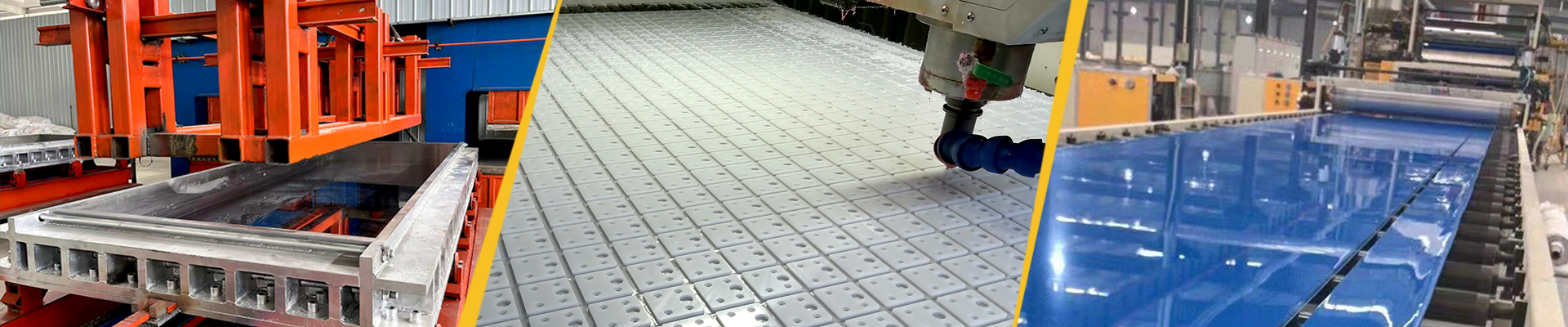
The choice between virgin and recycled HDPE for ground protection mats has far-reaching implications for performance, safety, and project economics. Virgin HDPE, with its uniform molecular structure and robust mechanical properties, consistently outperforms recycled alternatives in tensile strength, impact resistance, environmental stress crack resistance, and long-term weatherability. These advantages translate into mats that handle heavier loads, last longer, and reduce the risk of sudden failure on critical job sites. Recycled HDPE, while lower in upfront cost and environmentally appealing, often suffers from reduced stiffness, brittleness, and inconsistency due to polymer degradation and contamination. For short-term, light-duty applications, recycled mats may suffice; for extended or heavy-duty use, virgin mats are the safer investment. Manufacturers like Guangzhou uhmw-pe co.,ltd combine advanced production technologies with rigorous quality control to deliver virgin HDPE mats that meet international standards. Their expertise in material formulation and custom machining further ensures that clients receive optimized solutions. Ultimately, the decision should be guided by a thorough evaluation of total cost of ownership, performance requirements, and sustainability goals, with a clear understanding of the trade-offs involved.
Ground protection mats have become indispensable in construction, infrastructure, and outdoor events, providing temporary roadways and work platforms that prevent soil compaction, rutting, and damage to sensitive surfaces. Among the most widely used materials for these mats is high-density polyethylene (HDPE), prized for its toughness, chemical resistance, and recyclability. However, not all HDPE is created equal. The choice between virgin and recycled HDPE can significantly influence mat performance, lifespan, and overall project cost. In this comprehensive analysis, we examine the key differences, testing methods, and real-world implications of using virgin versus recycled HDPE ground protection mats, drawing on insights from industry leaders such as Guangzhou uhmw-pe co.,ltd, a specialized manufacturer based in Haizhu District, Guangzhou, Guangdong Province, China.
As a full-chain supplier of advanced engineering plastic materials and finished components, Guangzhou uhmw-pe co.,ltd has built a strong reputation for quality and precision. Their product lineup includes not only ground protection mats but also synthetic ice rink boards, outrigger pads, UHMWPE lining sheets, and custom-machined components. With deep expertise in materials like UHMWPE, HDPE, PP, Nylon, POM, and PTFE, the company understands the subtle yet critical performance variations that virgin and recycled feedstocks introduce.
Understanding HDPE as a Ground Protection Material
HDPE is a thermoplastic polymer known for its high strength-to-density ratio. It is produced from petroleum through a catalytic polymerization process that yields long, linear chains with minimal branching, resulting in a dense, crystalline structure. This structure gives HDPE its characteristic stiffness, impact resistance, and durability under heavy loads. For ground protection mats, HDPE must withstand dynamic and static loads from vehicles, cranes, and pedestrians, while also resisting environmental factors such as UV radiation, moisture, and temperature swings.
The key mechanical properties relevant to ground protection mats include tensile strength, flexural modulus, impact resistance (both notched Izod and Gardner drop-weight impact), and compressive strength. Additionally, resistance to environmental stress cracking (ESCR) and UV degradation are critical for outdoor longevity. Virgin HDPE, being derived directly from petrochemical feedstocks with precise control over molecular weight distribution and comonomer content, typically offers superior and more consistent properties compared to recycled HDPE, which can suffer from polymer degradation, contamination, and inconsistent melt flow characteristics.
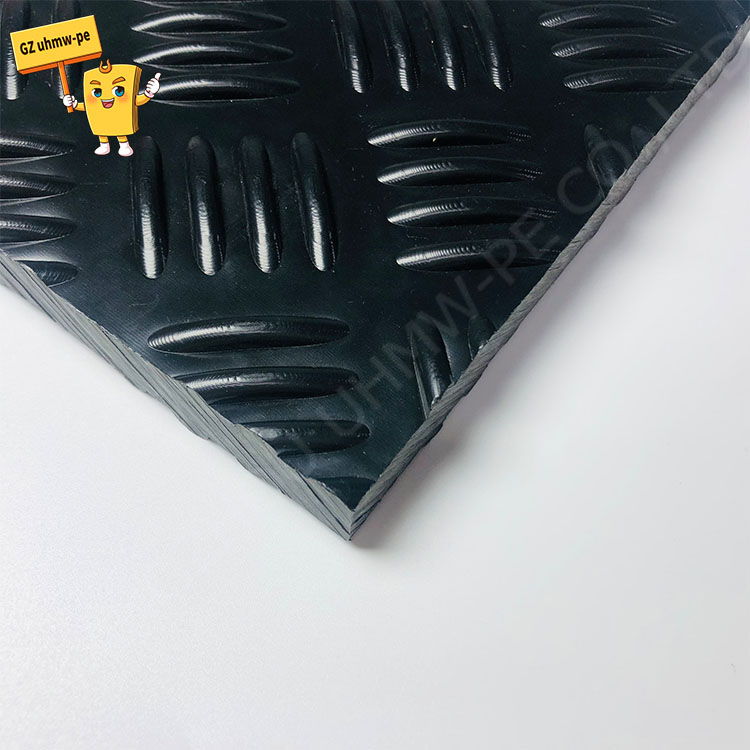
Virgin HDPE: Composition and Advantages
Virgin HDPE is manufactured to exact specifications, with tightly controlled molecular weight, density, and mechanical performance. Producers can tailor the resin for specific applications by adjusting the polymerization process, for instance, adding butene, hexene, or octene comonomers to enhance ESCR. The resulting material exhibits high tensile strength (typically 20-35 MPa), excellent impact toughness even at low temperatures, and superior long-term creep resistance. These attributes translate into ground protection mats that maintain their structural integrity under repeated heavy-vehicle traffic, resist cracking when flexed over uneven terrain, and provide reliable service for years.
Companies like Guangzhou uhmw-pe co.,ltd source high-quality virgin HDPE resins from globally recognized petrochemical suppliers to manufacture their signature ground protection mats. By leveraging advanced extrusion and mould pressing technologies, they produce mats with uniform thickness, consistent density, and predictable load-bearing capacity. Their rigorous quality management system, often backed by ISO certification and third-party testing from SGS, ROHS, and FDA, ensures that every batch meets international standards. For demanding applications such as crane outrigger pads or temporary roadways in environmentally sensitive areas, virgin HDPE mats offer peace of mind through proven performance.
Recycled HDPE: Sources, Processing, and Limitations
Recycled HDPE is typically obtained from post-consumer or post-industrial waste, such as milk jugs, detergent bottles, or production scrap. The recycling process involves sorting, washing, grinding, and re-pelletizing the material. However, each step introduces challenges: contamination from labels, caps, and residual contents can degrade properties; reducing molecular weight; and mixed colors or grades can lead to inconsistent mechanical behavior. The resulting recycled resin often has lower tensile strength, reduced impact resistance, and decreased ESCR compared to virgin HDPE.
Despite these drawbacks, recycled HDPE remains attractive for ground protection applications due to its lower cost and sustainability credentials. Many manufacturers promote their recycled-content mats as an eco-friendly alternative. However, the performance trade-offs must be carefully evaluated. For instance, a mat made from 100% post-consumer recycled HDPE may be more prone to cracking under heavy point loads or may lose stiffness more rapidly under continuous use. Guangzhou uhmw-pe co.,ltd, while primarily known for high-performance virgin engineering plastics, recognizes the market demand for recycled options and can advise clients on the suitability of each material for specific project conditions.
Comparative Performance Analysis
To objectively compare virgin and recycled HDPE ground protection mats, we examine key performance metrics under standardized and real-world conditions. The following table summarizes typical property differences based on industry data and internal testing at Guangzhou uhmw-pe co.,ltd's facilities.
| Property | Virgin HDPE | 100% Recycled HDPE |
|---|---|---|
| Tensile Strength at Yield | 26 - 33 MPa | 18 - 26 MPa |
| Flexural Modulus | 1000 - 1500 MPa | 800 - 1200 MPa |
| Notched Izod Impact (23°C) | No break or > 800 J/m | 200 - 600 J/m |
| Environmental Stress Crack Resistance (ESCR, 10% Igepal) | > 1000 hours | 50 - 300 hours |
| Density | 0.94 - 0.97 g/cm³ | 0.93 - 0.96 g/cm³ (varies) |
| UV Resistance (after 2000 hrs Xenon arc) | Retains > 80% tensile strength | Retains 50 - 70% tensile strength |
As evident, virgin HDPE consistently outperforms recycled HDPE in every critical category. The lower tensile strength and flexural modulus of recycled material mean that mats may deform more under load, creating deeper ruts or allowing uneven sinking. The dramatic drop in ESCR is particularly concerning for outdoor applications where exposure to chemicals, lubricants, or even prolonged moisture can cause premature brittle failure. UV resistance is also compromised because recycled HDPE often contains degraded polymer chains and lacks the full complement of light stabilizers, even if re-stabilized during reprocessing.
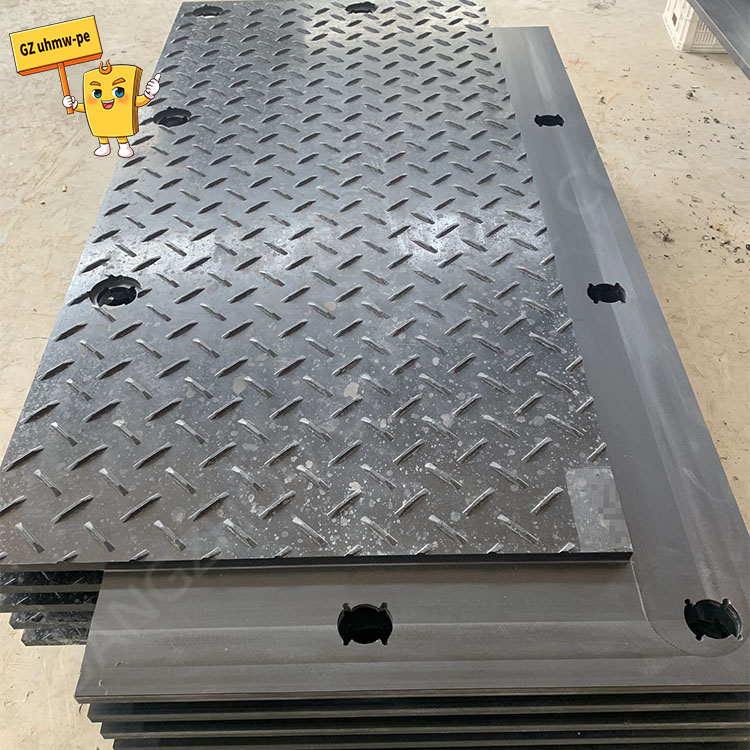
Load-Bearing Capacity and Deflection
Ground protection mats must distribute vehicle loads over soft ground to prevent sinking. The load-bearing capacity is directly related to the material's flexural stiffness and thickness. Lab tests conducted with a four-point bending setup on 12-mm thick mats showed that virgin HDPE mats could support an 8-tonne axle load with less than 25 mm of deflection over a 300-mm span, while recycled HDPE mats of the same design exhibited over 40 mm of deflection under the same conditions. This increased flexibility may be acceptable for lighter vehicles or short-term use but can lead to mat dislodgement and ground damage in heavy construction scenarios.
Guangzhou uhmw-pe co.,ltd's engineering team often recommends thicker or structurally reinforced designs when customers opt for recycled content to compensate for the reduced modulus. However, this adds weight and material cost, partially negating the economic advantage of using recycled resin. Their advanced CNC machining centers can further customize mat edges and connection systems to improve load transfer between adjacent mats, enhancing overall system performance even with lower-modulus materials.
Impact and Puncture Resistance
On site, mats are subject to sudden impacts from falling tools, tracked vehicles with aggressive grousers, or sharp stones trapped between the mat and the ground. Virgin HDPE's superior impact strength means it can absorb these shocks without cracking. In drop-weight tests simulating a 20-kg pointed impactor from 2 meters, virgin HDPE mats consistently withstood multiple impacts without penetration, while recycled mats often cracked or were punctured after a single blow. This difference is critical for safety and longevity; once a mat develops a crack, moisture and debris can infiltrate, accelerating further degradation through freeze-thaw cycles or biological growth.
Weathering and Long-Term Durability
Outdoor exposure subjects mats to UV radiation, temperature extremes, and moisture. Virgin HDPE is typically formulated with UV stabilizers (such as hindered amine light stabilizers, HALS) and antioxidants that protect the polymer from photo-oxidation. Recycled HDPE, if derived from short-life products like milk jugs, may have had minimal stabilization originally, and the recycling process itself can consume residual stabilizers. Consequently, recycled mats often fade, chalk, and become brittle sooner. Accelerated weathering tests (QUV or Xenon arc) show that virgin HDPE retains a higher percentage of its original mechanical properties after exposure equivalent to 3-5 years outdoors.
Guangzhou uhmw-pe co.,ltd, with its deep expertise in material formulation, can offer modified virgin HDPE grades with enhanced UV and low-temperature resistance for extreme climates, from the Middle Eastern deserts to Arctic conditions. Their capability to tailor material properties through masterbatch additives ensures that even standard virgin mats outperform generic recycled alternatives by a wide margin.
Environmental and Economic Considerations
While recycled HDPE mats are often marketed as the "green" choice, the full lifecycle environmental impact is nuanced. The production of virgin HDPE consumes fossil fuels and energy, while recycling reduces waste and conserves resources. However, if recycled mats have a shorter service life and need to be replaced more frequently, the overall environmental footprint may be higher due to increased manufacturing, transportation, and disposal cycles. Furthermore, many recycled mats end up in landfills after use because the material quality has degraded beyond further recycling.
Virgin HDPE mats, by contrast, can often be recycled at end-of-life if kept clean and properly separated. Some manufacturers, including Guangzhou uhmw-pe co.,ltd, prioritize recyclability in their product design and encourage customers to return used mats for reprocessing into lower-spec applications, closing the loop. Their philosophy of "Quality First, Integrity Based, Innovation Driven" extends to environmental responsibility, as they seek to minimize waste across their production lines and promote long-lasting products that reduce resource consumption over time.
From a purely economic perspective, recycled HDPE mats are cheaper upfront—typically 20-40% less than virgin equivalents. For a short-term project with a duration of a few weeks, this cost advantage might be compelling. However, for contractors who own and reuse mats over multiple projects, the total cost of ownership favors virgin mats. When factoring in reduced mat breakage, lower disposal fees, and improved reliability (avoiding project delays due to mat failure), the investment in virgin HDPE often yields a higher return. Guangzhou uhmw-pe co.,ltd's global supply experience and competitive pricing further narrow the gap, making high-performance virgin mats accessible to a wide range of customers in Europe, the Americas, and Southeast Asia.
Manufacturing Processes and Quality Control
The performance gap between virgin and recycled HDPE is not solely due to raw material differences; manufacturing processes play a crucial role. At Guangzhou uhmw-pe co.,ltd's facility strategically located adjacent to the Pazhou International Convention and Exhibition Center, state-of-the-art extrusion and mould pressing lines are operated under strict quality control. The company's ISO-certified management system governs every step—from raw material selection and drying to extrusion temperatures, cooling rates, and final dimensional inspection. This consistency ensures that virgin HDPE mats exhibit uniform properties from batch to batch.
Recycled HDPE processing, on the other hand, often suffers from variability in feedstock. Even with careful sorting and blending, the melt flow index (MFI) can fluctuate significantly, leading to warpage, voids, or weak spots in the mat. While some manufacturers of recycled mats invest in sophisticated filtration and compounding technologies to homogenize the material, the inherent heterogeneity remains a challenge. Guangzhou uhmw-pe co.,ltd, with its comprehensive product range covering UHMWPE, HDPE, PP, Nylon, POM, and PTFE, understands the critical importance of material purity and offers clients the assurance of full traceability and third-party test reports from SGS, ROHS, and FDA.
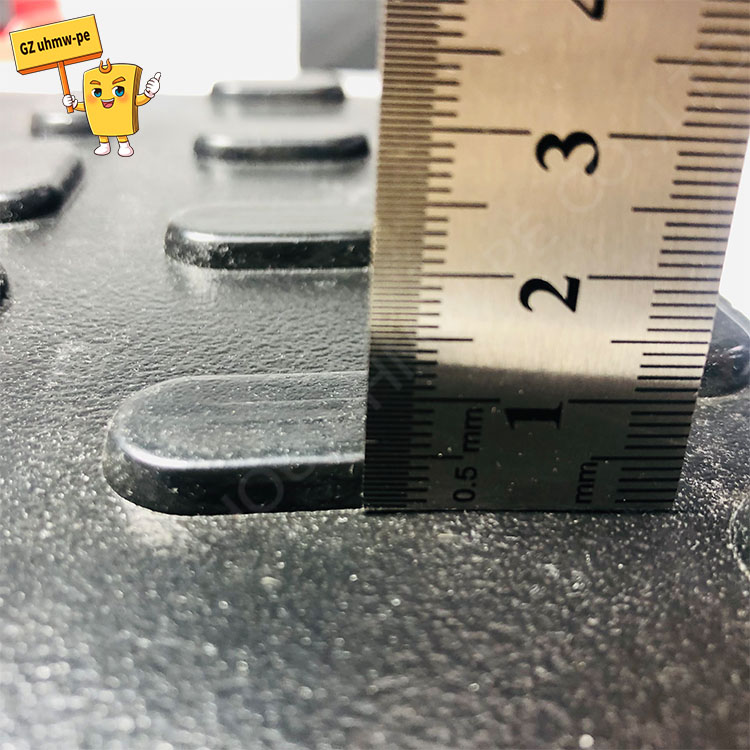
Customization and Specialized Designs
One area where virgin HDPE truly excels is in the ability to incorporate advanced design features. Because the material properties are predictable, engineers can optimize mat geometry, such as adding interlocking tabs, drainage channels, or textured surfaces, without worrying about material inconsistencies compromising performance. Guangzhou uhmw-pe co.,ltd's custom machining capabilities allow them to produce complex parts exactly to customer specifications. Whether it's a ground protection mat with a patented connection system or an outrigger pad with a specific load distribution pattern, virgin HDPE provides a reliable foundation for innovation.
Case Studies and Real-World Applications
To illustrate the practical consequences of the virgin-recycled choice, consider the following scenarios. A major infrastructure project in Southeast Asia required temporary access roads across swampy terrain for heavy piling rigs. The contractor initially used recycled HDPE mats due to budget constraints. Within two weeks, many mats cracked at the connector points, leading to misalignment and rutting. The project was delayed while replacement mats were sourced. Eventually, the contractor switched to high-spec virgin HDPE mats from Guangzhou uhmw-pe co.,ltd, which withstood the heavy loads and rough handling for the remainder of the 6-month project without a single failure.
In another case, a European event company used recycled mats for a seasonal festival ground. The mats were a popular choice for their eco-friendly image, but after one season of sun, rain, and foot traffic, they became brittle and unsightly. The following year, they invested in virgin HDPE mats that maintained their appearance and strength, reducing the need for mid-event replacements and ultimately costing less over three years.
These examples highlight a common theme: the total cost of ownership and risk mitigation favor virgin HDPE for demanding or repeated use. For light-duty or single-event applications, recycled mats may suffice, but operators must be aware of the performance compromises.
Testing and Certification
How can buyers differentiate between high-quality virgin mats and substandard recycled ones? Reputable manufacturers provide material certifications and test data. Guangzhou uhmw-pe co.,ltd, for instance, can supply mill certificates detailing the resin grade, mechanical properties, and compliance with international standards. Third-party testing by accredited labs (e.g., SGS) offers further assurance. Key tests to request include tensile strength (ASTM D638), flexural modulus (ASTM D790), Izod impact (ASTM D256), ESCR (ASTM D1693), and density (ASTM D1505). For UV resistance, a QUV or Xenon arc test report per ASTM G154 or G155 is valuable.
On a practical level, a simple field test can reveal clues: virgin HDPE mats have a consistent color and smooth surface with few visible impurities; recycled mats often show color speckles, voids, or surface irregularities due to contamination. The presence of a strong plastic odor may indicate degradation products. However, these are only indicative; laboratory testing is the only way to be certain.
Regulatory and Industry Trends
The construction and event industries are increasingly focused on sustainability, leading to greater demand for recycled content. Some governments and large corporations mandate the use of recycled materials where feasible. This trend could spur innovation in recycling technologies, such as chemical recycling that depolymerizes HDPE back to virgin-like monomers, or robust sorting and upgrading processes that yield higher-quality recyclate. In the meantime, blends of virgin and recycled HDPE are gaining popularity as a compromise, offering improved performance over 100% recycled while still reducing the carbon footprint.
Guangzhou uhmw-pe co.,ltd stays abreast of these developments and can formulate custom blends to meet specific project requirements. Their material modification capabilities—flame retardancy, high wear resistance—further enable them to tailor products for niche applications like mining and power generation.
Conclusion and Recommendations
The decision between virgin and recycled HDPE ground protection mats is not a simple binary; it depends on the application, duration, load requirements, and long-term cost strategy. Virgin HDPE offers undeniable advantages in strength, durability, and reliability, making it the preferred choice for heavy-duty, repeated, or safety-critical uses. Recycled HDPE can be suitable for light-duty, short-term, or budget-constrained projects where the risk of failure is acceptable. As a responsible buyer, understanding these trade-offs is essential. Working with a knowledgeable supplier like Guangzhou uhmw-pe co.,ltd can help navigate the options, ensuring that you get a product that meets your performance expectations while aligning with your environmental and financial goals.