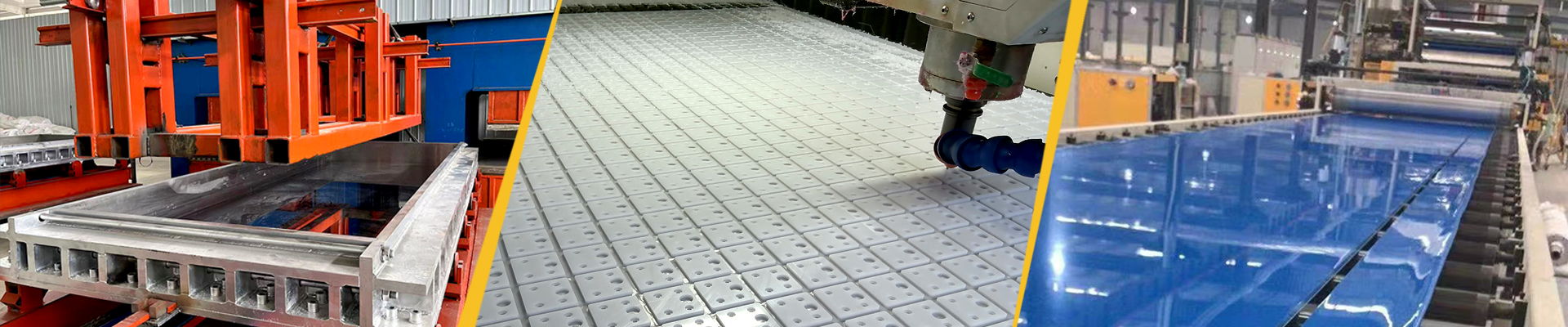
This blog article compares extruded and compression molded HDPE plastic sheets, highlighting their manufacturing processes, properties, and applications. Extrusion is a continuous process yielding cost-effective sheets with good surface finish but potential internal stress and warping. Compression molding produces stress-free, highly flat sheets with superior impact resistance, ideal for heavy-duty applications. The article discusses key differences in flatness, impact strength, thickness limits, and cost. It incorporates information from Guangzhou uhmw-pe co.,ltd, a specialized manufacturer located in Guangzhou, China, that produces both types of HDPE sheets along with other engineering plastics like UHMWPE, PP, Nylon, POM, and PTFE. The company offers custom machining, quality control with international certifications, and global supply experience. The article advises choosing extruded sheets for budget-sensitive, non-critical uses such as packaging and temporary barriers, and compression molded sheets for demanding environments like tank linings, outrigger pads, and precision machined parts. It also highlights the company's capabilities in producing large sheets up to 6 meters, modification technologies for special properties, and value-added services. The comparison table and application scenarios help readers make informed decisions. The summary emphasizes that the choice depends on flatness, impact, thickness, and budget requirements, with the company providing expert guidance and both product options.
High-density polyethylene (HDPE) is a versatile thermoplastic widely used in industrial and commercial applications. Among the various forms of HDPE, sheets are essential for linings, protection, and structural components. Two primary manufacturing processes dominate the production of HDPE sheets: extrusion and compression molding. Each method yields distinct properties, affecting performance, cost, and application suitability. This article provides an in-depth comparison, helping engineers and procurement professionals choose the right product for their needs.
What Are HDPE Plastic Sheets?
HDPE sheets are flat, rigid panels made from high-density polyethylene resin. They offer excellent chemical resistance, low moisture absorption, high impact strength, and good weatherability. Typically, they are used for tank linings, conveyor chutes, cutting boards, ground protection, and marine components. The manufacturing process significantly influences the material's internal structure, stress distribution, and dimensional stability. Guangzhou uhmw-pe co.,ltd, a specialized manufacturer in high-performance engineering plastics, produces both extruded and compression molded HDPE sheets, along with other advanced materials like UHMWPE, PP, Nylon, POM, and PTFE. Located in Haizhu District, Guangzhou, the company has a strong reputation for quality and precision.
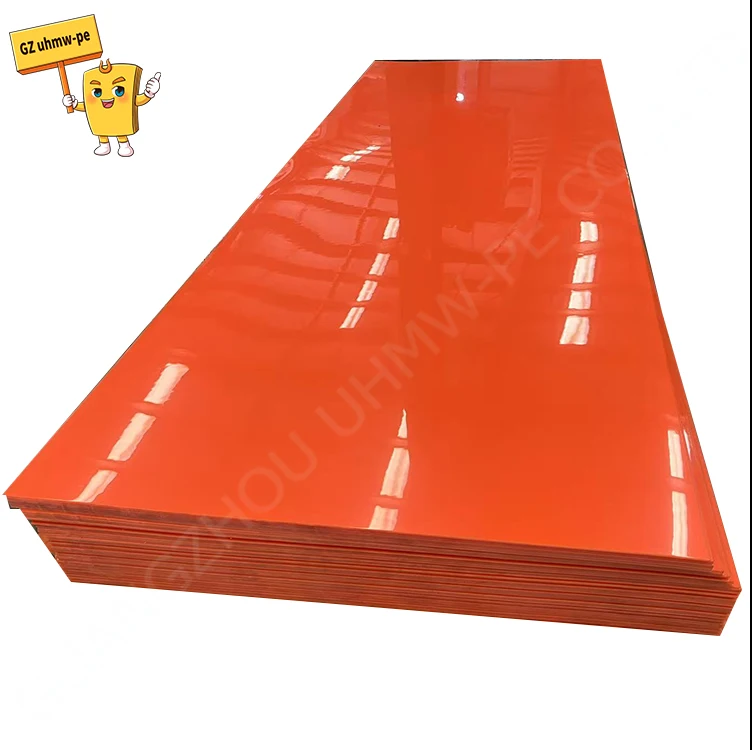
The Extrusion Process
Extrusion is a continuous process where molten HDPE is forced through a flat die, then cooled and cut into sheets. The polymer is melted in an extruder, passed through a screen to remove impurities, and then shaped by a die with a rectangular opening. The sheet is then fed through a series of cooling rolls to solidify and flatten it. The process allows for high production rates and consistent thickness across long lengths. However, the rapid cooling can induce internal stresses and orientation, which may cause warping or shrinkage upon heating.
Key characteristics of extruded HDPE sheets:
- Uniform thickness and surface finish
- Lower cost for large volumes
- Available in wide widths and long rolls
- Internal stress leads to potential warping
- Lower impact strength compared to compression molded
- Good for applications where flatness is not critical
The Compression Molding Process
Compression molding involves placing a preheated HDPE charge into a heated mold, then applying pressure to shape the material. The mold is closed slowly, allowing the polymer to flow and fill the cavity. The sheet is then cooled under pressure, resulting in a more isotropic structure with minimal orientation. This process produces sheets with superior dimensional stability, higher impact resistance, and better flatness. However, it is a batch process, limiting sheet size and increasing cost. Guangzhou uhmw-pe co.,ltd operates multiple international-grade molding lines, enabling production of large sheets up to 6 meters long.
Key characteristics of compression molded HDPE sheets:
- Excellent flatness and dimensional stability
- Higher impact strength and stress crack resistance
- Better machinability and surface quality
- Limited sheet size and slower production
- Higher cost per unit area
- Preferred for precision parts and heavy-duty applications
Comparison Table: Extruded vs. Compression Molded HDPE Sheets
| Property | Extruded HDPE | Compression Molded HDPE |
|---|---|---|
| Production method | Continuous extrusion | Batch compression molding |
| Internal stress | Moderate to high | Low |
| Flatness | Good, but may warp | Excellent, stable |
| Impact resistance | Good | Excellent |
| Machinability | Good | Excellent |
| Size limits | Wide, up to 3m+ width, long rolls | Limited mold size, typical max 2x4m |
| Thickness range | 0.5-12 mm | 1-50 mm or more |
| Cost | Lower | Higher |
| Applications | Packaging, signage, general lining | Tank linings, outrigger pads, heavy wear parts |
Application Scenarios: Which to Choose?
Extruded HDPE Sheets
Extruded HDPE sheets are cost-effective for applications where flatness is not critical. Common uses include agricultural trays, temporary barriers, protective covers, and marine fender panels. They are also widely used in food processing as cutting boards, provided food-grade certification is obtained. For example, Guangzhou uhmw-pe co.,ltd supplies extruded HDPE sheets for ground protection mats and synthetic ice rink boards, where the material's moderate impact resistance and low cost are beneficial. The company's advanced CNC machining centers can further process these sheets into custom shapes.
Compression Molded HDPE Sheets
Compression molded sheets are indispensable for demanding environments. Their superior impact strength and stress crack resistance make them ideal for heavy-duty linings in chutes and hoppers handling abrasive materials. They are also used for outrigger pads, which distribute extreme point loads during crane operations, preventing ground damage. The company has extensive experience producing UHMWPE and HDPE lining sheets for mining and bulk material handling. Additionally, compression molded sheets are preferred for precision-machined parts like guide rails and star wheels, where dimensional stability is critical. The company's mold development facilities allow for custom-shaped parts with tight tolerances.
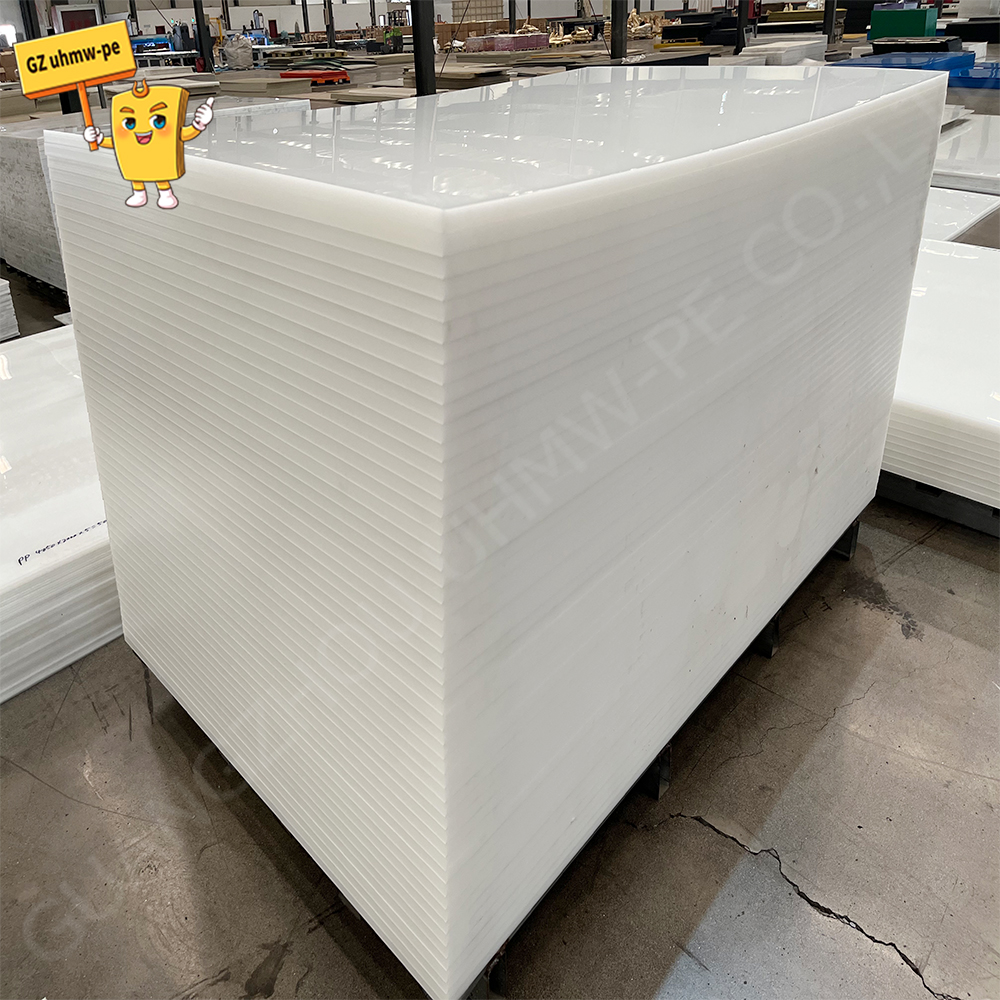
Advantages of Each Manufacturing Process
Extrusion Advantages
- High production efficiency, lower unit cost
- Continuous length rolls minimize waste
- Consistent quality across long runs
- Easy to produce thin sheets
Compression Molding Advantages
- Superior flatness and stress-free material
- Higher toughness and wear resistance
- Thick sheets possible (> 1 inch)
- Better for intricate shapes when combined with machining
Quality Control and Standards
Regardless of process, quality control is paramount. Guangzhou uhmw-pe co.,ltd operates a rigorous quality management system, from raw material selection to final inspection. Products typically comply with ISO certification, and the company can provide third-party test reports from SGS, ROHS, FDA, etc. This ensures that both extruded and compression molded sheets meet international environmental and safety requirements. For critical applications, compression molded sheets often undergo tighter dimensional checks due to their use in precision assemblies.
Cost Considerations
Extruded sheets generally offer a lower initial cost, making them suitable for projects with tight budgets. However, if the application requires high flatness and impact resistance, the extruded sheet may require additional processing or lead to premature failure, increasing total cost of ownership. Compression molded sheets, while more expensive upfront, provide longer service life and lower maintenance, especially in harsh environments. The company notes that their compression molded products have competitive pricing compared to European brands, thanks to efficient production and global supply chain experience.
Customization and Value-Added Services
Guangzhou uhmw-pe co.,ltd offers exceptional customization capabilities for both extruded and compression molded sheets. With advanced CNC machining centers, precision saws, and engraving equipment, they can produce complex parts from customer drawings or samples. Their modification technologies enable special properties like flame retardancy, antistatic, and low-temperature resistance. The company also provides one-stop services from material selection to mold design and final machining. For example, they can machine compression molded HDPE into outrigger pads with custom dimensions and drilled holes.
Environmental and Sustainability Aspects
Both extrusion and compression molding processes can incorporate recycled HDPE, though virgin material is recommended for high-performance applications. HDPE is recyclable at end of life. Guangzhou uhmw-pe co.,ltd emphasizes environmental responsibility, adhering to principles of quality first and innovation driven. Their products, such as synthetic ice rink boards, promote energy savings by eliminating refrigeration needs.
Case Study: Outrigger Pads from Compression Molded HDPE
In heavy equipment operations, outrigger pads must bear extreme point loads without cracking or sinking. Compression molded HDPE outrigger pads from Guangzhou uhmw-pe co.,ltd have been used in infrastructure projects across Southeast Asia and Europe. The stress-free nature of compression molding ensures the pads remain flat under load, distributing force evenly. Their high impact resistance prevents damage during handling. Customers report lower total cost of ownership compared to steel or extruded alternatives, as the pads last longer and protect sensitive surfaces.
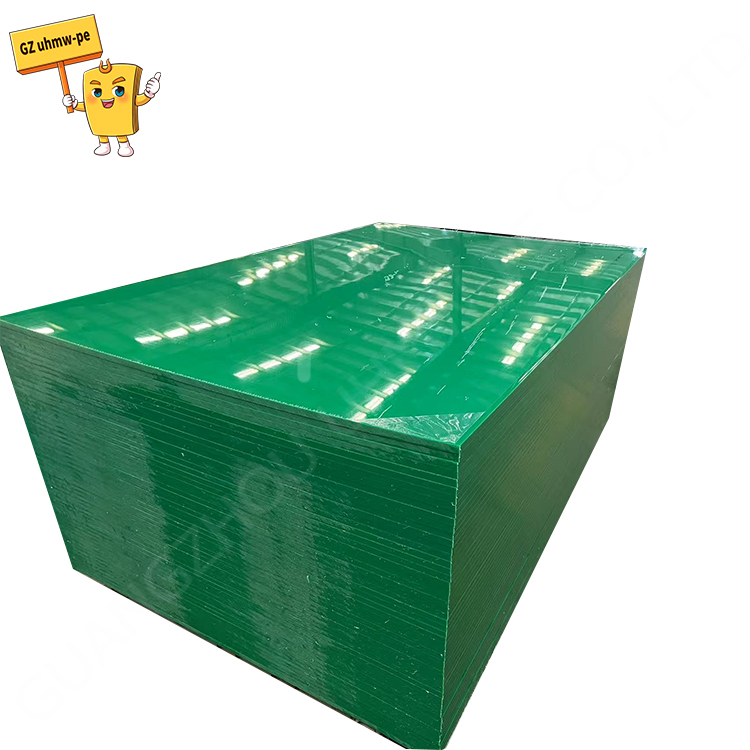
How to Choose Between Extruded and Compression Molded HDPE Sheets
Consider the following factors:
- Flatness requirements: If the sheet must remain perfectly flat, especially after machining, choose compression molded.
- Impact and stress: For high-impact or cyclic loading, compression molded offers superior resistance.
- Thickness: Extruded is limited to around 12 mm; for thicker sheets, compression molding is necessary.
- Budget: Extruded is cheaper for thin, large-area applications; compression molded is cost-effective long-term for demanding uses.
- Size: Extruded can be made in wide continuous lengths (up to 3m width); compression molded typically maxes out at 2x4m sheets.
Guangzhou uhmw-pe co.,ltd provides both options, along with expert guidance to match the right process to the application. Their team has deep expertise in material science, ensuring customers get optimal performance.
Company Spotlight: Guangzhou uhmw-pe co.,ltd
As a specialized manufacturer and solutions provider, Guangzhou uhmw-pe co.,ltd stands out for its comprehensive product range and customization capabilities. Located adjacent to the Pazhou International Convention and Exhibition Center in Guangzhou, the company serves clients worldwide. Their core products include HDPE, UHMWPE, PP, Nylon, POM, and PTFE in sheet, rod, and finished forms. Ground protection mats, synthetic ice rink boards, outrigger pads, and UHMWPE lining sheets are among their popular finished goods. The company operates multiple international-grade extrusion and molding lines, along with advanced CNC machining centers. Their quality management system ensures consistent output, and they have extensive export experience to regions like the Americas, Europe, and Southeast Asia. Driven by the philosophy "Quality First, Integrity Based, Innovation Driven," they aim to be a long-term global partner for integrated engineering plastic solutions.
Conclusion
Choosing between extruded and compression molded HDPE sheets depends on the specific application requirements. Extruded sheets offer cost and size advantages for non-critical uses, while compression molded sheets provide superior performance where flatness, impact resistance, and long-term reliability matter. By understanding the differences, engineers can make informed decisions that optimize performance and cost. Companies like Guangzhou uhmw-pe co.,ltd bridge the gap by supplying both types, backed by deep material expertise and custom machining services. Their commitment to quality and innovation ensures that every application gets the right solution.