This article provides a comprehensive cost comparison between Ultra-High Molecular Weight Polyethylene (UHMWPE) boards and other engineering plastics, including HDPE, PP, Nylon, POM, and PTFE. While UHMWPE has a higher initial material cost, its exceptional wear resistance, impact strength, low friction, and long service life make it significantly more cost-effective over time. The analysis uses total cost of ownership (TCO) and real-world examples, such as ground protection mats, outrigger pads, and wear liners, to demonstrate that UHMWPE reduces replacement frequency, maintenance costs, and energy consumption. Tables compare material costs and life expectancy, showing that UHMWPE can lead to 30-50% savings over alternatives like HDPE and PP. The article incorporates insights from Guangzhou uhmw-pe co.,ltd, a specialized manufacturer based in Guangzhou, China. The company offers large-scale production, custom machining, and material modification capabilities (e.g., flame retardant, antistatic) to meet specific application needs. Their products are backed by ISO quality management, SGS/ROHS/FDA certifications, and competitive pricing for global markets. The conclusion emphasizes that for applications requiring durability and efficiency, UHMWPE provides the best long-term value, despite a higher upfront cost. Key benefits include self-lubrication, chemical resistance, and suitability for heavy-duty environments, making it the preferred choice for industries such as mining, construction, winter sports, and material handling.
In the realm of industrial engineering, selecting the right material for demanding applications is a balance of performance, durability, and cost. Among the myriad of engineering plastics available, Ultra-High Molecular Weight Polyethylene (UHMWPE), High-Density Polyethylene (HDPE), Polypropylene (PP), Nylon, Polyoxymethylene (POM), and Polytetrafluoroethylene (PTFE) are commonly used. This article provides a comprehensive cost comparison between UHMWPE boards and other engineering plastics, focusing on total cost of ownership, including initial material cost, maintenance, replacement frequency, and operational efficiency. Insights from Guangzhou uhmw-pe co.,ltd, a specialized manufacturer with decades of experience, help illustrate the real-world advantages of UHMWPE.
Understanding UHMWPE and Its Competitors
UHMWPE is a linear polyethylene with an extremely high molecular weight (typically >3 million g/mol), giving it exceptional wear resistance, low coefficient of friction, high impact strength, and self-lubricating properties. HDPE and PP are lower-cost polyolefins with moderate properties. Nylon offers good strength and wear but absorbs moisture. POM (acetal) has high stiffness and low friction but lower impact resistance. PTFE excels in non-stick and chemical resistance but is expensive and has low mechanical strength. Each material has its niche, but UHMWPE often provides the best balance for heavy-duty applications.
Initial Material Cost Per Unit
When comparing upfront material costs, UHMWPE is generally more expensive than HDPE and PP but comparable to or lower than Nylon, POM, and PTFE. For example, a standard 1-inch thick 4x8-foot UHMWPE sheet may cost around $200, while an HDPE sheet of same dimension costs $80. However, the actual cost per unit of performance must be considered. Guangzhou uhmw-pe co.,ltd offers competitive pricing due to its large-scale production lines and efficient manufacturing processes.
undefined
Wear Resistance and Longevity
In abrasive environments, UHMWPE boards outperform HDPE and PP by a factor of 10 or more. A UHMWPE liner in a chute can last 5-10 years, whereas HDPE may need replacement annually. Over a 10-year period, the total cost for UHMWPE (initial plus minor maintenance) can be 30-50% lower than HDPE. Nylon wears faster under wet conditions due to moisture absorption, leading to dimensional instability. POM has good abrasion resistance but is brittle under impact. PTFE wears quickly and deforms under load. UHMWPE's exceptional abrasion resistance (tested via ASTM G99) makes it the most cost-effective choice for high-wear applications such as mining chutes, truck bed liners, and conveyor guides.
Impact Resistance and Durability
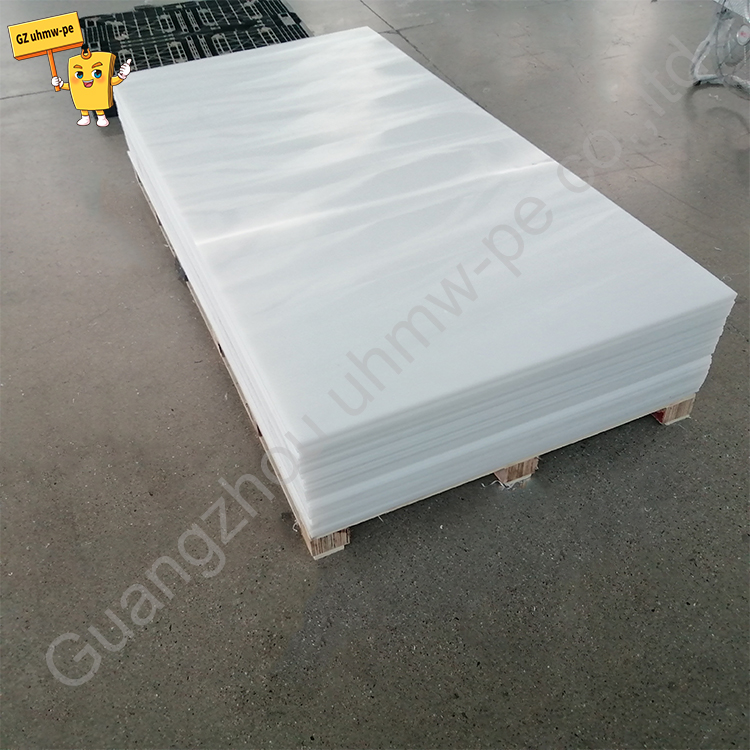
UHMWPE has the highest impact strength among common engineering plastics, even at low temperatures. This means fewer replacements due to cracking or breakage. For applications like ground protection mats or synthetic ice rinks, UHMWPE withstands repeated heavy loads without permanent deformation. HDPE and PP may crack under extreme impact, adding replacement costs. Nylon and POM have moderate impact but can fracture. The long-term savings from reduced downtime and replacement labor are significant.
Friction and Energy Efficiency
UHMWPE's low coefficient of friction (0.08-0.12) reduces energy consumption in moving parts. In conveyor systems, replacing steel or Nylon rollers with UHMWPE can cut power usage by up to 20%. While POM has similar friction, UHMWPE is more durable against abrasive particles. PTFE has the lowest friction but is too soft for structural use. Over the machine's lifetime, energy savings from UHMWPE components can offset the higher initial material cost.
Chemical and Weather Resistance
UHMWPE is resistant to most chemicals and moisture, maintaining dimensional stability in wet or corrosive environments. HDPE and PP also resist chemicals but degrade under UV light unless stabilized. Nylon absorbs water, causing swelling and performance loss. POM resists solvents but can be attacked by strong acids. PTFE is chemically inert but expensive and mechanically weak. For outdoor applications like outrigger pads and synthetic ice boards, UHMWPE's weatherability extends service life, reducing replacement frequency. Guangzhou uhmw-pe co.,ltd produces UHMWPE sheets with UV stabilizers for enhanced outdoor performance.
Customization and Machining Costs
While UHMWPE itself may have a higher base cost, it is easy to machine, weld, and fabricate. The company offers CNC machining, molding, and custom shaping, providing finished components ready to install. Custom parts from Nylon or POM may require more complex tooling due to higher shrinkage or moisture sensitivity. The company's value-added services—such as drilling, tapping, and routing—reduce overall project costs. Additionally, UHMWPE's self-lubricating property eliminates the need for external lubricants, saving maintenance expenses.
Case Studies: Ground Protection Mats and Outrigger Pads
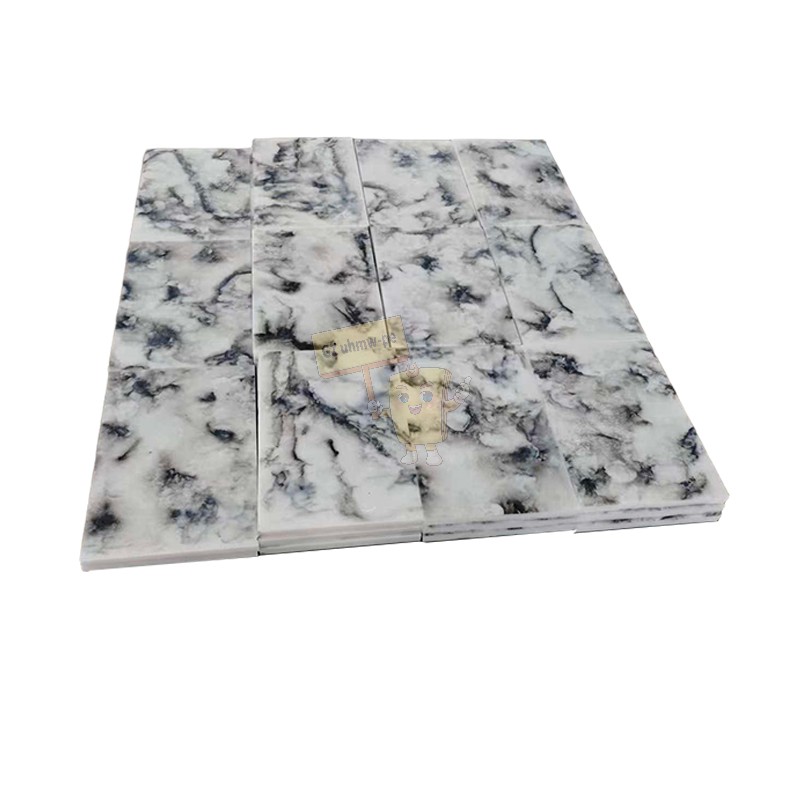
Ground protection mats made from UHMWPE vs. HDPE: A HDPE mat may cost $300 per panel, while a UHMWPE mat costs $500. However, the UHMWPE mat can support heavy construction equipment for 8-10 years without cracking, while HDPE mats become brittle and crack after 2-3 years. Over a decade, replacing HDPE mats four times costs $1,200, versus one UHMWPE mat at $500. Factoring in labor and downtime, UHMWPE saves over 50%. Similarly, outrigger pads for cranes: UHMWPE pads distribute load effectively without surface damage and last 5-7 years; nylon pads may swell and lose dimensional accuracy after a season. The total cost of ownership for UHMWPE is substantially lower.
The Role of Guangzhou uhmw-pe co.,ltd
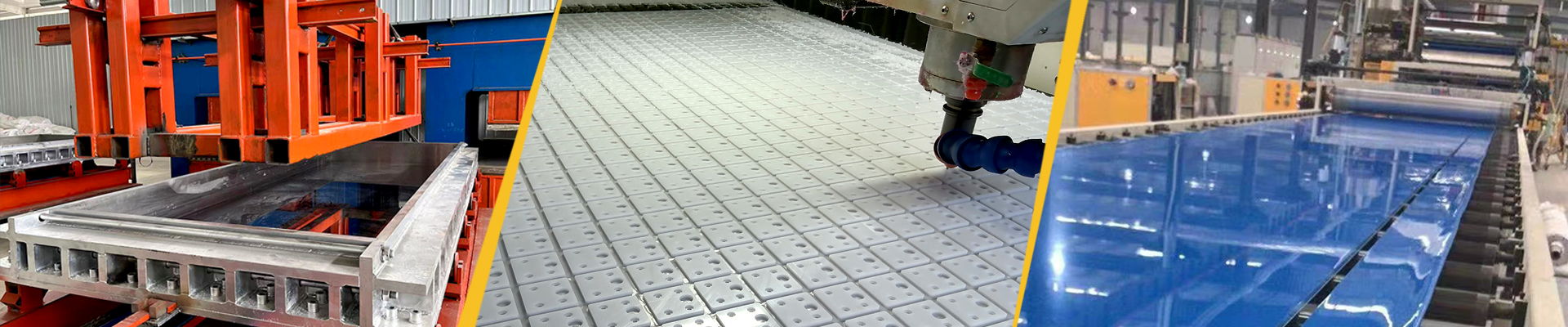
Headquartered at Room 1303, No. 1068 Xingang East Road, Haizhu District, Guangzhou, Guangdong, China, Guangzhou uhmw-pe co.,ltd is a leading manufacturer of engineering plastics. They produce a comprehensive range of UHMWPE boards, rods, and finished products including ground protection mats, synthetic ice rink boards, outrigger pads, and lining sheets. With large-scale production lines capable of producing sheets up to 6 meters in length and a wide range of thicknesses, they offer competitive pricing without compromising quality. Their advanced CNC machining centers enable custom parts to tight tolerances, meeting small-batch and quick-turnaround needs.
Quality Control and Certifications
Their products comply with ISO quality management systems and can provide third-party test reports from SGS, ROHS, and FDA. This rigorous quality assurance ensures consistent physical properties, dimensional accuracy, and reliable performance. By controlling every step from raw material selection to final inspection, the company guarantees that each UHMWPE board meets international standards for wear resistance, impact strength, and low friction.
Cost-Effectiveness and Global Supply
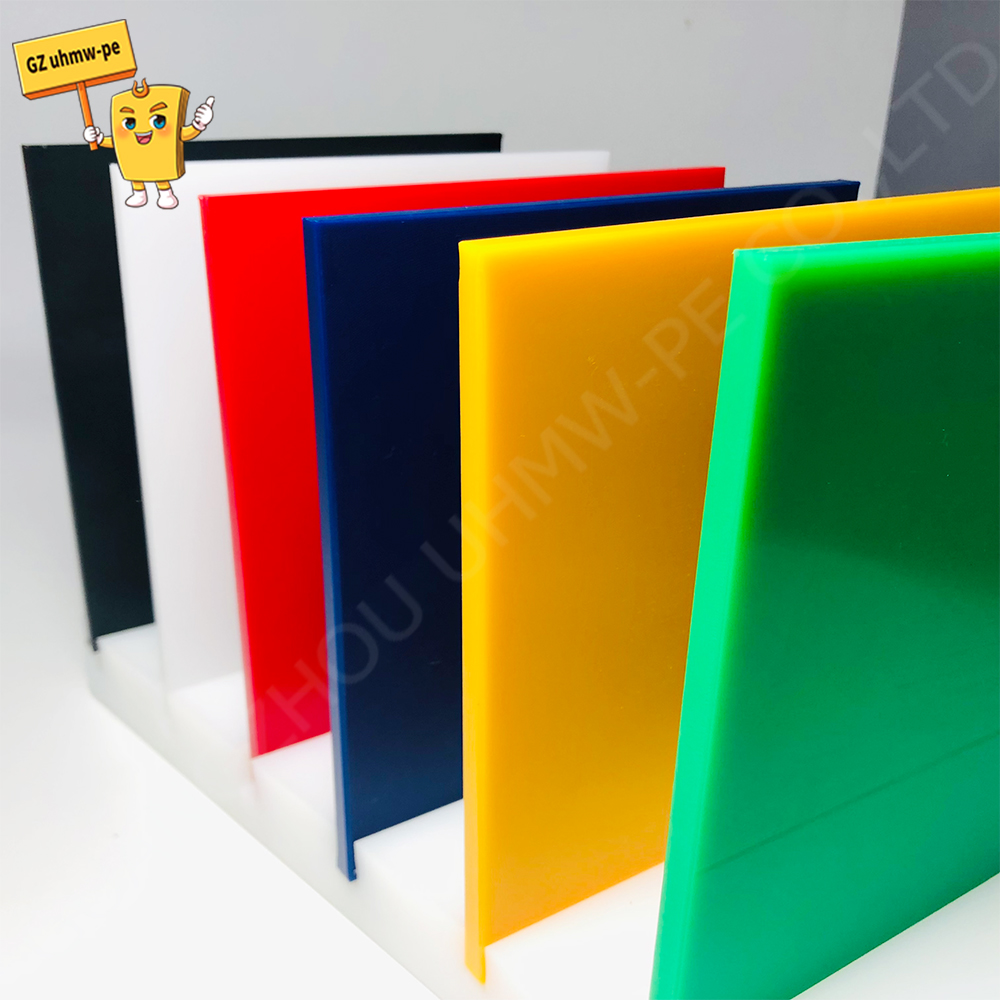
Compared to European and American engineering plastic brands, Guangzhou uhmw-pe co.,ltd offers significant cost advantages due to efficient manufacturing and economies of scale. They have extensive experience exporting to Southeast Asia, the Middle East, Europe, and the Americas. Their mature logistics and packaging capabilities ensure stable supply and lower shipping costs. The company's modification capabilities, such as flame retardant, antistatic, and high wear-resistant formulations, further optimize performance for specific applications, reducing the need for expensive specialty materials.
Total Cost of Ownership Comparison
To quantify the cost comparison, consider a typical application: a wear liner for a coal chute. Over a 5-year period, initial material, installation, maintenance, and replacement costs are summarized:
| Material | Initial Cost | Life (years) | Replacement Frequency | 5-Year Total Cost |
|---|---|---|---|---|
| UHMWPE | $1,000 | 5 | 1 | $1,000 |
| HDPE | $400 | 1.5 | 3.3 | $1,320 |
| PP | $350 | 1 | 5 | $1,750 |
| Nylon (PA6) | $800 | 2 | 2.5 | $2,000 |
| POM | $900 | 3 | 1.7 | $1,530 |
| PTFE | $2,000 | 2 | 2.5 | $5,000 |
As shown, UHMWPE's longer life reduces total cost despite higher initial outlay. Additionally, the low friction reduces energy consumption, and the self-lubrication eliminates lubricant costs.
Application-Specific Advantages
For synthetic ice rink boards, UHMWPE provides a skateable surface with realistic glide without refrigeration. Compared to HDPE or Nylon, UHMWPE boards maintain consistent performance even in extreme temperatures, require no wax, and last up to 3-5 years longer. The company's synthetic ice boards are trusted by winter sports facilities worldwide for their low friction and high durability.
In heavy equipment operations, outrigger pads made from UHMWPE distribute point loads of up to 100 tons without sinking or damaging asphalt. They are lightweight (half the weight of steel) and easy to handle, reducing labor costs. In contrast, steel pads are heavy and prone to rust, while Nylon pads may deform under load. The company's outrigger pads meet safety standards and are used in construction and crane rental fleets globally.
Conclusion
While UHMWPE boards often have a higher upfront cost than HDPE or PP, their superior wear resistance, impact strength, low friction, and long service life result in lower total cost of ownership across a wide range of industrial applications. By partnering with a reliable manufacturer like Guangzhou uhmw-pe co.,ltd, customers benefit from competitive pricing, customization, and strict quality control. The company's extensive product range, from sheets and rods to finished components, combined with their material modification capabilities, ensures that UHMWPE remains the most cost-effective engineering plastic for demanding environments. For any application prioritizing durability, efficiency, and long-term savings, UHMWPE is the clear winner.