This article provides a comprehensive guide on selecting HDPE panels by focusing on two critical factors: thickness and density. Thickness determines load-bearing capacity and rigidity, with common ranges from 1 mm to over 100 mm tailored for applications like ground protection mats (12–25 mm) and chemical linings (3–6 mm). Density, ranging from 0.941 to 0.967 g/cm³, influences stiffness, impact resistance, and chemical resistance. Higher density panels are ideal for structural uses, while lower density offers flexibility. The article emphasizes the interplay between these parameters and presents a table linking applications to recommended thickness and density values. It also highlights the value of customization and quality control, using Guangzhou uhmw-pe co.,ltd as an example manufacturer that offers modified grades (flame retardant, antistatic), large-format production up to 6 meters, and stringent ISO/SGS certifications. Practical steps guide readers through defining the environment, load calculations, and consulting experts. Finally, the cost-effectiveness and global supply capabilities of the company are noted, reinforcing that informed selection combined with a reliable partner ensures optimal performance and low total cost of ownership.
High-density polyethylene (HDPE) panels are widely used across industries for their excellent chemical resistance, impact strength, and weatherability. Selecting the right HDPE panel requires careful consideration of two key parameters: thickness and density. These factors directly influence the panel's mechanical properties, durability, and suitability for specific applications. This article provides a comprehensive guide to choosing HDPE panels based on thickness and density, drawing on insights from industry experts and manufacturers like Guangzhou uhmw-pe co.,ltd, a specialized manufacturer and solutions provider in high-performance engineering plastics.
Understanding HDPE Panel Thickness
Thickness is a primary determinant of an HDPE panel's load-bearing capacity and rigidity. Thicker panels offer greater strength and resistance to bending, making them suitable for heavy-duty applications such as ground protection mats, industrial flooring, and structural components. Conversely, thinner panels are more flexible and lightweight, ideal for lining, packaging, and low-stress applications.
undefined
Common Thickness Ranges
HDPE panels are available in thicknesses from 1 mm to over 100 mm. For example:
- 1–5 mm: Used for chemical tank linings, cutting boards, and signage.
- 6–12 mm: Suitable for wear strips, chute liners, and light-duty ground mats.
- 12–25 mm: Common for heavy-duty ground protection, outrigger pads, and structural supports.
- >25 mm: Employed in crane pads, ballistic protection, and extreme load distribution.
How Thickness Affects Performance
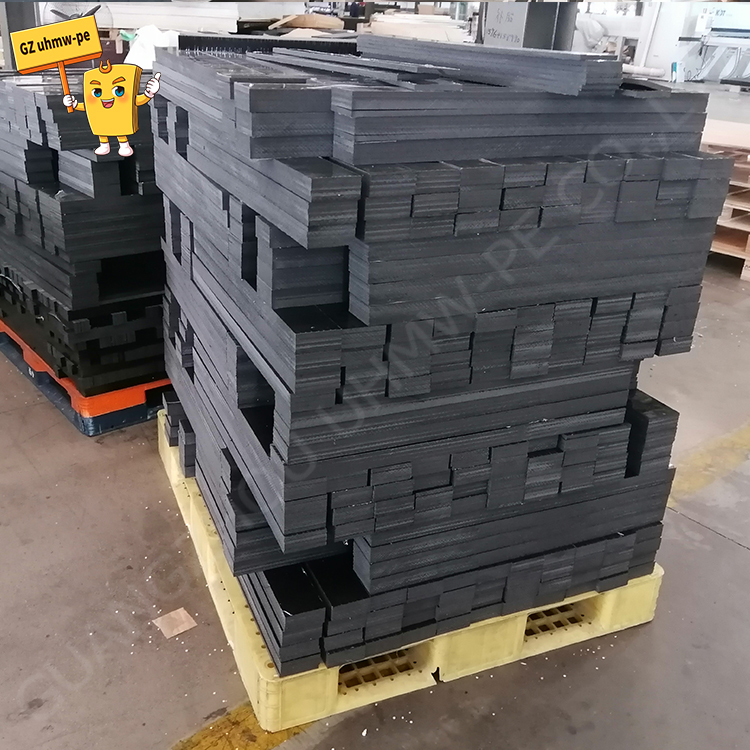
Increasing thickness enhances stiffness and impact resistance but also adds weight and cost. For applications requiring frequent handling or transport, a balance must be struck. For example, Guangzhou uhmw-pe co.,ltd manufactures HDPE ground protection mats in thicknesses up to 20 mm, providing robust protection for turf and asphalt while remaining manageable for installation.
The Role of Density in HDPE Panels
Density measures the mass per unit volume of the panel, typically expressed in g/cm³. Standard HDPE has a density range of 0.941–0.967 g/cm³. Higher density generally correlates with greater crystallinity, resulting in improved tensile strength, chemical resistance, and hardness. However, it may reduce impact resistance and flexibility.
Density Grades
- Low-density HDPE (0.941–0.955 g/cm³): Offers better impact strength and ductility, used for applications requiring flexibility, such as plastic bags or fuel tanks.
- High-density HDPE (0.956–0.967 g/cm³): Provides higher stiffness and barrier properties, ideal for pipes, sheets, and rigid containers.
For engineering applications, opt for panels with density ≥0.955 g/cm³ to ensure adequate rigidity and wear resistance. Premium manufacturers like Guangzhou uhmw-pe co.,ltd offer HDPE panels with precisely controlled density to meet specific performance criteria, such as antistatic or flame-retardant grades.
Thickness vs. Density: Finding the Right Combination
The interplay between thickness and density determines the panel's overall mechanical response. For a given density, increasing thickness improves load capacity. For a given thickness, higher density enhances stiffness and chemical resistance. Selection involves matching these properties to the application's demands.
| Application | Recommended Thickness | Recommended Density |
|---|---|---|
| Ground protection mats (light traffic) | 12–15 mm | 0.955–0.960 g/cm³ |
| Outrigger pads (heavy machinery) | 20–30 mm | 0.960–0.967 g/cm³ |
| Chemical tank linings | 3–6 mm | 0.950–0.955 g/cm³ |
| Synthetic ice rink panels | 10–20 mm | 0.955–0.962 g/cm³ |
Special Considerations: Customization and Quality Control
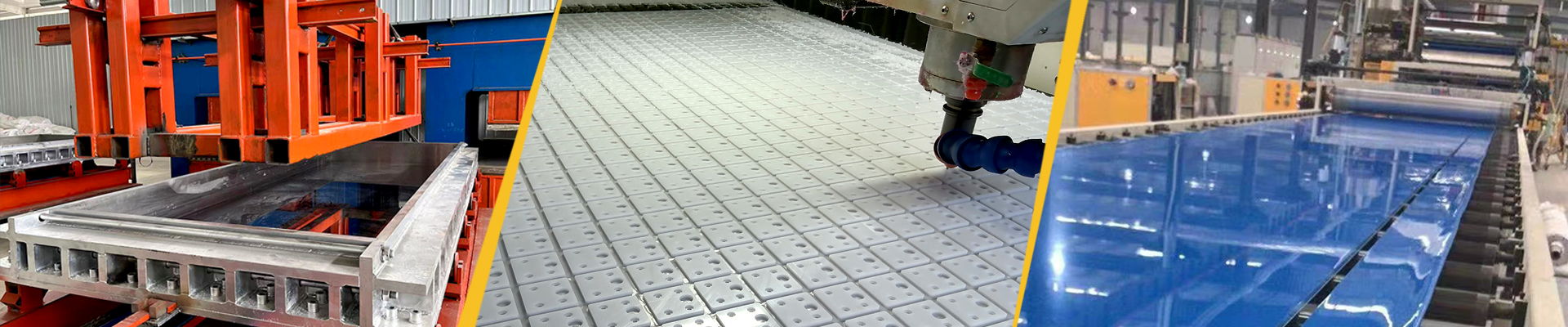
When selecting HDPE panels, consider the manufacturer's ability to tailor thickness and density to your exact needs. Guangzhou uhmw-pe co.,ltd offers extensive modification capabilities, including flame retardancy, antistatic properties, and enhanced wear resistance. Their advanced CNC machining centers and large-format sheet production lines (up to 6 meters in length) enable customized solutions for oversized components.
Quality assurance is paramount. The company adheres to ISO standards and provides third-party reports (SGS, ROHS, FDA). Rigorous testing ensures dimensional accuracy and consistent physical properties, giving customers confidence in replacing imported materials.
Practical Steps to Choose
Step 1: Define the Application Environment
Assess operating conditions: load type (static or dynamic), temperature, chemical exposure, UV resistance, and required lifespan. For outdoor use, UV-stabilized HDPE is essential.
Step 2: Determine Load Requirements
Calculate maximum expected load and distribution area. For point loads (e.g., outriggers), select thicker panels (≥20 mm) with higher density to prevent deformation.
Step 3: Evaluate Dimensional Needs
Consider panel size, allowable deflection, and installation constraints. Large panels may require thicker sections to avoid sagging.

Step 4: Consult with Experts
Engage manufacturers like Guangzhou uhmw-pe co.,ltd to leverage their engineering team's experience. They can recommend the optimal thickness-density combination based on your drawings or samples, ensuring tight tolerances and quick turnaround.
Cost-Effectiveness and Global Supply
Compared to European and American brands, HDPE panels from Guangzhou uhmw-pe co.,ltd offer competitive pricing without compromising quality. With mature logistics and export documentation, they serve clients across Southeast Asia, the Middle East, Europe, and the Americas. Their one-stop service—from material selection to finished product machining—reduces total cost of ownership.
Conclusion
Choosing the right HDPE panel involves balancing thickness and density against application-specific requirements. Thickness provides structural strength, while density influences rigidity and chemical resistance. By understanding these parameters and partnering with a reliable manufacturer like Guangzhou uhmw-pe co.,ltd, you can achieve optimal performance, durability, and cost efficiency.
For more information, visit Guangzhou uhmw-pe co.,ltd at Room 1303, No. 1068 Xingang East Road, Haizhu District, Guangzhou, Guangdong Province, China. Their team is ready to provide tailored solutions.