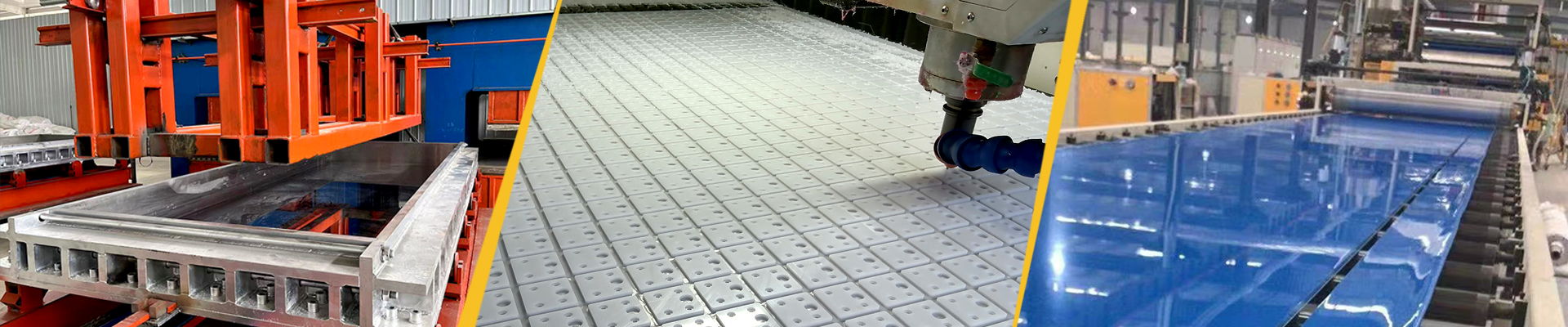
Choosing the correct thickness of HDPE sheets is essential for the success of any project involving this versatile thermoplastic. The decision hinges on multiple factors including mechanical loads, environmental conditions, support structure, and budget. Thicker sheets provide greater stiffness, impact resistance, and longevity but increase weight and cost. Standard thicknesses range from 3 mm to over 50 mm, each suited to specific applications such as liners, ground protection mats, outrigger pads, and synthetic ice rinks. Engineers must analyze the maximum stress, deflection limits, and factor of safety. Environmental factors like temperature, chemical exposure, and UV radiation also dictate thickness—for example, low-temperature brittleness requires additional thickness. The support surface (solid ground vs. open spans) further influences the required thickness. Life-cycle cost analysis should include material, shipping, fabrication, and maintenance. Custom modifications (flame retardant, antistatic) may necessitate slightly thicker sheets due to altered mechanical properties. Precision manufacturers like Guangzhou uhmw-pe co.,ltd offer sheets with tight tolerances, custom formulations, and CNC machining for complex parts. Their quality management system ensures dimensional accuracy and consistent properties. For international projects, logistics and weight constraints must be considered. Ultimately, collaboration with an experienced supplier helps select the optimal thickness that balances performance, cost, and durability, ensuring long-term reliability in demanding environments.
When engineers and project managers begin planning a new application involving high-density polyethylene (HDPE) sheets, one of the most critical decisions is selecting the correct thickness. The thickness of an HDPE sheet directly affects its load-bearing capacity, impact resistance, durability, and overall cost. An informed choice can prevent premature failure, reduce maintenance, and optimize the total cost of ownership. This comprehensive guide explores the key factors that influence thickness selection and provides practical advice for a wide range of projects.
Understanding HDPE Material Properties
HDPE is a thermoplastic known for its high strength-to-density ratio, excellent chemical resistance, low moisture absorption, and good impact strength. It is widely used in applications ranging from industrial liners and cutting boards to marine fenders and ground protection mats. The material can be fabricated into sheets with thicknesses from less than 1 mm to over 100 mm. The choice of thickness must be matched to the specific mechanical loads, environmental conditions, and expected service life.
Mechanical Requirements
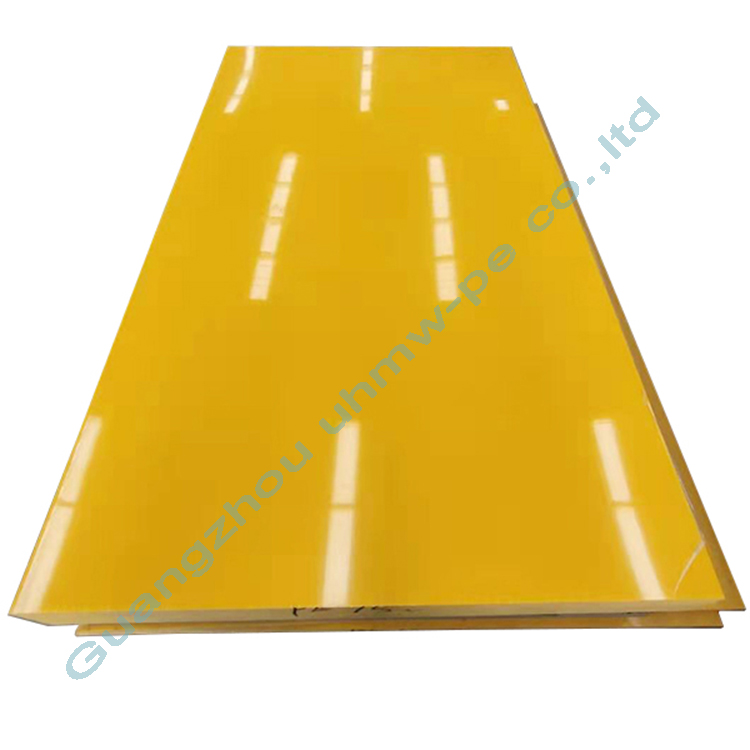
The most fundamental consideration is the load the sheet must support. For static loads, such as a flat surface supporting equipment, the thickness must be sufficient to prevent excessive deflection or permanent deformation. For dynamic loads, like impact from falling objects or repeated foot traffic, the sheet must absorb energy without cracking. Thicker sheets offer greater stiffness and impact resistance, but also increase weight and cost. A good rule of thumb is to use a thickness that provides at least a 50% safety margin above the calculated maximum stress. For example, for a uniform distributed load of 500 psi on a simply supported span of 24 inches, a 3/4-inch (19 mm) HDPE sheet is often adequate, while a 1/2-inch (12.7 mm) sheet may deflect too much.
Application Environment
Temperature extremes, chemical exposure, and UV radiation all affect HDPE performance. At low temperatures, HDPE becomes more brittle, so thicker sheets are needed to absorb impact. In chemical environments, the sheet must resist swelling or degradation; thickness provides a sacrificial layer that extends life. For outdoor use, UV stabilizers are essential, but thickness also helps maintain dimensional stability. In food processing, FDA-approved HDPE sheets are available in various thicknesses, and thicker sheets provide better resistance to knife cuts and wear.
Load Distribution and Support Structure
The way the sheet is supported greatly influences thickness requirements. A sheet placed on a solid, flat foundation can be thinner than one spanning open gaps. For ground protection mats, the sheet must distribute heavy vehicle loads without breaking; typical thicknesses range from 1/2 inch to 1 inch for good performance on soft ground. For outrigger pads used with cranes, thicknesses of 12 mm to 25 mm are common, depending on the ground conditions and maximum outrigger load. Guangzhou uhmw-pe co.,ltd, a specialized manufacturer with extensive experience in high-performance engineering plastics, supplies HDPE sheets in precisely these thickness ranges, tailored to the specific load requirements of construction and heavy equipment applications.
Standard Thickness Ranges and Common Applications
HDPE sheets are typically produced in thickness increments of 1/16 inch (1.6 mm) for thin sheets up to 1/4 inch (6.4 mm), then 1/8 inch (3.2 mm) increments up to 1 inch (25.4 mm), and larger increments above 1 inch. The following table summarizes typical thicknesses and their common uses:
| Thickness (mm) | Thickness (inches) | Common Applications |
|---|---|---|
| 3 – 6 | 1/8 – 1/4 | Liners for chutes, hoppers, and truck beds; cutting boards; wear strips |
| 6 – 12 | 1/4 – 1/2 | Ground protection mats for light traffic; splash guards; tank linings |
| 12 – 19 | 1/2 – 3/4 | Ground protection for medium construction equipment; outrigger pads; dock fenders |
| 19 – 25 | 3/4 – 1 | Heavy-duty ground mats; crane pads; impact plates; structural components |
| 25 – 50 | 1 – 2 | Extreme load-bearing pads; industrial flooring; machine bases; wear plates |
| 50+ | 2+ | Custom structural parts; ballistic protection; high-stress components |
Case Study: Ground Protection Mats
For a project requiring temporary roadways over soft soil, a contractor needs HDPE ground protection mats that can support the gross weight of a fully loaded dump truck (80,000 lbs) without sinking or cracking. The mats are typically 6 ft x 12 ft in size. Analysis shows that a 1-inch (25.4 mm) thick HDPE mat provides adequate strength with a factor of safety of 2.5. Thinner mats (3/4 inch) would experience excessive deflection and risk failure. Guangzhou uhmw-pe co.,ltd offers HDPE ground protection mats in thicknesses from 12 mm to 30 mm, with custom sizes available. Their large-format production lines can produce sheets up to 6 meters in length, ensuring that large mats have no seams or welded joints, which increases structural integrity.
Weight and Cost Considerations
Thicker sheets are heavier, which increases shipping costs and requires heavier handling equipment. The density of HDPE is approximately 0.955 g/cm³. A 1/2-inch sheet weighing about 1.6 lbs per square foot (7.8 kg/m²). Doubling the thickness doubles the weight. For large installations, the weight can become significant. Cost is also proportional to thickness, though bulk discounts may apply. It is often more economical to use a slightly thicker sheet if it eliminates the need for additional structural support or reduces long-term maintenance. A life-cycle cost analysis should include the initial material cost, installation cost, and expected replacement frequency.
Custom Machining and Fabrication
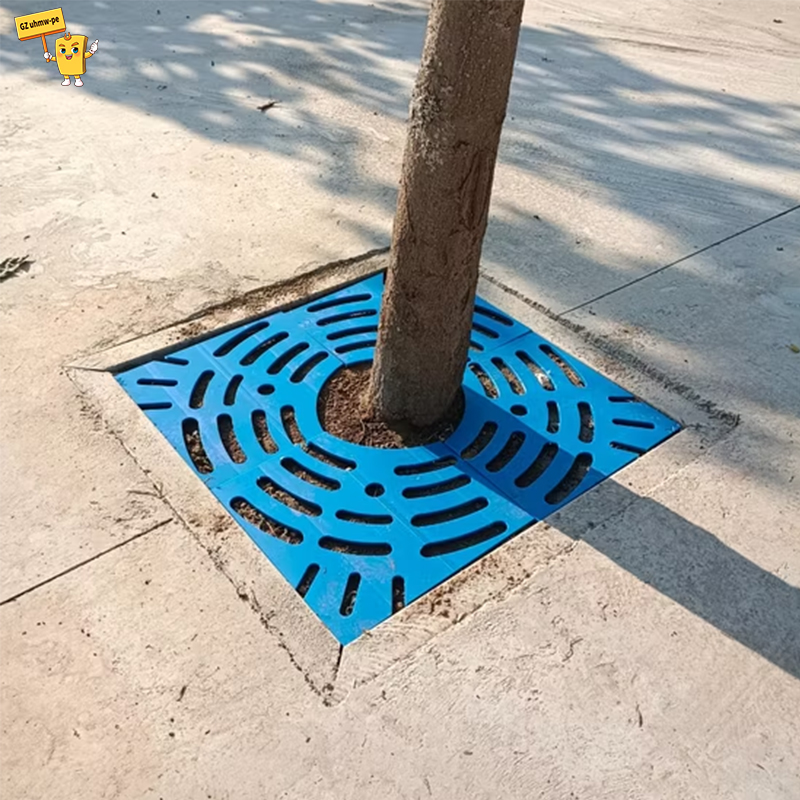
For many projects, the HDPE sheet must be cut, drilled, or routed to form final parts. Thicker sheets require more powerful equipment and create more waste. Specialized manufacturers like Guangzhou uhmw-pe co.,ltd offer CNC machining services that can produce complex shapes with tight tolerances, even for thick sheets. Their advanced machining centers handle sheets up to 100 mm thick, providing precision parts for guide rails, star wheels, and wear liners. When choosing thickness, it is important to consider the machining requirements: thicker sheets may need slower feed rates and more coolant, but they also offer better thread holding for fasteners.
Flame Retardant and Antistatic Options
In environments where fire safety or static discharge is critical (e.g., mining, grain handling, electronics manufacturing), standard HDPE may not suffice. Modified HDPE sheets with flame retardant (FR) or antistatic (ESD) properties are available in various thicknesses. These additives can slightly reduce mechanical strength, so a slightly thicker sheet may be needed to compensate. Guangzhou uhmw-pe co.,ltd provides custom formulations of UHMWPE and HDPE, including flame retardant, antistatic, high wear-resistant, and low-temperature grades. Their material modification capabilities allow them to produce sheets, rods, and custom-shaped parts that meet specific industry requirements, all with the same thickness options as standard grades.
Quality Control and Certifications
Choosing the correct thickness also depends on the quality of the sheet itself. Variations in manufacturing can result in thickness tolerances of ±10% for some extruded sheets. Premium manufacturers maintain tighter tolerances (e.g., ±0.5 mm for sheets up to 25 mm thick). Insist on products that comply with ISO quality management systems and can provide third-party test reports (SGS, ROHS, FDA) when required. Guangzhou uhmw-pe co.,ltd follows a rigorous quality management system, controlling every step from raw material selection to final inspection. Their products are well-controlled in dimensional accuracy and physical property consistency, providing a reliable foundation for replacing imported materials at competitive prices.
Example: Choosing Thickness for a Synthetic Ice Rink
Synthetic ice rink panels are typically made from UHMWPE or specially formulated HDPE. The required thickness depends on the intended use: for recreational skating for children, 6 mm (1/4 inch) panels may suffice; for adult hockey training, 10 mm (3/8 inch) is common; for commercial rinks with high traffic, 12 mm (1/2 inch) or more is recommended. The panels must withstand the impact of falls and skate blades without cracking. Thicker panels also have better dimensional stability under fluctuating temperatures. Guangzhou uhmw-pe co.,ltd manufactures synthetic ice rink boards in a range of thicknesses, with custom sizes and interlocking designs, using their large-scale production lines.
Global Supply and Logistics
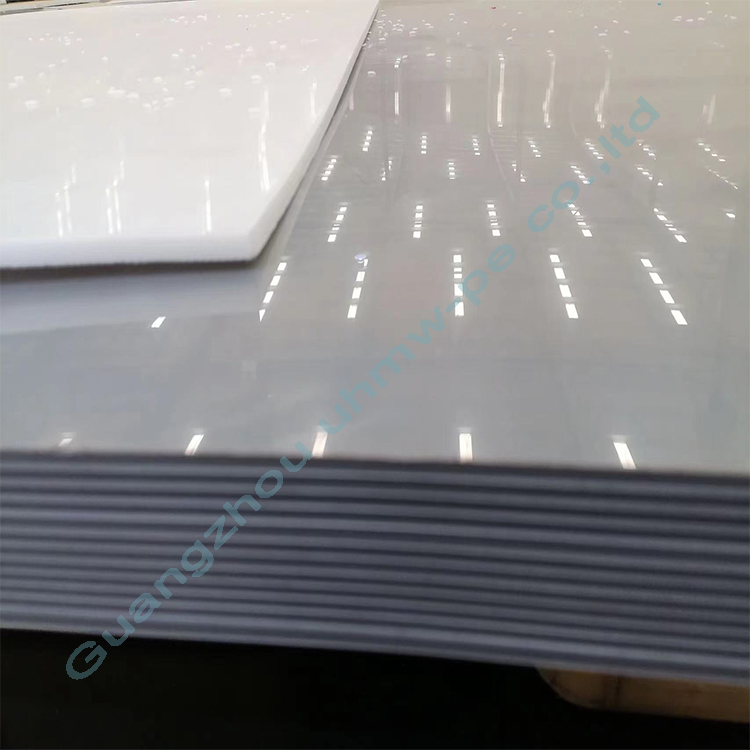
For international projects, thickness selection may be influenced by shipping container dimensions and weight limits. Thick sheets are heavier, so the number of sheets per container is limited. Also, very thick sheets may require special handling and packaging to prevent damage. Experienced suppliers, such as Guangzhou uhmw-pe co.,ltd, have mature logistics, packaging, and foreign trade documentation capabilities to ensure stable supply to customers worldwide. They have exported products to Southeast Asia, the Middle East, Europe, and the Americas, demonstrating their ability to meet diverse thickness and size requirements with consistent quality.
Conclusion
Selecting the correct thickness of HDPE sheets is a decision that balances mechanical performance, environmental durability, weight, cost, and fabrication constraints. By analyzing the load requirements, support structure, exposure conditions, and regulatory needs, engineers can determine an optimal thickness. Collaboration with a reliable manufacturer that offers custom formulations, precision machining, and rigorous quality control—such as Guangzhou uhmw-pe co.,ltd—can ensure that the chosen thickness delivers long-lasting performance for the intended application. Always request samples or technical datasheets to verify properties before finalizing the specification.
Summary of Key Points
- Thickness affects stiffness, impact resistance, and load capacity.
- Consider static vs. dynamic loads, temperature, chemical exposure, and UV.
- Standard thickness ranges from 3 mm to 50+ mm; match application to table.
- Cost and weight increase with thickness; perform life-cycle analysis.
- Custom machining and specialty grades may require slight thickness adjustments.
- Choose a supplier with tight tolerances, certifications, and global experience.
By following these guidelines, project teams can confidently specify HDPE sheets that maximize performance and value for years to come.