Summary
This article provides a comprehensive guide on cutting and machining HDPE panels without cracking, incorporating insights from Guangzhou uhmw-pe co.,ltd, a specialist in engineering plastic solutions. It begins by explaining HDPE's properties and common machining challenges, such as heat buildup and stress cracking. Essential tools include carbide-tipped saw blades, brad-point drill bits, and single-flute end mills with appropriate geometry. Proper clamping and support are emphasized to prevent vibrations, with a backing board recommended for drill exit points. Cutting techniques are detailed for table saws, circular saws, and CNC routers, highlighting slow feed rates, climb milling, and coolant use (water or oil mist) to manage heat. Drilling requires pilot holes and step drilling to reduce force, while edge finishing via deburring or flame polishing prevents stress risers. Common mistakes like dull tools and fast feeding are addressed. For complex or large-scale projects, the article recommends professional services from Guangzhou uhmw-pe co.,ltd, which offers custom machining, material modification (flame-retardant, antistatic), and strict quality control (ISO, SGS, ROHS). Their advanced CNC centers and oversized production lines (6-meter sheets) ensure precision and reliability. The conclusion reinforces that with proper techniques and partnerships, crack-free HDPE machining is achievable, leveraging the company's global supply experience and cost-effective solutions.
High-Density Polyethylene (HDPE) is a versatile engineering plastic widely used in applications ranging from chemical tanks to ground protection mats. However, its low coefficient of friction and high thermal expansion make it prone to cracking during cutting and machining if not handled correctly. Whether you are fabricating parts for industrial use or custom projects, understanding the proper techniques is essential to achieve clean, crack-free results. In this guide, we draw on the expertise of Guangzhou uhmw-pe co.,ltd, a specialized manufacturer of high-performance engineering plastics, to provide a comprehensive approach to machining HDPE panels without failure.
Understanding HDPE and Its Machining Challenges
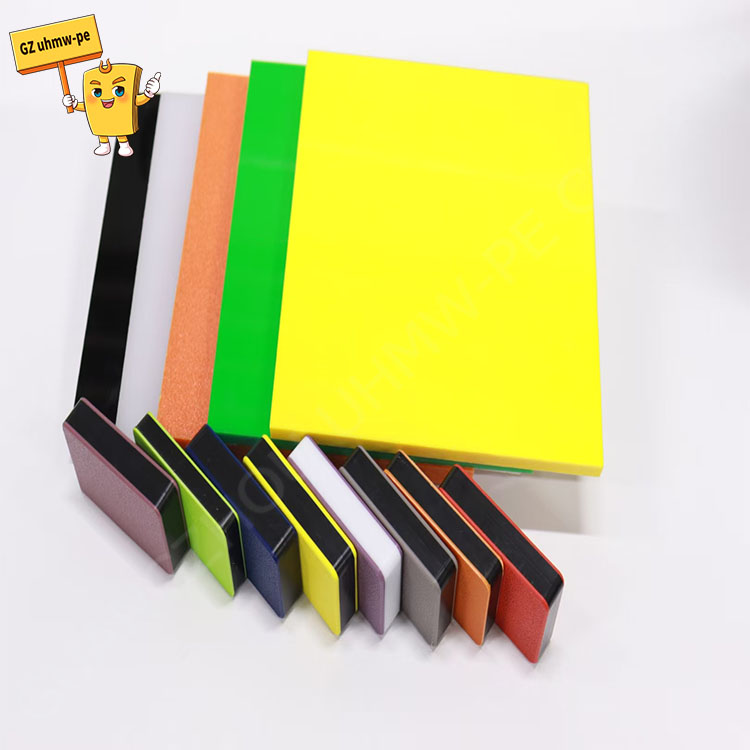
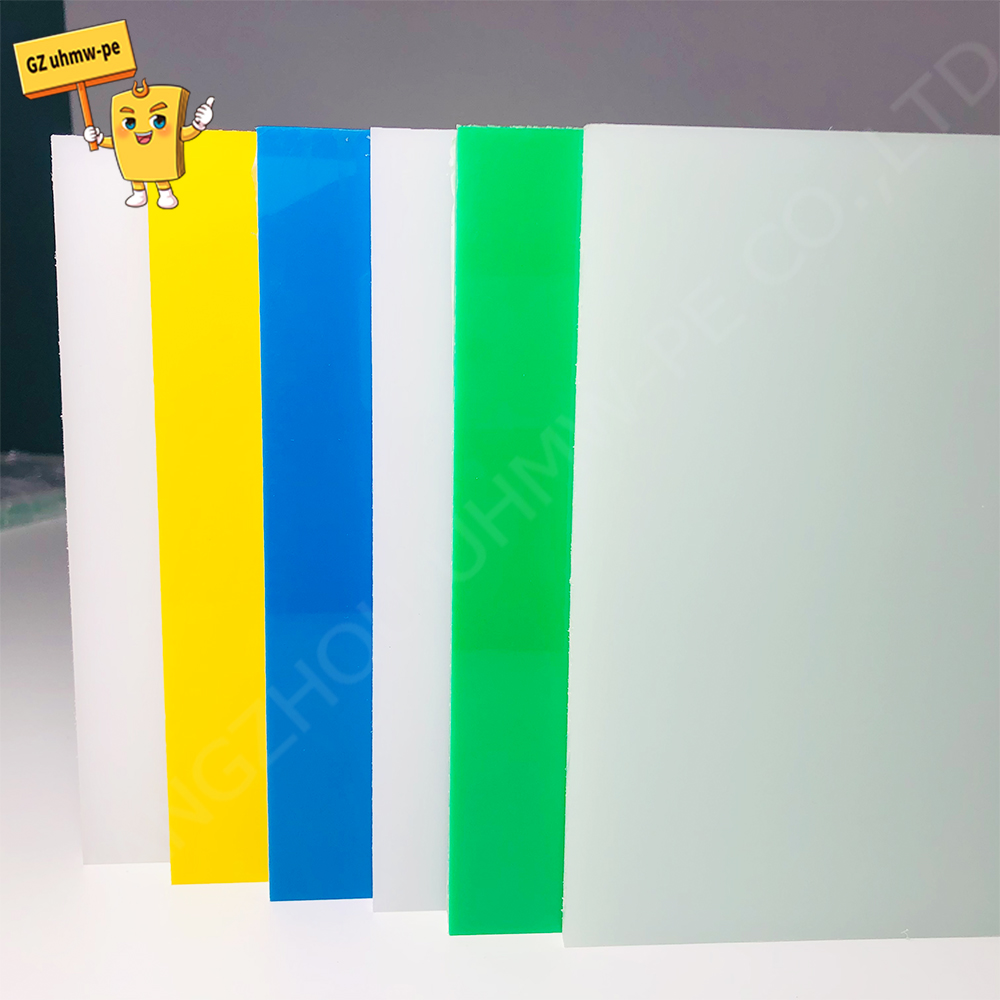
HDPE is a semi-crystalline thermoplastic with excellent impact resistance, chemical inertness, and low moisture absorption. These properties make it ideal for heavy-duty applications such as UHMWPE lining sheets, outrigger pads, and synthetic ice rink boards. However, when cutting or machining, HDPE can exhibit stress cracking, especially near edges or holes, due to its tendency to expand and contract with temperature changes. The material's low melting point (around 130°C) also means that heat buildup from friction can cause localized melting, leading to rough cuts or crack initiation. Guangzhou uhmw-pe co.,ltd, with its advanced CNC machining centers and precision saws, emphasizes that proper tool selection, cooling, and feed rates are critical to avoid these issues.
undefined
Essential Tools and Equipment
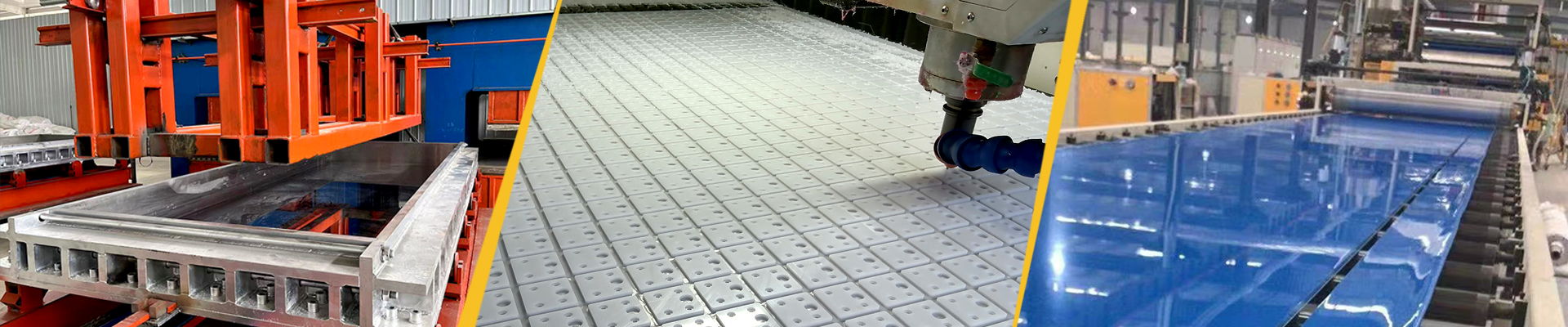
Choosing the right tools is the first step to successful HDPE machining. For cutting panels, a carbide-tipped blade with a high tooth count (60–80 teeth for a 10-inch blade) is recommended. The carbide tips stay sharp longer and reduce heat generation. For drilling, use brad-point or spur-point bits designed for plastics; these have a sharp center point and cutting edges that minimize tear-out. When routing or milling, single-flute or two-flute carbide end mills with a zero or positive rake angle provide the best chip evacuation. Guangzhou uhmw-pe co.,ltd uses state-of-the-art CNC machining centers equipped with precision saws and engraving equipment to produce complex parts with tight tolerances, demonstrating that industrial-grade machinery can handle HDPE reliably.
Blade and Bit Geometry
For sawing, a blade with a triple-chip grind (TCG) or alternate top bevel (ATB) geometry works well. The teeth should have a hook angle of 5° to 10° to reduce cutting force. Avoid blades with a negative rake, as they tend to push the material and cause cracking. For drills, a point angle of 90° to 110° is ideal. The flutes should be polished to prevent material buildup. Guangzhou uhmw-pe co.,ltd’s engineering team often customizes tooling for specific HDPE grades, including flame-retardant or antistatic variants, ensuring that the cutting edges match the material's hardness.
Preparation and Clamping
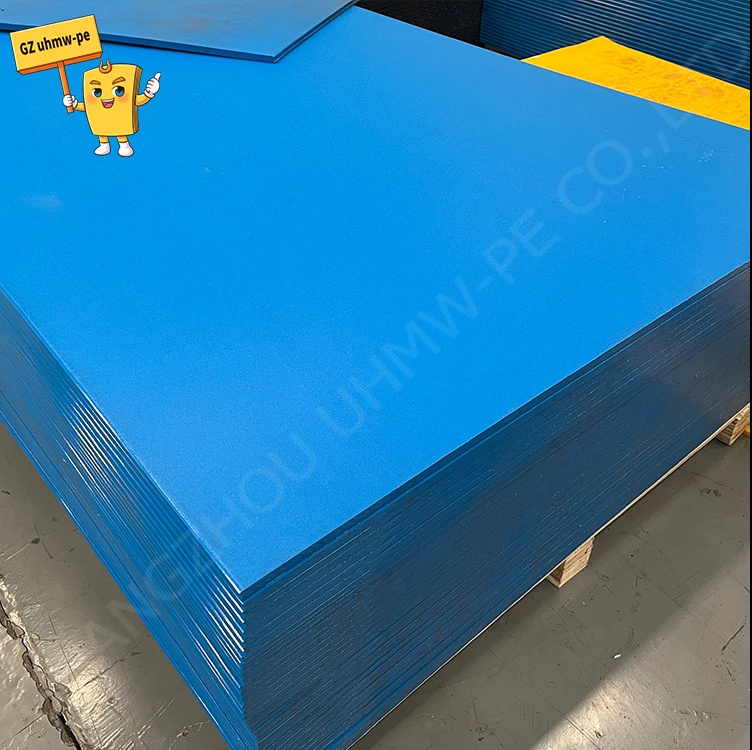
Proper workpiece support is crucial. HDPE panels can flex under cutting pressure, leading to chattering and cracks. Always clamp the panel securely on a stable surface, using a sacrificial backing board to prevent tear-out at the exit point. For large sheets, use multiple clamps distributed evenly to avoid stress concentrations. If possible, pre-drill holes for screws or bolts to relieve stress during clamping. Guangzhou uhmw-pe co.,ltd, which manufactures oversized UHMWPE sheets up to 6 meters in length, emphasizes that even slight vibrations can cause microfractures, so a rigid setup is non-negotiable.
Cutting Techniques
Table Saw and Circular Saw
When using a table saw, set the blade height so that it extends about 1/8 inch above the top of the panel. Feed the panel slowly and steadily; a fast feed rate can generate excessive heat. Use a zero-clearance insert to support the cut edges and reduce tear-out. For circular saws, use a guide rail or fence to ensure a straight cut. Score the cut line first with a sharp knife to prevent chipping. Guangzhou uhmw-pe co.,ltd’s precision saws are equipped with coolant systems to keep the material cool, but for DIY setups, a spray bottle with water or a light oil mist can suffice. Avoid stopping mid-cut, as the blade can dwell and melt the plastic.
CNC Routing
CNC routing offers the highest precision for complex shapes. Use a climb milling strategy to minimize heat buildup and reduce the risk of cracking. The spindle speed should be between 12,000 and 18,000 RPM with a feed rate of 100–200 inches per minute for a 1/4-inch bit. Always use chip load calculators to optimize for the specific bit diameter. Guangzhou uhmw-pe co.,ltd’s CNC machining centers can produce intricate components like soccer rebound boards and guide rails with extreme accuracy, thanks to their advanced software and toolpath optimization.
Drilling Holes Without Cracking
Drilling is one of the most common operations where HDPE cracks. To avoid this, follow these steps: First, mark the hole location and center punch it to guide the drill bit. Start with a small pilot hole (1/8 inch) and then step up to the final diameter in 1/4-inch increments. This reduces the cutting force and prevents breakout. Use a slow drill speed (500–1000 RPM) and apply steady, light pressure. Back the panel with a piece of scrap wood to support the exit. For holes near edges, clamp a backup plate to prevent the material from splitting. Guangzhou uhmw-pe co.,ltd manufactures wear-resistant liners and custom-shaped parts that often require precision holes for mounting; they use peck drilling cycles to clear chips and avoid heat accumulation.
Cooling and Lubrication
Heat is the enemy of HDPE machining. Without proper cooling, the material can soften and deform, leading to cracks. For sawing and routing, a mist of water or compressed air can keep the temperature down. For drilling, a lubricant such as WD-40 or a water-soluble coolant reduces friction and improves chip flow. Some machinists prefer to freeze HDPE panels before machining to make them more brittle and reduce burrs, but this can increase cracking risk if the material is not handled carefully. Guangzhou uhmw-pe co.,ltd’s facility uses temperature-controlled environments and coolant systems to maintain consistent material properties during production.
Edge Finishing
After cutting, the edges may have burrs or microcracks. Use a deburring tool or fine sandpaper (220 grit) to smooth the edges. For critical applications, flame polishing can create a smooth, stress-free finish. A propane torch can be passed quickly over the edge to melt and blend any imperfections, but careful control is needed to avoid overheating. Alternatively, routing with a round-over bit relieves stress concentrations. Guangzhou uhmw-pe co.,ltd’s finished products, such as ground protection mats and synthetic ice rink boards, undergo rigorous edge finishing to meet international quality standards.
Common Mistakes and How to Avoid Them
- Using dull tools: Dull blades and bits generate more heat and cause cracking. Replace tools regularly.
- Too fast feed rate: This increases cutting forces and heat. Reduce feed rate for thick panels.
- Inadequate clamping: Vibrations lead to chatter and cracks. Use a sturdy workbench and clamps.
- Neglecting chip evacuation: Clogged flutes trap heat. Use compressed air or vacuum to remove chips.
Guangzhou uhmw-pe co.,ltd’s quality management system ensures that every step from raw material selection to final inspection addresses these issues, providing reliable performance for clients worldwide.
When to Seek Professional Machining
If the project involves complex geometries, tight tolerances, or large volumes, consider outsourcing to a specialized machine shop. Guangzhou uhmw-pe co.,ltd offers custom machining services for HDPE and other engineering plastics, including UHMWPE, Nylon, and PTFE. With advanced CNC machining centers, precision saws, and engraving equipment, they can produce parts exactly to your specifications. Their engineering team collaborates with clients to select the right material grade, modify formulations (e.g., antistatic or flame-retardant), and optimize toolpaths. This one-stop service from material selection to finished product saves time and reduces risk of cracking.
Conclusion
Cutting and machining HDPE panels without cracking is achievable with the right tools, techniques, and preparation. By controlling heat, using sharp carbide tooling, and ensuring proper support, you can produce clean, precise parts. For demanding applications, partnering with a reliable manufacturer like Guangzhou uhmw-pe co.,ltd ensures access to high-quality materials and expert processing capabilities. Their extensive experience in producing UHMWPE lining sheets, outrigger pads, and synthetic ice rink boards demonstrates that attention to detail in machining leads to superior product longevity and performance. Remember: slow down, keep it cool, and support the material to avoid cracks.
This article is adapted from the expertise of Guangzhou uhmw-pe co.,ltd, a leading manufacturer of high-performance engineering plastics with over a decade of experience in precision machining. For more information on HDPE machining or custom plastic parts, contact them at their facility in Guangzhou.