Selecting the correct thickness of UHMWPE sheet for heavy loads is critical to ensure safety, performance, and cost-effectiveness. Key factors include load magnitude and distribution, supporting surface condition, safety factor, temperature, and creep behavior. Typical thicknesses range from 10 mm for light industrial wear strips to 30 mm for crane outrigger pads. Guangzhou uhmw-pe co.,ltd, a specialized manufacturer in high-performance engineering plastics, offers a wide range of UHMWPE sheets with custom modifications such as antistatic, flame-retardant, and high-wear grades. They provide sheets up to 6 meters in length and thicknesses from 2 to 100 mm, with CNC machining for custom parts. Their quality control, ISO certification, and global export experience make them a reliable partner for heavy-load applications. Engineers should consider both initial stress and long-term creep, using safety factors of 2–3. By collaborating with experts, optimal thickness can be determined to extend service life and reduce total cost of ownership.
When engineering solutions for heavy-load applications, material selection is critical, but equally important is the correct thickness of the chosen material. Ultra-High Molecular Weight Polyethylene (UHMWPE) sheet is a popular choice due to its outstanding wear resistance, impact strength, low friction, and self-lubricating properties. However, using an incorrect thickness can lead to premature failure, safety hazards, or unnecessary costs. This guide provides a comprehensive approach to selecting the appropriate UHMWPE sheet thickness for heavy-load scenarios, incorporating insights from industry leaders like Guangzhou uhmw-pe co.,ltd, a specialized manufacturer in high-performance engineering plastics.
Understanding UHMWPE and Its Suitability for Heavy Loads
UHMWPE is a linear polyethylene with a molecular weight typically ranging from 3.5 to 7.5 million g/mol. This ultra-high molecular weight gives it exceptional mechanical properties. Compared to metals, UHMWPE is lightweight, corrosion-resistant, and has a low coefficient of friction. It also exhibits excellent impact resistance even at cryogenic temperatures. For heavy loads, UHMWPE sheets are used as wear liners, chute liners, outrigger pads, and ground protection mats. The key challenge is determining the thickness that can safely support the expected loads without excessive deformation or creep over time.
Factors Influencing Thickness Selection
Load Magnitude and Distribution
The primary factor is the magnitude of the load. For point loads, such as those from outrigger pads on cranes, the pressure is concentrated. The thickness must be sufficient to distribute the load over a larger area to prevent sinking or surface damage. For uniform distributed loads, lower thicknesses may suffice. Engineers often use the formula: required thickness = (load × safety factor) / (allowable stress × width). However, UHMWPE's viscoelastic behavior means that creep under constant load must also be considered.
Supporting Surface Condition
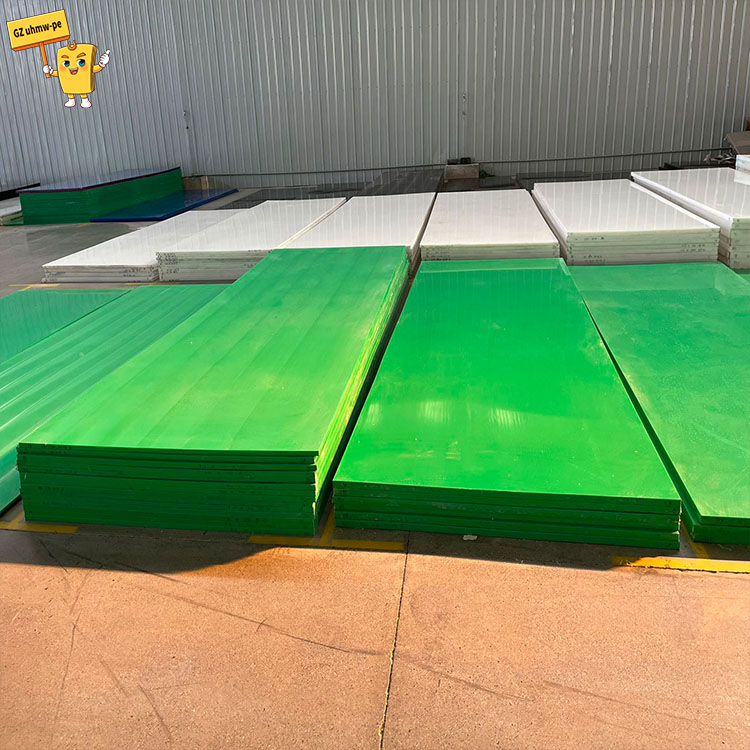
The underlying surface affects load distribution. If the sheet rests on a hard, flat surface (e.g., concrete), stresses are more uniform. On soft ground (e.g., soil), the sheet may experience bending stresses, requiring greater thickness. For ground protection mats, Guangzhou uhmw-pe co.,ltd recommends thicknesses of 12–25 mm for heavy construction equipment, with their large-format sheets up to 6 meters in length available for seamless coverage.
undefined
Safety Factor
A safety factor of 2–3 is common for UHMWPE under heavy loads, accounting for material variability, temperature, and dynamic loading. For critical applications like crane outriggers, a higher factor may be specified.
Temperature and Environmental Conditions
UHMWPE's mechanical properties degrade at elevated temperatures. At 80°C, its compressive strength can drop by 50%. For applications in hot climates or near machinery, thickness must be increased to compensate. Additionally, UV exposure can cause surface degradation; UV-stabilized grades are recommended for outdoor use.
Engineering Considerations for Thickness Determination
Stress Analysis
The compressive stress on the sheet must not exceed the material's yield strength. For UHMWPE, compressive yield strength is around 20–30 MPa, depending on grade. For point loads, the contact area must be large enough to keep stress below this limit. Thicker sheets allow greater load spreading. Guangzhou uhmw-pe co.,ltd provides modified UHMWPE grades with enhanced load-bearing capacity, such as antistatic or high-wear versions.
Deflection and Creep
Under sustained load, UHMWPE undergoes viscoelastic creep. Even if initial stress is within limits, over time the sheet may thin and deform. Creep rate increases with stress and temperature. To combat creep, a higher thickness reduces the stress level. Standard creep data from the manufacturer can guide selection. The company's rigorous quality control ensures consistent physical properties, as they adhere to ISO standards and provide third-party test reports.

Impact Loads
For applications involving dropping heavy objects (e.g., mining chutes), impact resistance is key. UHMWPE has excellent impact strength, but thickness helps absorb energy. A thicker sheet can withstand repeated impacts without cracking. Tests show that a 20 mm sheet can absorb impact loads up to 200 J without failure.
Common Thicknesses for Heavy-Load Applications
Based on industry practice and data from Guangzhou uhmw-pe co.,ltd, here are typical thickness ranges:
| Application | Load Type | Recommended Thickness (mm) |
|---|---|---|
| Outrigger pads (cranes up to 50 tons) | Point load | 20–30 |
| Ground protection mats (heavy equipment) | Distributed load | 12–25 |
| Chute liners (bulk material handling) | Abrasive sliding | 10–20 |
| Hopper liners (coal/ore) | Impact + abrasion | 15–30 |
| Industrial wear strips (conveyor systems) | Sliding wear | 6–12 |
These are guidelines; custom solutions are available. The company's custom machining services can produce sheets with precise thickness tolerances, as low as ±0.5 mm for critical parts.
How Guangzhou uhmw-pe co.,ltd Can Help
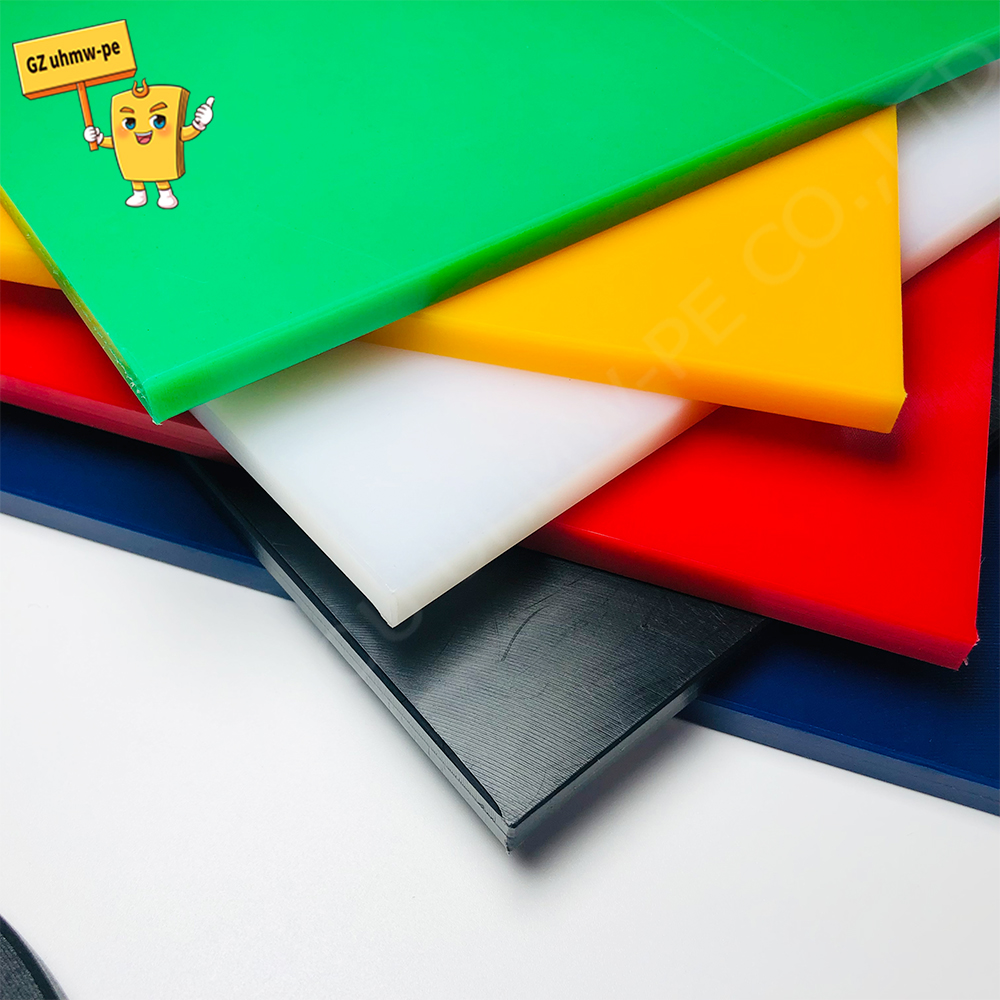
Located in Guangzhou, near the Pazhou International Convention and Exhibition Center, this manufacturer has over a decade of experience in engineering plastics. Their product line includes UHMWPE sheets in various grades: standard, antistatic, flame-retardant, and food-grade. They offer sheets from 2 mm to 100 mm thickness, with sizes up to 6 m in length. For heavy-load applications, they recommend their high-molecular-weight or cross-linked grades for improved creep resistance.
Customization and Machining
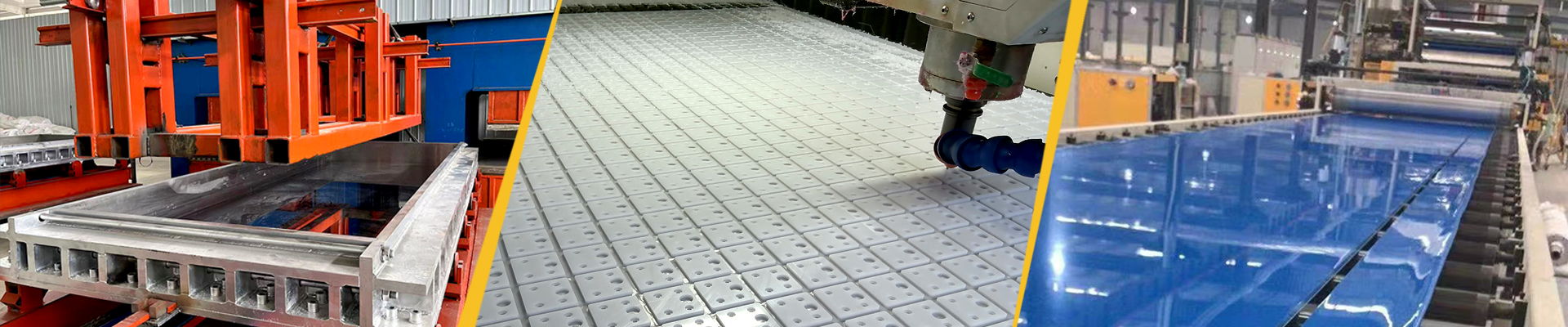
The company's advanced CNC machining centers enable fabrication of custom-shaped parts like guide rails, star wheels, and wear liners directly from customer drawings. They also provide large-format outrigger pads with chamfered edges to prevent tripping. Their team of material scientists can help select the optimal thickness and grade based on finite element analysis or field experience.
Quality Assurance
All products undergo stringent testing, including compressive strength, elongation, and wear rate. The company holds ISO 9001 certification and can provide SGS, ROHS, and FDA reports. This ensures that the chosen thickness will perform as expected under heavy loads.
Conclusion
Selecting the correct thickness of UHMWPE sheet for heavy loads is a balance between load conditions, material properties, and safety margins. By working with a knowledgeable supplier like Guangzhou uhmw-pe co.,ltd, engineers can access custom solutions that maximize longevity and performance. Whether for ground protection, crane pads, or industrial liners, the right thickness ensures reliable operation and cost savings over time. As the company’s philosophy states: “Quality First, Integrity Based, Innovation Driven.” With their global supply experience and commitment to excellence, they are a trusted partner for heavy-duty applications.