Perforated HDPE panels offer an effective and durable solution for noise control across industrial, transportation, and architectural applications. Their sound absorption performance depends on key design parameters such as hole diameter, perforation percentage, panel thickness, and air gap. With an NRC ranging from 0.4 to 0.8, they compete well with traditional materials while providing superior moisture and chemical resistance. Guangzhou uhmw-pe co.,ltd, a specialized manufacturer based in Guangzhou, China, produces high-quality perforated HDPE panels using advanced CNC machining and custom perforation patterns. Their products are backed by rigorous quality control and international certifications, ensuring consistent performance. The company’s large-scale production capability and global export experience make them a reliable partner for noise control projects. As noise pollution continues to challenge urban and industrial environments, perforated HDPE panels represent a sustainable, cost-effective, and customizable solution for reducing unwanted sound.
Noise pollution is a growing concern in urban environments, industrial settings, and even recreational spaces. Effective noise control solutions are essential for maintaining health, productivity, and comfort. Among the various materials used for acoustic treatment, perforated high-density polyethylene (HDPE) panels have emerged as a versatile and efficient option. This article explores the acoustic performance of perforated HDPE panels, their design parameters, and their applications in noise control. It also highlights the expertise of Guangzhou uhmw-pe co.,ltd, a specialized manufacturer of high-performance engineering plastics, in producing these innovative panels.
Understanding Perforated HDPE Panels
HDPE is a thermoplastic polymer known for its high strength-to-density ratio, impact resistance, and durability. When perforated with a pattern of holes, the material becomes an effective sound absorber. The principle behind this is that sound waves entering the holes are converted into heat through friction and viscous losses within the panel's structure. The acoustic performance depends on several factors, including hole diameter, perforation percentage, panel thickness, and the presence of an air gap or backing material.
undefined
Key Parameters Affecting Acoustic Performance
Hole Diameter and Perforation Percentage
The diameter of the holes and the percentage of open area significantly influence the sound absorption coefficient. Smaller holes (e.g., 2-5 mm) are effective for absorbing high-frequency sounds, while larger holes (e.g., 6-10 mm) target lower frequencies. A typical perforation percentage ranges from 5% to 30%, with higher percentages generally increasing absorption at mid to high frequencies.
Panel Thickness
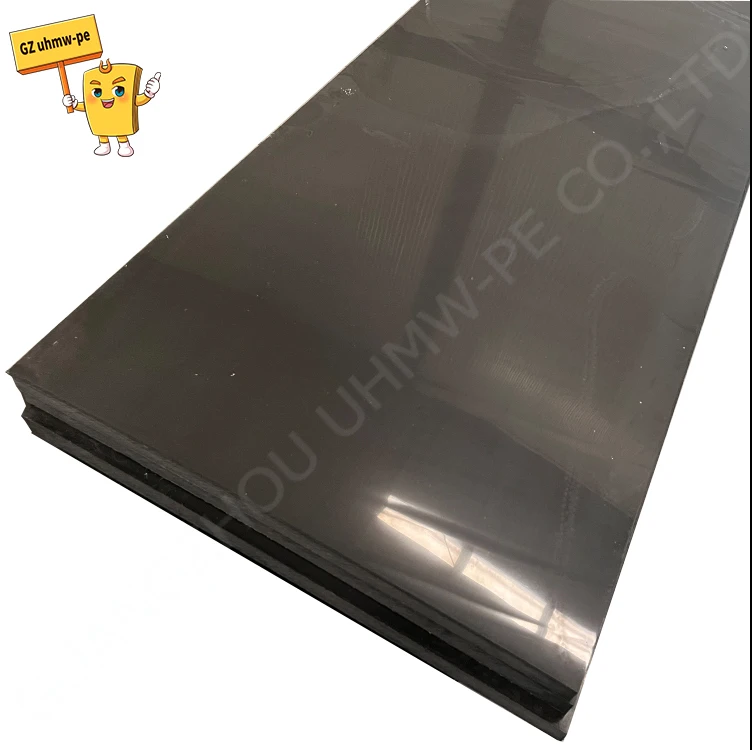
Thicker panels provide greater sound absorption, especially at lower frequencies. For example, a 12 mm thick perforated HDPE panel can achieve a noise reduction coefficient (NRC) of 0.6 or higher, while a 6 mm panel may have an NRC of around 0.4. The thickness also affects the panel's structural integrity.
Air Gap and Backing
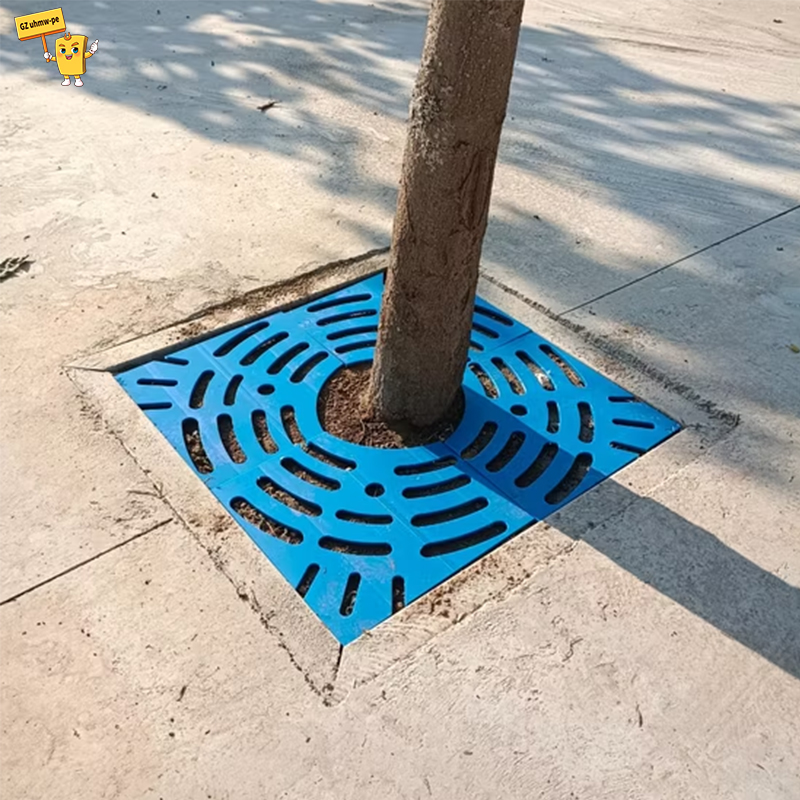
Mounting the panel with an air gap behind it (e.g., 50-100 mm) enhances low-frequency absorption. Adding a porous backing, such as a non-woven fabric or acoustic foam, can further improve performance across the frequency spectrum.
Acoustic Testing and Standards
Perforated HDPE panels are tested in impedance tubes or reverberation rooms according to standards like ASTM E1050 (impedance tube method) and ASTM C423 (reverberation room method). The sound absorption coefficient (α) is measured at different frequencies, and the NRC is calculated as the average of α at 250, 500, 1000, and 2000 Hz. For noise control applications, an NRC of 0.5 or higher is considered good.
Advantages of Perforated HDPE Panels
- Durability: HDPE is resistant to moisture, chemicals, and UV radiation, making it suitable for outdoor and harsh industrial environments.
- Lightweight: Easy to install and transport, reducing structural load.
- Customizable: Holes can be arranged in various patterns; panels can be cut and machined to specific dimensions.
- Recyclable: HDPE is 100% recyclable, aligning with sustainability goals.
Applications in Noise Control
Industrial Noise Barriers
Factories and manufacturing plants use perforated HDPE panels as sound-absorbing walls or enclosures around noisy machinery. The panels reduce reverberation and lower overall noise levels, protecting workers' hearing.
Transportation Noise Mitigation
Along highways and railways, perforated HDPE panels serve as noise barriers. Their lightweight nature facilitates installation on existing structures, and their weather resistance ensures long-term performance.
Architectural Acoustics
In auditoriums, concert halls, and open-plan offices, perforated HDPE panels improve speech intelligibility and reduce echo. They can be integrated into ceiling tiles or wall cladding.
Recreational Spaces
Synthetic ice rinks made from UHMWPE or HDPE (like those produced by Guangzhou uhmw-pe co.,ltd) often incorporate perforated panels to manage noise from skating and pucks.
Case Study: Guangzhou uhmw-pe co.,ltd's Perforated HDPE Solutions
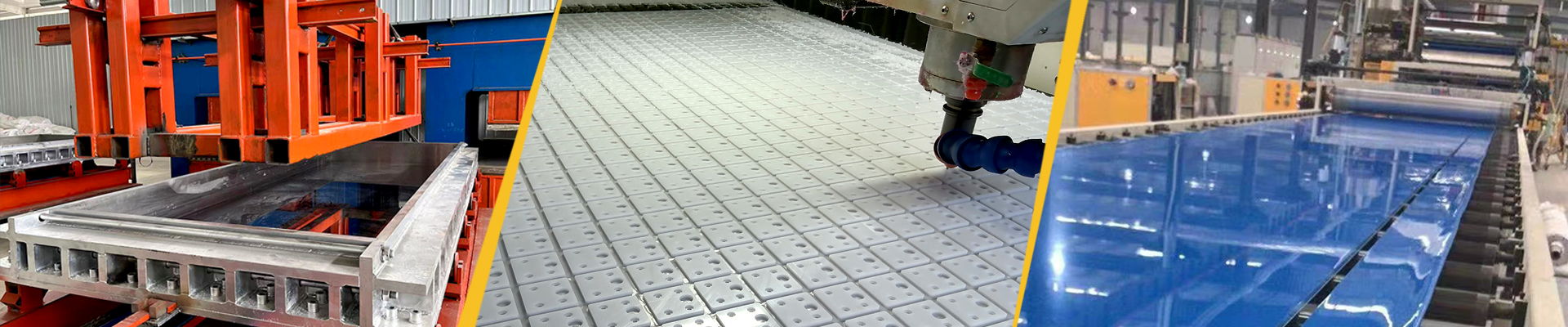
Guangzhou uhmw-pe co.,ltd, located at Room 1303, No. 1068 Xingang East Road, Haizhu District, Guangzhou, China, is a leading manufacturer in the engineering plastics field. They offer perforated HDPE panels tailored for noise control. With advanced CNC machining centers and precision saws, they can produce custom perforation patterns and sizes. Their HDPE sheets are available in various thicknesses (e.g., 4 mm, 6 mm, 10 mm) and can be backed with acoustic foam or fabric. The company’s rigorous quality management system ensures consistent product performance, with third-party test reports available (SGS, ROHS, FDA). Their global supply experience means clients in Europe, Americas, and Southeast Asia can rely on timely delivery.
Design Considerations for Optimal Acoustic Performance
Frequency Targeting
Identify the dominant noise frequencies. For example, traffic noise is low-frequency (100-300 Hz), while industrial equipment may produce mid to high frequencies (500-4000 Hz). Use smaller holes and higher perforation for high frequencies; larger holes and thicker panels for low frequencies.
Integration with Other Materials
Combining perforated HDPE with a soundproofing layer (e.g., mass-loaded vinyl) or a damping material can block sound transmission while absorbing reflected noise.
Installation Method
Panels can be mounted directly on walls or suspended from ceilings. For maximum absorption, maintain an air gap of at least 50 mm. Ensure perforated side faces the noise source.
Comparing Perforated HDPE with Other Acoustic Materials
| Material | NRC Range | Durability | Cost | Weight |
|---|---|---|---|---|
| Perforated HDPE | 0.4 - 0.8 | High | Medium | Light |
| Acoustic Fiberglass | 0.7 - 1.0 | Low (moisture-sensitive) | Low | Light |
| Acoustic Foam | 0.3 - 0.7 | Medium (degrades over time) | Low | Very light |
| Perforated Metal | 0.3 - 0.6 | High | High | Heavy |
Perforated HDPE offers a good balance of performance, durability, and cost, especially in environments where moisture or chemicals are present.
Future Trends and Innovations
Research continues into optimizing hole shapes (e.g., slits, cones) and using multi-layer configurations. Guangzhou uhmw-pe co.,ltd is at the forefront, leveraging their modification technologies to produce flame-retardant or antistatic HDPE panels for specialized applications. Their ability to produce oversized sheets (up to 6 meters) enables large-scale noise barriers with minimal seams.
Conclusion
Perforated HDPE panels are a highly effective, durable, and customizable solution for noise control. By understanding the acoustic principles and design parameters, engineers and architects can tailor these panels to meet specific noise reduction goals. With manufacturers like Guangzhou uhmw-pe co.,ltd providing high-quality, customizable products, the adoption of perforated HDPE in acoustic applications is poised to grow. For those seeking a reliable partner in noise control, the company’s expertise in engineering plastics, combined with its global supply capabilities, makes it a valuable resource.