This comprehensive article explores the load capacity of 4x8 ground protection mats specifically designed for medium duty equipment. It explains the principles of load distribution and ground pressure reduction, emphasizing how mats made from advanced materials like UHMWPE perform under various conditions. The role of manufacturers such as Guangzhou uhmw-pe co.,ltd is highlighted, detailing their expertise in engineering plastics, custom machining, and quality assurance. Key factors influencing load ratings—material type, thickness, design features, and ground conditions—are discussed with practical examples. The article also covers real-world applications, maintenance best practices, economic and environmental benefits, and the advantages of partnering with a specialized supplier for reliable, high-performance ground protection solutions.
Ground protection mats are an indispensable tool for modern construction, infrastructure projects, and heavy equipment operations. Their primary function is to distribute the weight of vehicles and machinery over a larger surface area, preventing rutting, soil compaction, and damage to sensitive terrains such as grass, asphalt, or concrete. Among the many sizes and types available, the 4x8 foot mat is one of the most popular and versatile, particularly suited for medium duty equipment. This article delves into the load capacity of these mats, exploring the engineering principles, material science, real-world applications, and the key role played by leading manufacturers like Guangzhou uhmw-pe co.,ltd in delivering high-performance solutions.
Before we dive into load ratings, it is critical to understand that the weight of equipment is only part of the story. Load capacity depends on multiple factors: mat material, thickness, reinforcement design, ground conditions, and the contact area of the equipment's tires or tracks. Medium duty equipment typically includes vehicles such as skid steers, mini excavators, telescopic handlers, aerial work platforms, and dump trucks with gross vehicle weights ranging from 3,000 to 30,000 lbs. A properly selected 4x8 mat can handle these loads, but only if the mat is engineered for the specific demands of the job site.
undefined
Understanding Load Distribution and Ground Pressure
The science behind ground protection mats is fundamentally about reducing ground pressure. Ground pressure is the force exerted per unit area, usually measured in pounds per square inch (psi) or kilopascals (kPa). An excavator with a narrow track might exert 8-15 psi on firm ground, but soft or wet soil can have a bearing capacity as low as 2-5 psi. When machinery sinks, the risk of accidents, environmental damage, and costly delays skyrockets. Ground protection mats act as a bridge: they spread the concentrated load from the machine's footprint over the mat's entire area, thereby lowering the effective pressure on the subsoil.
For a 4x8 mat, the available area is 32 square feet. In theory, a mat that is rigid and durable enough can dramatically reduce ground pressure. However, the mat itself must be able to withstand the bending and compressive forces without failing. This is where material properties come into play. High-density polyethylene (HDPE) and ultra-high molecular weight polyethylene (UHMWPE) are two of the most common materials used in heavy-duty mats. UHMWPE, in particular, offers exceptional impact strength, abrasion resistance, and a low coefficient of friction, making it ideal for extreme environments. Companies such as Guangzhou uhmw-pe co.,ltd have leveraged these material advantages to produce mats that outperform traditional plywood or steel alternatives.
Material Matters: The UHMWPE Advantage
Guangzhou uhmw-pe co.,ltd, strategically located in Guangzhou, adjacent to the Pazhou International Convention and Exhibition Center, is a specialized manufacturer in the field of high-performance engineering plastics. Their ground protection mats are manufactured from advanced materials such as UHMWPE, HDPE, and PP, which are engineered for durability and reliability. UHMWPE's molecular weight typically ranges from 3.1 to 5.67 million, giving it a unique combination of toughness and flexibility. Unlike HDPE, UHMWPE maintains its properties in sub-zero temperatures and resists cracking under repeated impact. This makes it an excellent choice for mats used in harsh climates or with tracked equipment that exerts high point loads.
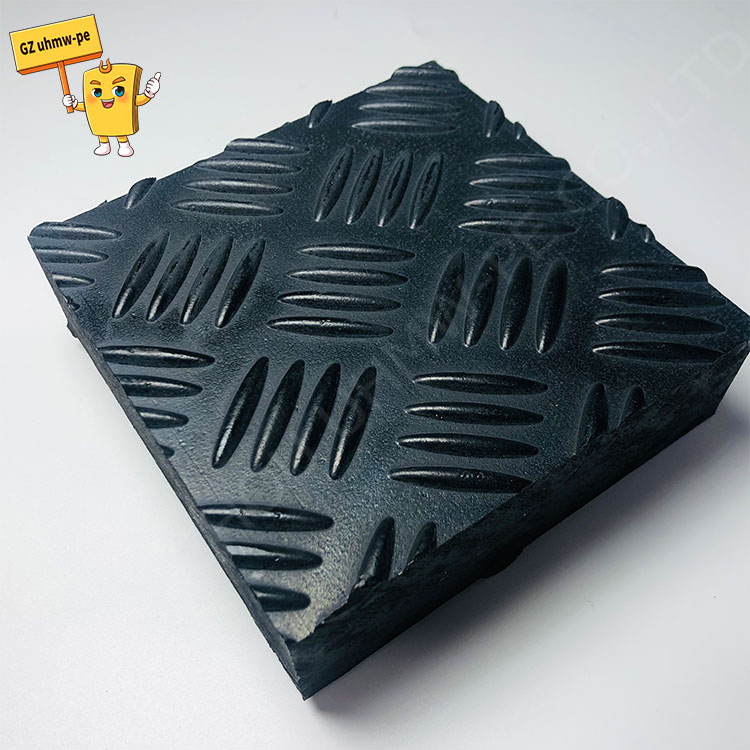
The load capacity of a 4x8 UHMWPE mat is influenced by its thickness. Standard thicknesses range from ½ inch to 1 inch or more. A ½-inch thick, 4x8 foot mat made from high-quality UHMWPE can typically support medium duty equipment with a distributed load of up to 20,000 lbs on firm, level ground. However, this rating drops significantly if the ground is soft or uneven because the mat must bridge voids and resist flexing. To boost capacity, some mats incorporate reinforcement, such as a grid pattern or a textured surface that enhances stiffness and prevents sliding. Guangzhou uhmw-pe co.,ltd not only produces standard sheets but also offers custom machining and value-added services, including CNC routing to add traction patterns or connection systems, ensuring that their mats meet or exceed load expectations.
Calculating Load Capacity for Your Application
Determining whether a 4x8 mat is sufficient for your medium duty equipment requires a step-by-step analysis. First, identify the gross vehicle weight (GVW) of the equipment, including any attachments or payloads. Next, find the contact area of the wheels or tracks. For wheeled equipment, this is the total area of the tires in contact with the ground; for tracked equipment, it is the track length times the width. The ground pressure without mats is GVW divided by contact area. Then, compare that to the soil bearing capacity. If it exceeds the soil's capacity, you need mats. With mats, the ground pressure becomes approximately the total weight divided by the mat area (minus any overlap). However, this simplified method assumes a perfectly rigid mat and uniform loading, which is rarely the case. In practice, manufacturers provide a load rating chart based on empirical testing and finite element analysis.
As an example, a common skid steer loader weighing 8,000 lbs with a bucket might have a loaded weight of 10,000 lbs. With tire contact area around 400 square inches, ground pressure is 25 psi—too high for many surfaces. Place two 4x8 mats (total area 64 sq ft = 9,216 sq in) under the tires, and theoretical ground pressure drops to about 1.1 psi. That's well within safe limits for grass or soft ground. But if the mat flexes too much, the actual pressure under the tires may remain high in localized spots, leading to mat failure or ground damage. This is why material stiffness and tensile strength are critical. UHMWPE mats from Guangzhou uhmw-pe co.,ltd are designed with a modulus of elasticity that balances flexibility and support, preventing permanent deformation under repeated loads.
Testing and Certification: Ensuring Real-World Performance
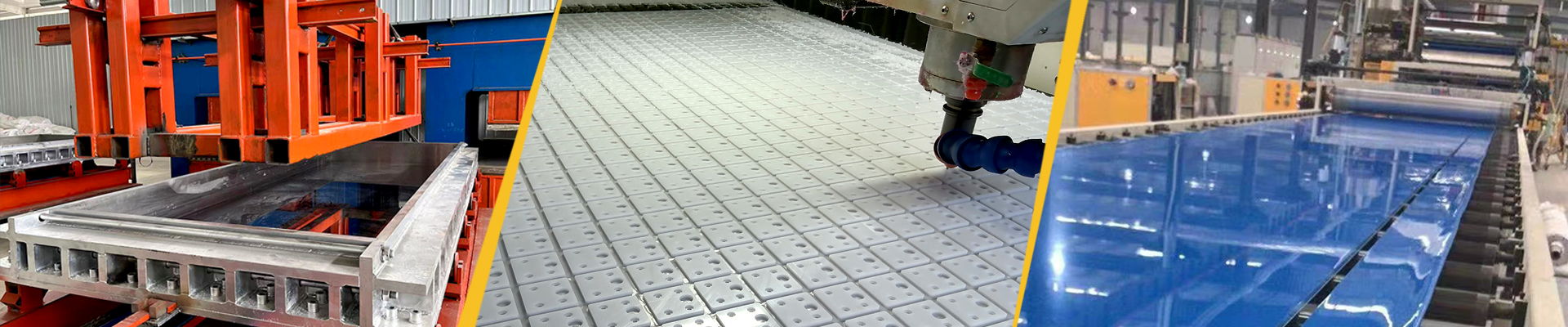
Reputable manufacturers conduct rigorous testing to validate load capacities. Guangzhou uhmw-pe co.,ltd operates multiple international-grade extrusion and mould pressing lines and testing facilities. Their quality management system governs every step from raw material selection to final inspection. Third-party test reports from SGS, ROHS, FDA, and others are available, confirming that the products meet international standards for safety and environmental compliance. For ground protection mats, key tests include three-point bending, compression strength, and dynamic impact resistance. These tests simulate equipment rolling over the mat, sudden stops, and uneven loading. The results translate into safe working load (SWL) and concentrated load limits that users can trust.
A 4x8 mat with a thickness of ¾ inch might have an SWL of 30,000 lbs uniformly distributed, but a concentrated load limit of 10,000 lbs applied over a 12-inch diameter area. This means a small-diameter steel wheel carrying a heavy load could punch through if not properly accommodated. That's why outrigger pads—another product offered by Guangzhou uhmw-pe co.,ltd—are specifically designed to handle extreme point loads under crane outriggers or aerial work platforms. By combining knowledge from both product lines, the company ensures that their ground protection mats are optimized for typical medium duty equipment footprints.
Comparing 4x8 Mats: Material Options and Their Impact on Load Capacity
The market offers various materials, each with trade-offs in load capacity, weight, cost, and lifespan. The following table summarizes typical properties:
| Material | Typical Thickness (in) | Uniform Load Capacity (lbs) | Weight per Mat (lbs) | Lifespan |
|---|---|---|---|---|
| Plywood | 0.75 | 15,000 | 80 | Short, prone to rot |
| HDPE | 0.75 | 25,000 | 95 | Long, UV resistant |
| UHMWPE | 0.75 | 30,000+ | 110 | Excellent, extreme toughness |
| Aluminum | 0.5 | 40,000 | 150 | Long, but heavy and costly |
Note that these are approximate values and depend heavily on the specific design and quality. Guangzhou uhmw-pe co.,ltd's UHMWPE mats often exceed generic ratings due to their superior material formulation and modification capabilities. The company can produce sheets and rods with special properties such as flame retardancy, antistatic characteristics, high wear resistance, and low-temperature resistance—all of which can be critical in mining, ports, power generation, and other industrial settings. For medium duty construction, standard UHMWPE already provides a margin of safety that users appreciate.
The Importance of Mat Design: Beyond Material
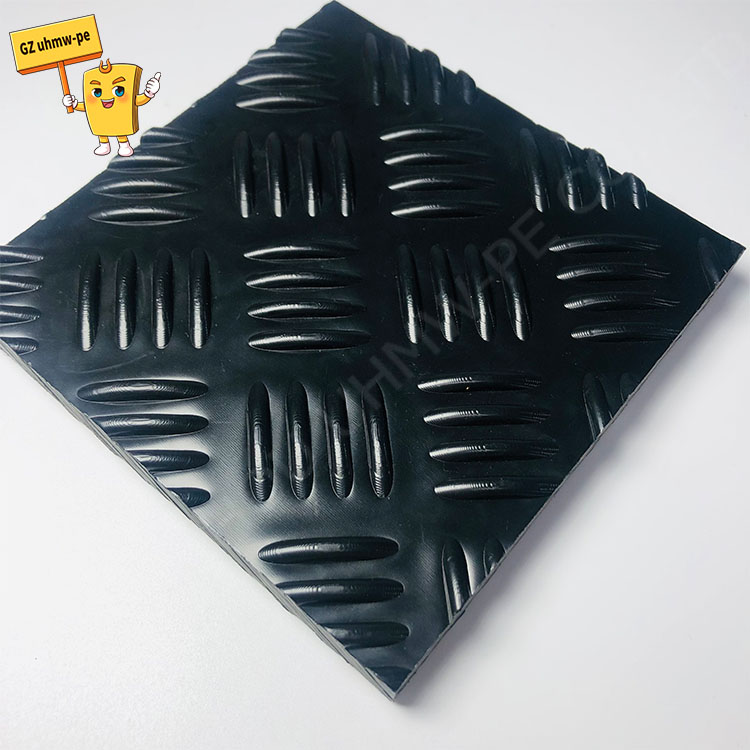
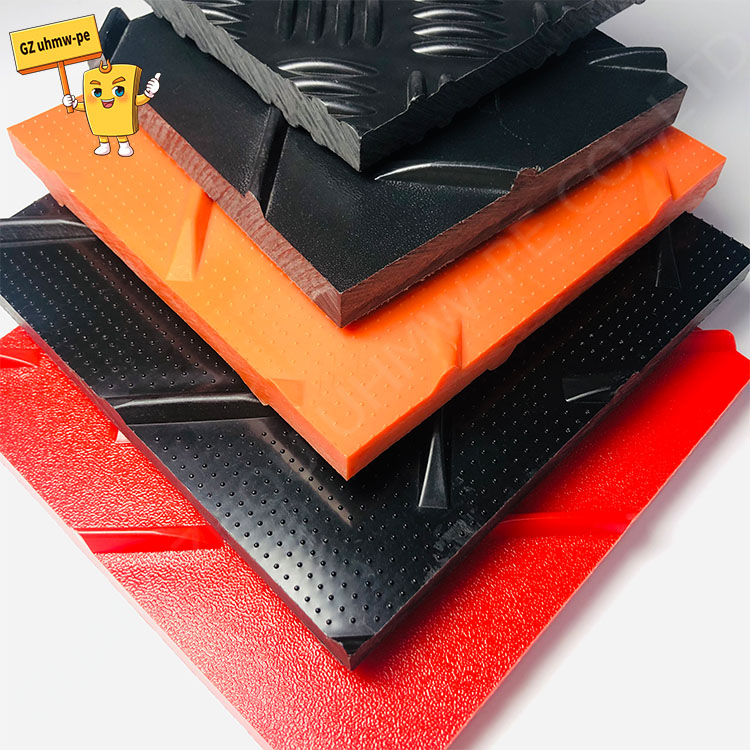
Load capacity is not solely a material property; design features play a huge role. Many 4x8 mats include a diamond-plate or ribbed surface to improve traction for equipment and personnel, while the underside may have a smooth or grooved pattern to aid sliding over soft ground. Connection systems—such as interlocking tabs, turn-keys, or overlapping lips—allow multiple mats to form a continuous roadway, distributing loads even more effectively across joints. A poorly designed connection can become a weak point, so manufacturers like Guangzhou uhmw-pe co.,ltd invest in robust connection designs that maintain load transfer integrity.
Customization is another strength. Equipped with advanced CNC machining centers, precision saws, and engraving equipment, Guangzhou uhmw-pe co.,ltd can produce complex parts and assemblies exactly to customer specifications. For ground protection mats, this means clients can order mats with varying thicknesses, custom logos, attachment points for lifting, or special shapes beyond the 4x8 standard. Such flexibility ensures that the mats are not only load-rated correctly but also fit seamlessly into the operational workflow.
Real-World Applications: 4x8 Mats in Action
Let's explore how 4x8 ground protection mats perform in typical medium duty scenarios. In landscaping and tree care, a 4x8 mat is ideal for a 50-foot aerial lift truck with a GVW of 20,000 lbs. By placing mats under the outriggers and drive path, contractors can work on pristine lawns without leaving ruts, avoiding costly restoration. The low friction of UHMWPE also means the mats can be easily slid into position, reducing manual handling.
In utility construction, trenchers and directional drills often need temporary access over sidewalks, curbs, and soft shoulders. A 4x8 mat can bridge uneven ground while protecting concrete from cracking. The impact resistance of UHMWPE mats from Guangzhou uhmw-pe co.,ltd ensures they can withstand the constant pounding of heavy machinery without splitting. Moreover, their chemical resistance means that accidental spills of fuels or hydraulic fluids won't degrade the mat—a common failure point for lesser materials.
Another application is in crane operations, where medium duty mobile cranes may have outrigger loads exceeding 30,000 lbs on a single point. While dedicated outrigger pads are often recommended, in a pinch, stacking multiple 4x8 mats can provide sufficient load distribution. However, users must be cautious and consult load charts. Guangzhou uhmw-pe co.,ltd also manufactures specialized outrigger pads that are tested for extreme point loads, complementing their ground protection mat line.
Environmental and Operational Benefits
Choosing UHMWPE mats over plywood or steel offers significant environmental and operational advantages. Wood mats require logging, have a short lifecycle, and often end up in landfills. Steel mats are durable but extremely heavy, requiring lifting equipment and increasing fuel consumption during transport. UHMWPE mats are lightweight (a 4x8 mat weighs around 100-120 lbs), so they can be manually handled by two workers, reducing the need for additional machinery. Their longevity—often thousands of cycles—means less material turnover. Guangzhou uhmw-pe co.,ltd is guided by principles of quality first, integrity based, and innovation driven, with a strong commitment to environmental responsibility. Their manufacturing processes are designed to minimize waste, and the mats themselves are recyclable at end of life.
From an economic standpoint, the lower total cost of ownership is clear. A single UHMWPE mat might cost more upfront than plywood, but it last many times longer, withstands weather, and resists damage that would render wood useless. When factoring in reduced labor for installation, elimination of replacement costs, and avoided ground repair expenses, the investment pays for itself quickly. Guangzhou uhmw-pe co.,ltd offers competitive pricing compared to similar engineering plastic brands in Europe and the United States, with extensive export experience across Southeast Asia, the Middle East, Europe, and the Americas.
Customization and Advanced Manufacturing for Optimal Load Capacity
One size does not fit all when it comes to load capacity. A 4x8 mat that works perfectly for a skid steer on firm clay might fail under the same skid steer on peat moss. To address these nuances, leading suppliers offer custom formulations. Guangzhou uhmw-pe co.,ltd's material modification capabilities allow them to alter the UHMWPE matrix to enhance stiffness or toughness as needed. For instance, adding glass fibers or specific cross-linking agents can increase flexural modulus by 20-30%, directly boosting load capacity without increasing thickness. Alternatively, anti-static grades are available for fueling zones or chemical plants where static discharge is a concern.
Their production lines can manufacture UHMWPE sheets up to 6 meters in length and across a wide range of thicknesses, giving them a significant advantage in supplying large-scale wear-resistant structural components beyond just 4x8 mats. For projects requiring oversized mats or custom shapes, they can provide a one-stop service from material selection and mold design to finished product machining. This capability ensures that even non-standard equipment with unusual footprints can be accommodated safely.
Maintenance and Inspection for Sustained Load Capacity
Even the best mats require proper care to maintain their rated load capacity. UHMWPE is highly resistant to abrasion, but deep cuts from sharp rocks or tracked grousers can create stress concentrations. Regular inspections should look for cracks, excessive wear zones, or deformation. If a mat is significantly bent or has a permanent indentation, its load distribution ability is compromised and it should be replaced. Cleaning is simple; most contaminants can be pressure-washed off. Because UHMWPE does not absorb water, mats retain their mechanical properties even after prolonged exposure to wet conditions, unlike wood which swells and weakens.
Guangzhou uhmw-pe co.,ltd provides guidance on proper usage and storage. Their rigorous quality control ensures that each mat leaves the facility with consistent physical properties, but users must follow manufacturer recommendations to sustain performance. For example, avoiding excessive point loads by using appropriately sized contact pads under outriggers or ensuring that the mat is fully supported by the ground without bridging large voids are essential practices.
Global Supply and Support
With sales networks expanding from the Pearl River Delta across China and into key international markets, Guangzhou uhmw-pe co.,ltd has accumulated mature logistics, packaging, and foreign trade documentation capabilities. They can reliably supply 4x8 ground protection mats in container loads or pallet quantities, with options for custom labeling and branding. Their responsive service includes technical support to help customers select the right mat for their load requirements and ground conditions.
Given the critical nature of ground protection in preventing accidents and project delays, partnering with a supplier that has deep material science expertise is a strategic advantage. Guangzhou uhmw-pe co.,ltd's team of professionals brings together knowledge in polymer engineering and mechanical processing, enabling them to solve complex load distribution challenges. Whether you need a standard 4x8 mat or a fully customized solution, their integrated approach ensures you get a product that meets the demands of medium duty equipment day in and day out.
Conclusion: Making the Right Choice for Your Job Site
The load capacity of 4x8 ground protection mats is a multifaceted specification that intertwines material science, design engineering, and practical application. For medium duty equipment, these mats provide a lightweight, durable, and cost-effective solution to ground disturbance and safety hazards. By understanding the fundamentals of load distribution, selecting a high-quality material like UHMWPE from a reputable manufacturer, and considering customization options, contractors and operators can ensure smooth and safe operations on any terrain.
Companies like Guangzhou uhmw-pe co.,ltd exemplify the value of specialized manufacturing in this field. Their comprehensive product range, advanced modification techniques, and commitment to quality control translate into ground protection mats that you can rely on. As the industry moves towards more sustainable and efficient practices, engineered plastic mats will continue to replace traditional materials, and the 4x8 footprint will remain a cornerstone of site logistics. Investing in the right mat is not just about load capacity; it's about project success, environmental stewardship, and long-term cost savings.