This article provides a comprehensive overview of the UV stability of 10mm polypropylene (PP) sheets for outdoor use. It explains the mechanisms of UV degradation, the factors that influence UV stability (including UV stabilizers, pigments, manufacturing processes, and environmental conditions), and the testing methods used to evaluate UV resistance. The article also highlights best practices for enhancing UV stability, such as using a combination of UV absorbers and HALS, and emphasizes the importance of quality manufacturing. Real-world applications, such as ground protection mats and outrigger pads, are discussed to illustrate the practical significance of UV stability. The article also includes a comparative analysis of PP with other materials like UHMWPE and HDPE, and touches on future trends in UV-stable polypropylene. Finally, it introduces Guangzhou uhmw-pe co.,ltd as a reliable manufacturer of UV-stable PP sheets, showcasing their expertise and commitment to quality.
When it comes to outdoor applications, the durability of materials against ultraviolet (UV) radiation is a critical factor. Polypropylene (PP) sheets, particularly those with a thickness of 10mm, are widely used in various industries due to their excellent mechanical properties and chemical resistance. However, their performance under prolonged sun exposure depends heavily on their UV stability. This article delves into the science behind UV degradation, the factors influencing the UV stability of 10mm PP sheets, and the practical measures taken by manufacturers like Guangzhou uhmw-pe co.,ltd to ensure long-lasting outdoor performance.
Understanding UV Degradation in Polypropylene
Polypropylene is a thermoplastic polymer that is inherently susceptible to UV radiation. When exposed to sunlight, the high-energy UV photons can break the chemical bonds in the polymer chain, leading to a process called photo-oxidation. This degradation manifests as discoloration, surface cracking, loss of mechanical strength, and eventual embrittlement. For a 10mm thick PP sheet, the surface is the first line of defense, but over time, the degradation can penetrate deeper, compromising the structural integrity of the material.
The mechanism of UV degradation involves the absorption of UV light by chromophoric groups (such as carbonyl groups) that may be present as impurities or formed during processing. This absorption initiates free radical reactions, which in the presence of oxygen lead to chain scission and cross-linking. The result is a material that becomes brittle and prone to failure under stress. Therefore, for outdoor use, it is imperative to enhance the UV stability of PP sheets through the addition of stabilizers and careful manufacturing practices.
undefined
Factors Affecting UV Stability of 10mm PP Sheets
Several factors influence the UV stability of a 10mm PP sheet, including the type and concentration of UV stabilizers, the presence of pigments, the manufacturing process, and the environmental conditions. Let's explore these in detail.
UV Stabilizers
UV stabilizers are chemical additives that protect the polymer from UV radiation. They can be classified into three main types: UV absorbers, hindered amine light stabilizers (HALS), and quenchers. UV absorbers, such as benzotriazoles, work by absorbing UV light and dissipating it as heat, preventing it from reaching the polymer chains. HALS, on the other hand, scavenge free radicals generated during photo-oxidation, thereby interrupting the degradation cycle. The choice and dosage of these stabilizers are crucial. For a 10mm PP sheet intended for outdoor use, manufacturers like Guangzhou uhmw-pe co.,ltd often use a combination of UV absorbers and HALS to achieve synergistic protection.
Pigments and Fillers
Pigments, especially carbon black, can significantly enhance UV stability. Carbon black acts as a UV absorber and also quenches excited states, providing a physical barrier against UV penetration. However, the addition of pigments can affect the mechanical properties and color consistency. For applications where color is important, such as in outdoor signage or architectural panels, the choice of pigment is critical. Titanium dioxide, for example, can reflect UV rays, but it may also catalyze degradation under certain conditions. Therefore, careful selection of pigments is essential to maintain both aesthetics and performance.
Manufacturing Process
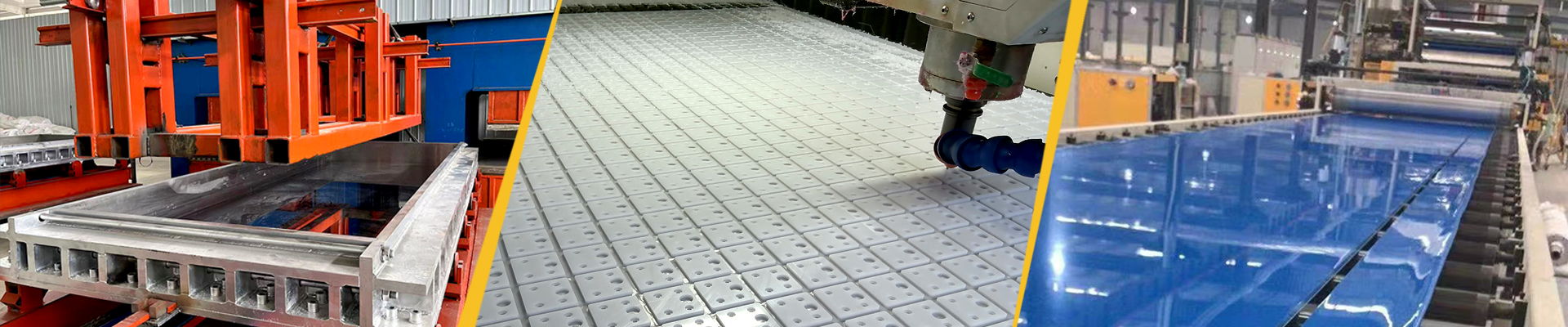
The manufacturing process plays a vital role in the UV stability of PP sheets. During extrusion, the polymer is subjected to high temperatures, which can cause thermal degradation and the formation of hydroperoxides. These impurities can accelerate UV degradation. To mitigate this, manufacturers must control the processing temperature, residence time, and cooling rate. Additionally, the use of high-quality raw materials with low levels of catalyst residues and impurities is essential. Guangzhou uhmw-pe co.,ltd employs advanced extrusion lines with precise temperature control to minimize thermal stress and ensure uniform dispersion of additives.
Environmental Conditions
The actual UV exposure varies with geographic location, altitude, and weather conditions. For instance, areas with high solar intensity, such as tropical regions, will cause faster degradation. Humidity and temperature fluctuations can also exacerbate the effects of UV radiation. Therefore, the UV stability of a 10mm PP sheet must be tested under conditions that simulate the intended use environment. Accelerated weathering tests, such as those using Xenon arc lamps or QUV chambers, are commonly used to predict the long-term performance of PP sheets.
Testing UV Stability of Polypropylene Sheets
To ensure that a 10mm PP sheet meets the requirements for outdoor use, it must undergo rigorous testing. The most common standards include ASTM D2565 (Standard Practice for Xenon-Arc Exposure of Plastics Intended for Outdoor Applications) and ISO 4892-2 (Plastics – Methods of Exposure to Laboratory Light Sources – Part 2: Xenon-arc lamps). These tests involve exposing the sample to cycles of UV light and moisture at elevated temperatures, and then evaluating changes in appearance, gloss, color, and mechanical properties.
For a quantitative assessment, the tensile strength and elongation at break are measured before and after exposure. A significant reduction in these properties indicates poor UV stability. Additionally, the yellowness index and surface gloss are monitored to detect discoloration and surface degradation. By conducting these tests, manufacturers can optimize their formulations and provide products with guaranteed UV resistance.
Enhancing UV Stability: Best Practices
To produce a 10mm PP sheet with excellent UV stability, manufacturers like Guangzhou uhmw-pe co.,ltd adopt a multi-faceted approach. This includes the use of high-quality UV stabilizers, careful selection of pigments, and optimization of the manufacturing process. Moreover, they may apply a UV-resistant coating or co-extrude a UV-stabilized layer on the surface of the sheet. This not only protects the material but also extends its service life.
Another important practice is the incorporation of UV stabilizers during the polymerization stage, known as in-reactor stabilization. This ensures that the stabilizers are uniformly distributed throughout the polymer matrix, providing long-lasting protection. However, this method requires specialized equipment and expertise, which is why many customers rely on established suppliers like Guangzhou uhmw-pe co.,ltd for their PP sheet needs.
Real-World Applications of 10mm PP Sheets
10mm PP sheets are used in a variety of outdoor applications where UV stability is paramount. For example, they are used in the construction of ground protection mats, which are laid down to create temporary roadways for heavy vehicles. These mats are exposed to direct sunlight for extended periods, and any degradation could lead to cracking and failure, posing safety risks. Similarly, outrigger pads used to support cranes and aerial work platforms are often made from PP sheets. These pads must withstand both UV exposure and heavy loads, making UV stability a critical requirement.
In the agricultural sector, PP sheets are used for greenhouse glazing and as liners for irrigation channels. These applications require materials that can endure long-term sun exposure without losing their mechanical properties. Additionally, PP sheets are used in outdoor signage, playground equipment, and even in the manufacture of synthetic ice rinks, where the surface must remain smooth and durable under UV exposure.
Guangzhou uhmw-pe co.,ltd has extensive experience in supplying 10mm PP sheets for such applications. Their products are known for their excellent UV stability, which is achieved through rigorous quality control and the use of advanced additives. The company's commitment to quality is evident in their adherence to international standards and their ability to provide third-party test reports from organizations like SGS and ROHS.
Case Study: UV Stability in Ground Protection Mats
To illustrate the importance of UV stability, consider the case of ground protection mats used in construction sites. These mats are often left outdoors for months, exposed to harsh sunlight. A 10mm PP sheet used in these mats must maintain its impact resistance and load-bearing capacity even after prolonged UV exposure. If the sheet degrades, it becomes brittle and may crack under the weight of heavy machinery, leading to costly downtime and potential accidents.
Guangzhou uhmw-pe co.,ltd manufactures ground protection mats using 10mm PP sheets that have been specially formulated with UV stabilizers. These mats have been tested in accordance with ASTM D2565 and have shown minimal loss of mechanical properties after 2000 hours of accelerated weathering. This level of performance ensures that the mats can withstand the rigors of outdoor use, providing a safe and reliable surface for vehicles and equipment.
Comparative Analysis: PP vs. Other Materials
When selecting a material for outdoor use, it is essential to compare the UV stability of PP with other engineering plastics. For instance, UHMWPE (Ultra-High Molecular Weight Polyethylene) is known for its excellent abrasion resistance and impact strength, but its UV stability is generally lower than that of UV-stabilized PP. HDPE (High-Density Polyethylene) also has good UV resistance when properly stabilized, but PP offers superior stiffness and heat resistance. Nylon, while strong, is hygroscopic and can degrade more quickly under UV exposure. Therefore, PP is often the material of choice for applications that require a balance of mechanical properties and UV durability.
However, it is important to note that the UV stability of any plastic depends on the specific formulation and additives used. A well-stabilized PP sheet can outperform a poorly stabilized UHMWPE sheet in outdoor applications. This is why it is crucial to source materials from reputable manufacturers like Guangzhou uhmw-pe co.,ltd, who have the expertise to tailor formulations to meet specific environmental challenges.
Future Trends in UV-Stable Polypropylene
The demand for UV-stable PP sheets is expected to grow as industries seek more durable and sustainable materials. Advances in additive technology are leading to the development of more effective UV stabilizers with lower environmental impact. For example, new HALS compounds are being designed to be more resistant to migration and extraction, providing longer-lasting protection. Additionally, the use of nanofillers, such as nano-silica and nano-titania, is being explored to enhance UV resistance while maintaining transparency.
Another trend is the development of self-cleaning and UV-reflective surfaces, which can reduce the surface temperature of the material and slow down degradation. These innovations are particularly relevant for applications in hot climates, where the combination of UV radiation and high temperatures accelerates aging. Guangzhou uhmw-pe co.,ltd is at the forefront of these developments, continuously researching and testing new formulations to meet the evolving needs of their customers.
Conclusion
In conclusion, the UV stability of 10mm polypropylene sheets is a critical factor for their successful use in outdoor applications. By understanding the mechanisms of UV degradation and implementing effective stabilization strategies, manufacturers can produce PP sheets that maintain their performance and appearance over many years of exposure. Guangzhou uhmw-pe co.,ltd, with its expertise in engineering plastics and commitment to quality, offers 10mm PP sheets that are specifically designed to withstand the harshest outdoor conditions. Whether for ground protection mats, outrigger pads, or any other outdoor application, their UV-stable PP sheets provide the durability and reliability that customers demand.
About Guangzhou uhmw-pe co.,ltd
Guangzhou uhmw-pe co.,ltd is a specialized manufacturer and solutions provider in the field of high-performance engineering plastics. Strategically located in Guangzhou, adjacent to the Pazhou International Convention and Exhibition Center, we have built a strong reputation for quality, reliability, and precision over many years of dedicated service. Our core products include UHMWPE, HDPE, PP, Nylon, POM, and PTFE sheets and rods, as well as finished goods such as ground protection mats, synthetic ice rink boards, outrigger pads, and UHMWPE lining sheets. We are committed to providing our global customers with cost-effective, high-quality solutions backed by rigorous quality control and international certifications.