This article explores the critical need for high-quality ground protection mats on construction sites, highlighting how advanced materials like UHMWPE offer unmatched durability, safety, and environmental benefits. It details the key features that define a superior mat—such as load distribution, slip resistance, and UV stability—and compares them favorably to traditional plywood, steel, and aluminum alternatives. The discussion extends to diverse applications ranging from infrastructure projects to event management, demonstrating the versatility of these mats. The economic and operational advantages, including reduced repair costs, enhanced safety, and minimal downtime, make a compelling case for their adoption. The article also introduces how innovations in customization and material science, as exemplified by companies like Guangzhou uhmw-pe co.,ltd, enable tailored solutions for challenging environments. With a strong focus on quality assurance, global standards, and sustainability, the piece concludes that investing in premium ground protection is a strategic decision for any construction operation valuing efficiency, compliance, and long-term cost savings.
Construction sites are dynamic environments where heavy machinery, constant traffic, and unpredictable weather combine to create significant challenges to the ground beneath. Without adequate protection, turf, soil, asphalt, and concrete can be irreparably damaged, leading to costly repairs, project delays, and serious safety hazards. For this reason, investing in high-quality ground protection mats is no longer a luxury—it is a fundamental requirement for efficient, safe, and environmentally responsible project execution. Advanced solutions from specialized manufacturers such as Guangzhou uhmw-pe co.,ltd, based in Room 1303, No. 1068 Xingang East Road, Haizhu District, Guangzhou, Guangdong Province, China, are setting new standards in site protection. The company provides durable, lightweight, and highly adaptable mats made from ultra-high molecular weight polyethylene (UHMWPE) and other engineering plastics, ensuring that even the most demanding job sites remain secure and productive.
The Critical Importance of Ground Protection on Construction Sites
Every construction manager understands that the foundation of a successful project lies in maintaining a stable and secure work area. Unprotected ground quickly degrades under the weight of excavators, cranes, concrete trucks, and forklifts. Ruts and muddy patches not only slow down operations but also pose tipping risks for equipment and create slip hazards for workers. Moreover, environmental regulations increasingly mandate the prevention of soil erosion, sediment runoff, and contamination of natural habitats. Failing to protect the ground can result in heavy fines and reputational damage. High-quality ground protection mats provide a practical, cost-effective solution that addresses all these concerns simultaneously.
Understanding Ground Protection Mats: Materials and Design
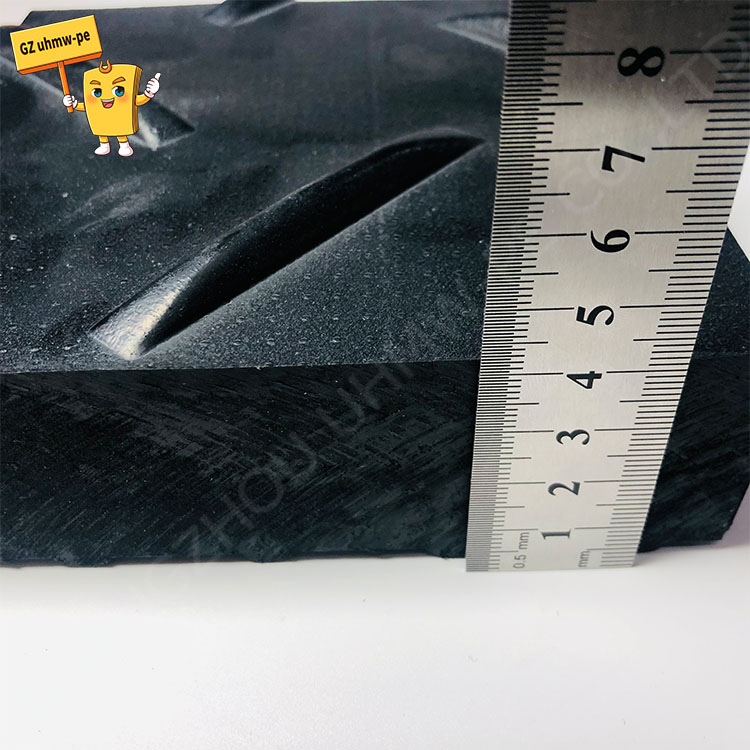
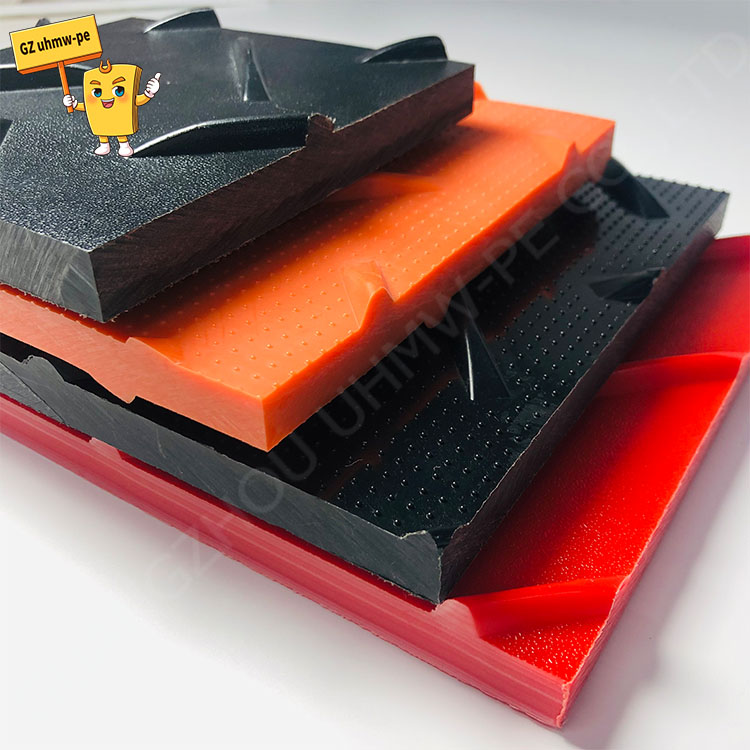
Modern ground protection mats are engineering marvels, typically made from high-performance plastics such as UHMWPE, HDPE, and PP. Among these, UHMWPE stands out for its extraordinary combination of properties: exceptional wear resistance, high impact strength, low friction surface, and outstanding weatherability. These mats are designed to distribute heavy point loads over a larger surface area, drastically reducing ground pressure and preventing sinking or surface damage. A typical mat features a textured surface for traction, beveled edges for easy vehicle transition, and often interlocking systems for creating continuous roadways or platforms. Leading manufacturers like Guangzhou uhmw-pe co.,ltd produce mats in various sizes, thicknesses, and colors, and can even incorporate UV stabilizers, flame retardants, and anti-static additives to meet specific project requirements. The mats are lightweight compared to steel or plywood, making them easier to transport, handle, and install without the need for heavy lifting equipment.
Key Benefits of Using Premium Ground Protection Mats
1. Load Distribution and Surface Preservation
The primary function of a ground protection mat is to spread the weight of heavy machinery, preventing localized ground failure. A crane outrigger, for instance, exerts immense pressure on a small footprint; without a mat, it would punch through asphalt or compact soil, causing deep depressions. High-quality mats engineered from UHMWPE can withstand point loads of tens of tons while flexing slightly to conform to surface irregularities, thereby preserving the integrity of paved and unpaved surfaces alike. This capability is critical when working on finished landscapes, sports fields, or sensitive archaeological sites where ground restoration costs can be exorbitant.
undefined
2. Enhanced Safety for Workers and Equipment
Uneven, muddy, or rutted ground dramatically increases the risk of equipment rollovers and worker slips and falls. Ground mats create a stable, level platform that significantly improves traction and footing. Moreover, because UHMWPE is non-conductive and non-sparking, these mats add an extra layer of safety in environments where electrical hazards or flammable gases may be present. By minimizing sudden ground failures, operators can maintain control of their machinery, reducing accident rates and potential liability.
3. Environmental Compliance and Sustainability
Environmental regulations in many regions require construction activities to prevent soil compaction, protect tree root zones, and avoid sediment runoff into waterways. Ground protection mats act as a barrier, trapping displaced soil and preventing the creation of deep ruts that channel stormwater and silt. Additionally, durable UHMWPE mats have a long service life and can be reused hundreds of times across multiple projects, contributing to a circular economy. Manufacturers like Guangzhou uhmw-pe co.,ltd are committed to environmental responsibility, producing mats that are fully recyclable at end-of-life and that reduce the need for temporary gravel roads with their associated carbon footprint.
4. Operational Efficiency and Reduced Downtime
Time is money on a construction site. When the ground turns to mud after rain, work often halts until conditions improve. With ground protection mats in place, work can continue virtually unabated, keeping schedules on track. The lightweight nature of UHMWPE mats means they can be installed and repositioned by a small crew or even a single worker, unlike heavy steel plates that require cranes. This speeds up site setup and reconfiguration, directly boosting productivity. Furthermore, the smooth, low-friction surface of these mats allows vehicles to move with less rolling resistance, saving fuel and reducing tire wear.
Critical Features That Define a High-Quality Ground Protection Mat
Not all mats are created equal. When selecting ground protection solutions, several performance attributes should be carefully evaluated:
- Material Composition: Pure UHMWPE or a reinforced HDPE blend with proven UV and chemical resistance ensures longevity in outdoor conditions.
- Load Capacity: The mat must be rated for the maximum equipment load expected on site, often expressed as ground bearing pressure in kPa or psi.
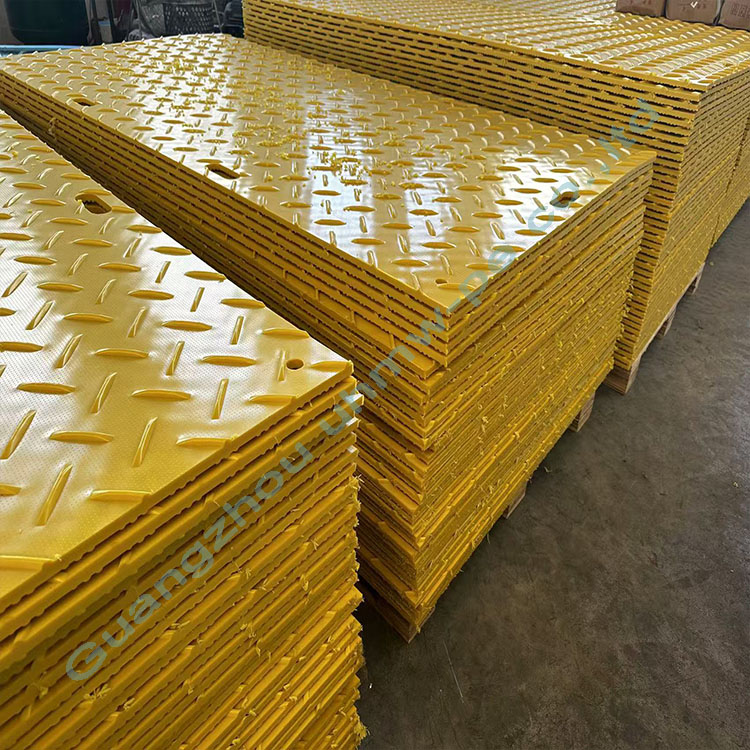
- Slip Resistance: A textured pattern—such as diamond-plate or molded grip—prevents vehicle tires and workers' boots from slipping, especially when wet.
- Edge Design: Beveled, ramped edges facilitate smooth transitions and reduce tripping hazards, while interlocking connectors allow mats to be linked together securely.
- Weight vs. Strength: The ideal mat provides maximum strength with minimum weight, simplifying logistics and manual handling.
- Temperature and Chemical Tolerance: Mats should remain flexible in freezing conditions and resilient under hot sun, without degrading when exposed to fuels, oils, and common construction chemicals.
Guangzhou uhmw-pe co.,ltd excels in delivering all these features, utilizing advanced extrusion and mould pressing lines and rigorous quality control to produce mats that consistently meet or exceed international standards. Their products are validated by third-party test reports from SGS, ROHS, FDA, and others, ensuring compliance with global environmental and safety requirements.
Comparing Ground Protection Mats to Traditional Alternatives
Traditionally, construction sites have relied on materials like plywood, steel plates, and aluminum sheets for temporary ground protection. However, each of these has significant drawbacks that modern engineering plastic mats overcome.
| Material | Advantages | Disadvantages |
|---|---|---|
| Plywood | Low initial cost; readily available | Absorbs water, rots, delaminates; splinters create safety hazard; very limited load capacity; single-use in many cases |
| Steel Plates | Extremely high strength; durable | Very heavy, requiring cranes for placement; rusts; smooth surface is dangerously slippery; noisy when driven over; high transport costs |
| Aluminum Mats | Lighter than steel; corrosion-resistant | Expensive; can still be heavy; prone to theft; lower impact resistance than engineered plastics |
| UHMWPE/HDPE Mats | Lightweight; extremely durable; excellent traction; chemical and UV resistant; low maintenance; reusable hundreds of times | Higher initial cost than plywood (but far lower total cost over life cycle) |
The superior overall value of high-quality plastic ground mats becomes clear when considering total cost of ownership, ease of use, safety, and environmental impact. Companies like Guangzhou uhmw-pe co.,ltd provide these mats with a lifespan that often exceeds 10 years of heavy use, making them a wise investment for contractors who regularly face challenging ground conditions.
Diverse Applications Across Industries
While the construction industry is the largest consumer, ground protection mats find use in a remarkable array of fields:
- Infrastructure Projects: Road and bridge construction, pipeline installation, and airport runway repairs require stable, high-load-bearing surfaces for heavy equipment.
- Event Management: Outdoor concerts, festivals, and sporting events use mats to protect turf and create accessible pathways for visitors and service vehicles.
- Utility and Power Line Work: Trucks and cranes accessing remote towers need mats to cross soft terrain and protect environmentally sensitive areas.
- Landscaping and Golf Course Maintenance: Mats prevent turf damage during aeration, irrigation system installation, or tree removal operations.
- Military and Emergency Response: Rapid deployment of temporary landing zones, command posts, and supply routes often relies on portable ground mats.
- Oil and Gas Exploration: Drill rigs and support vehicles use massive mat systems to create stable working pads in marshy or unstable soil.
The versatility of UHMWPE ground mats, particularly the ability to custom-machine them to exact dimensions and to integrate connection systems, makes them indispensable in virtually any scenario where ground integrity must be maintained under heavy loads.
The Role of Accessories: Outrigger Pads and More
Ground protection is not limited to large area coverage. Often, the most critical point loads come from stabilizer legs and outriggers on cranes, concrete pumps, and aerial lifts. A small outrigger pad placed under each foot can prevent a catastrophic sinking event that could tip the entire machine. Guangzhou uhmw-pe co.,ltd manufactures a range of outrigger pads from the same high-performance UHMWPE material, providing a systematic solution for point load distribution. These pads are lightweight, stackable, and designed with handles or rope ties for easy placement. Using matched mat and pad systems ensures uniform performance and simplifies logistics on multi-faceted job sites.
The Economic Argument: Lower Total Cost of Ownership
At first glance, the price of a single UHMWPE ground mat may seem high relative to a sheet of plywood. However, a thorough economic analysis paints a very different picture. A plywood track may need replacement after every heavy rain, incurring recurrent material costs, labor for installation, and disposal fees. Steel plates require constant anti-rust treatment, costly transportation, and often damage the surfaces they are meant to protect due to their rigidity and sharp edges. In contrast, a quality plastic mat from a company like Guangzhou uhmw-pe co.,ltd can be used repeatedly across dozens of projects with minimal maintenance. Savings accrue from reduced surface repair costs, lower accident rates, faster project completion, and extended equipment lifespan (due to improved traction and reduced vibration). When these factors are considered, the return on investment often becomes evident within the first year of use.
Innovations in Ground Protection: Customization and Advanced Materials
Modern construction demands solutions tailored to specific challenges. Leading manufacturers now offer extensive customization services. Customers can order mats with particular sizes, thicknesses, and load ratings, and even specify custom colors for safety zoning or branding. Guangzhou uhmw-pe co.,ltd, with its advanced CNC machining centers and mould development facilities, excels at producing custom-shaped parts and assemblies. Whether a project requires interlocking pathways with unique angles, cutouts for obstacles, or mats with embedded cable channels, the company can deliver precisely engineered solutions. Furthermore, their material modification capabilities allow the incorporation of flame retardant, antistatic, and high-temperature resistant additives, broadening the safe operating envelope of the mats to hazardous industrial environments like mines, chemical plants, and power generation stations.
Quality Assurance and Global Standards
For safety-critical products like ground protection mats, quality cannot be compromised. Reputable manufacturers operate under strict ISO quality management systems and subject their products to rigorous internal and external testing. At Guangzhou uhmw-pe co.,ltd, every batch of raw material is verified, and finished mats undergo dimensional checks, load testing, and weatherability simulations. Third-party certifications such as SGS, ROHS, and FDA compliance are routinely provided, giving international buyers confidence that the mats meet the most stringent health, safety, and environmental regulations. This dedication to quality ensures consistent performance across different production lots and over years of service, which is essential for customers who depend on these mats for critical operations.
Insights from the Field: Real-World Performance
Consider a major pipeline project crossing wetlands. The contractor initially tried using timber mats, but within days, they became waterlogged and splintered, creating dangerous conditions and threatening the project timeline. Switching to UHMWPE mats transformed the site: they floated on the soft ground without absorbing water, provided a secure traction surface, and were easily repositioned as the work front advanced. The project not only stayed on schedule but also avoided significant environmental penalties. In another case, an event management company used interlocking plastic mats to create a protective floor inside a historic park for a large gala. After the event, the turf underneath was pristine, earning praise from park authorities and paving the way for future bookings. Such experiences underscore the reliability and versatility that only high-quality ground protection mats can offer.
Selecting the Right Mat for Your Site: A Practical Guide
Choosing the optimal ground protection solution requires a systematic assessment of site conditions and operational needs:
- Assess Ground Conditions: Determine soil type, moisture content, and existing turf or paving. Softer, wetter ground requires thicker mats with higher load distribution.
- Identify Maximum Loads: List the heaviest equipment that will traverse the mats, noting ground contact pressure for tracked vehicles and outrigger loads for cranes. Add a safety factor of at least 1.5.
- Consider Durability and Frequency of Use: For long-duration or multi-project use, invest in premium UHMWPE mats with UV protection. For one-off events, a cost-effective HDPE option may suffice.
- Connectivity Requirements: If mats must form a continuous roadway, ensure they have a robust interlocking mechanism that resists separation under heavy braking and turning forces.
- Transport and Handling: Evaluate how mats will be delivered, deployed, and recovered. Lightweight materials reduce crane dependency and allow manual handling by small crews.
- Compatibility with Accessories: If outrigger pads are also needed, consider sourcing from the same manufacturer to ensure consistent material quality and dimensions.
Guangzhou uhmw-pe co.,ltd offers a consultative approach, helping clients select the ideal product configuration from their extensive range of standard and custom ground protection mats, backed by deep technical expertise and global supply experience.
The Manufacturing Excellence Behind the Mats
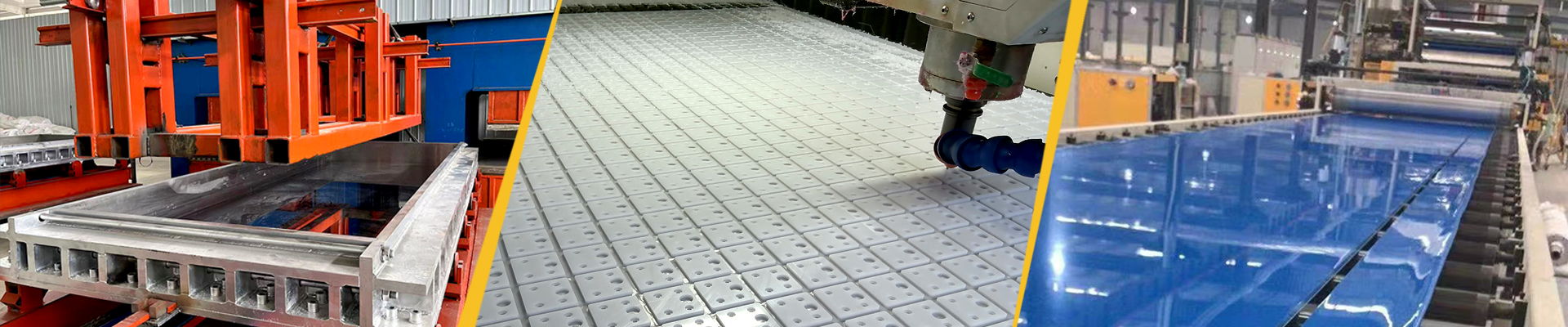
The best ground protection mats emerge from a combination of advanced materials science and precision manufacturing. Guangzhou uhmw-pe co.,ltd operates large-scale production lines with high-tonnage presses capable of producing UHMWPE sheets up to 6 meters in length and in a wide range of thicknesses. Such capability is critical for creating mats that minimize seams and weak points, providing superior protection over large areas. The company's in-house CNC machining centers and engraving equipment then transform these sheets into finished mats with exact tolerances, beveled edges, and any required custom features. This integration of material production, moulding, and machining under one roof enables faster lead times, strict quality control, and the ability to produce specialty items like oversized outrigger pads and synthetic ice rink boards—all from the same high-performance polymer family. Their experience in exporting to Europe, the Americas, Southeast Asia, and beyond ensures that logistics, packaging, and documentation meet the demands of global projects.
Sustainability and the Future of Ground Protection
As the construction industry embraces green building practices, ground protection mats are evolving as well. Durable, reusable mats significantly reduce waste compared to disposable wood products. Moreover, UHMWPE is fully recyclable, and end-of-life mats can be ground and reprocessed into new products, supporting the circular economy. Companies are also exploring bio-based additives and closed-loop take-back programs. Guangzhou uhmw-pe co.,ltd, guided by its philosophy of environmental responsibility, is actively expanding its product portfolio with sustainability in mind, ensuring that site protection today does not compromise the planet tomorrow. Their synthetic ice rink boards exemplify this innovation—creating year-round skating surfaces without the energy consumption and refrigerant use of traditional ice rinks, yet another example of how advanced engineering plastics are transforming industries.
Conclusion
In an era where construction efficiency, safety, and environmental stewardship are paramount, high-quality ground protection mats have become an indispensable tool. They not only safeguard surfaces and reduce costs but also enhance operational safety and project continuity. Investing in mats made from top-grade UHMWPE, such as those offered by Guangzhou uhmw-pe co.,ltd, is a strategic decision that pays dividends over years of reliable service. From burgeoning infrastructure projects to delicate event setups, these mats provide the stability and protection that modern worksites demand. As technology advances, we can expect even more innovative solutions, but the fundamental truth remains: every construction site that values its resources, its people, and its reputation needs a high-quality ground protection mat.
For more information about ground protection mats, outrigger pads, and other engineered plastic solutions, contact Guangzhou uhmw-pe co.,ltd at Room 1303, No. 1068 Xingang East Road, Haizhu District, Guangzhou, Guangdong Province, China.