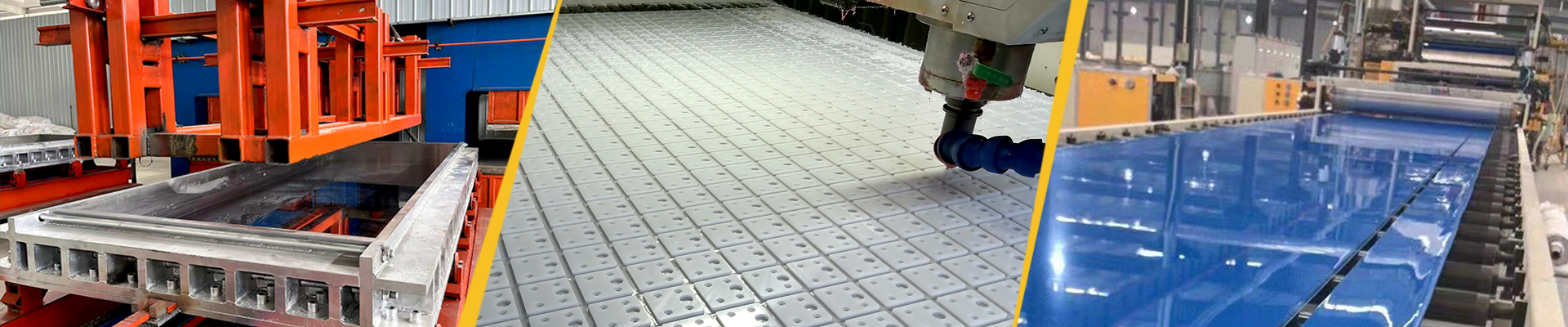
UV Resistant HDPE Sandwich Sheet for Outdoor Playground Applications
Outdoor playground equipment has to cope with sunlight, rain, frequent cleaning and repeated everyday use. For manufacturers and project buyers, the panel material is therefore more than a color choice: it affects appearance, fabrication, maintenance planning and long-term service performance. A UV-resistant HDPE sandwich sheet can be a practical option for selected playground panel applications when its grade and construction are matched to the project.
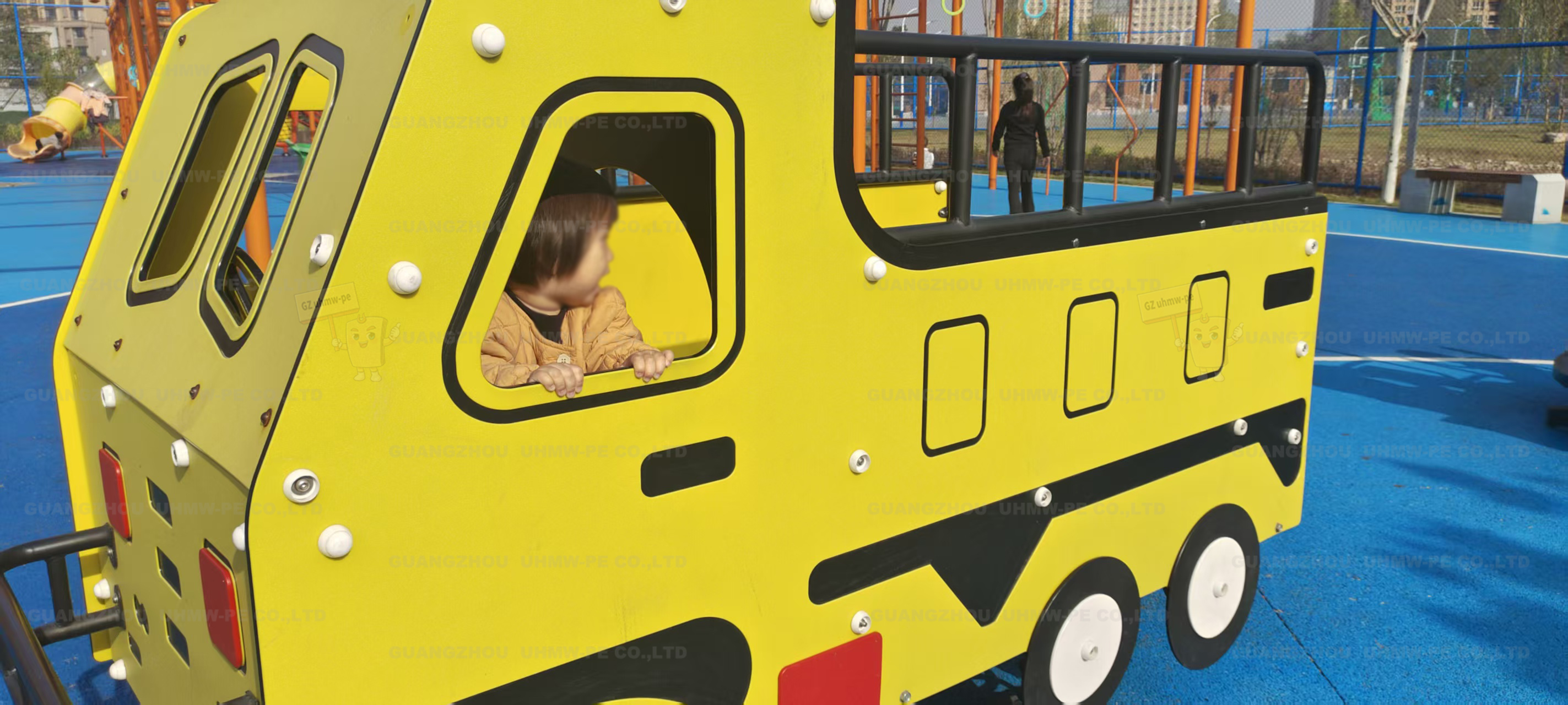
Table of Contents
- What Is an HDPE Sandwich Sheet?
- Why UV Resistance Matters for Outdoor Playground Panels
- Potential Playground Applications
- What Buyers Should Specify When Ordering HDPE Sandwich Sheet
- Fabrication and Installation Considerations
- HDPE Sheet Compared with Other Materials
- Discuss a Custom HDPE Sheet Project with UHMW-PE
- Frequently Asked Questions
What Is an HDPE Sandwich Sheet?
High-density polyethylene (HDPE) is a thermoplastic used in a wide range of fabricated products. In the product range presented by UHMW-PE, the HDPE sandwich sheet category includes double-layer and multi-layer, two-color and three-layer/two-color board options. The product listings also identify playground plastic board and UV-resistant HDPE extrusion sheet applications.
The term sandwich sheet can describe different layer arrangements depending on the manufacturer's design. Buyers should not assume that every product has the same core, skin thickness or bonding method. Ask the supplier for a cross-section drawing or sample so the exact construction is clear before approving a specification.
UHMW-PE lists wear resistance, high tensile strength, anti-UV characteristics and custom color, size and thickness among the features of its HDPE sandwich sheet products. These are useful starting points for a project discussion, but the final grade should be selected against the actual exposure and mechanical requirements.
View the product range: HDPE Sandwich Sheet products.
Why UV Resistance Matters for Outdoor Playground Panels
Panels installed outdoors receive repeated exposure to sunlight and changing weather. Over time, ultraviolet radiation can contribute to color fading, surface chalking or loss of mechanical properties in polymers that are not formulated for outdoor use. The speed and severity of these changes depend on resin selection, additives, color, panel thickness, climate and the way the product is installed.
Color retention and appearance
Bright colors are often part of a playground's visual identity. A UV-resistant grade is intended to better withstand outdoor exposure than an unprotected grade, but buyers should request test information for the exact color and formulation they plan to purchase. A result for a natural or black sheet should not automatically be applied to a bright yellow or blue sheet.
Maintenance planning
Material selection should consider the cleaning chemicals, cleaning frequency and local environment. Confirm chemical compatibility with the supplier, especially where disinfectants, detergents or sunscreen residues may contact the panels. A simple cleaning plan and periodic inspection can help identify wear, loose fasteners or surface damage early.
Project-specific performance
“UV resistant” is not a complete engineering specification. Ask which weathering test was used, how long the sample was exposed, what changes were measured and whether the test specimen matches the production color and thickness. This makes supplier comparisons more meaningful.
Potential Playground Applications
Depending on the sheet construction, thickness and structural design, colored HDPE boards may be considered for selected non-structural or engineered components in playground equipment.
- Decorative side panels: Colored panels can create visual themes around play towers, activity stations and themed structures.
- Equipment infill panels: Sheet material may be evaluated for infill or divider elements where openings, edge finishing and impact requirements are properly designed.
- Protective covers and enclosures: Fabricated covers can shield selected equipment areas from routine contact and weather, subject to ventilation and access requirements.
- Wayfinding and activity boards: Contrasting colors can help create durable-looking visual panels and interactive surfaces.
- Custom-fabricated components: CNC cutting and drilling can be discussed when a project needs specific shapes, holes or mounting patterns.
Important safety note: A plastic sheet by itself does not make a playground component safe. Structural strength, entrapment openings, sharp edges, fasteners, impact zones, fall protection and applicable local playground standards must be assessed by the equipment designer or qualified project engineer.
What Buyers Should Specify When Ordering HDPE Sandwich Sheet
A clear purchase specification reduces misunderstandings between the material supplier, fabricator and playground equipment manufacturer. Include the following information in your RFQ.
| Specification | What to confirm | Why it matters |
|---|---|---|
| Material grade | HDPE grade and whether it is intended for outdoor exposure | Helps match the resin formulation to the service environment |
| Layer construction | Number of layers, color arrangement and cross-section | Prevents confusion between different sandwich or co-extruded designs |
| UV performance | Weathering test method, exposure duration and test report for the requested color | Provides evidence beyond a general “UV resistant” description |
| Dimensions | Length, width, thickness and dimensional tolerances | Supports accurate nesting, machining and assembly |
| Color | Color reference, surface finish and whether both sides need the same color | Improves consistency across production batches |
| Fabrication | Cut-outs, drilled holes, edge profiles and drawings | Allows the supplier to assess manufacturability before production |
| Compliance | Required declarations, test reports and project-specific standards | Helps the finished playground system meet its intended market requirements |
For a quotation, send a drawing or sample, the intended application, expected outdoor conditions, color reference, order quantity and delivery destination. If the design is still under development, request a material sample and review it with the fabricator before placing a production order.
Fabrication and Installation Considerations
Plan for thermal movement
Like other thermoplastics, HDPE expands and contracts as temperature changes. Designers should account for movement in panel dimensions, mounting slots, clearances and joint details. The required allowance depends on the sheet grade, panel size, temperature range and fixing method; obtain design guidance rather than relying on a generic gap value.
Protect edges and fixing points
Cut edges should be finished to remove burrs and sharp corners. Holes and fasteners should be positioned to avoid unnecessary stress concentrations, and the mounting design should prevent panels from loosening during use. The final component should be checked for pinch points, protrusions and accessible edges.
Check the complete assembly
Panel performance depends on its supporting frame, fasteners, spacing and exposure. A sheet that performs well as a material sample may behave differently when used as a large unsupported panel. Review deflection, impact loading, drainage, cleaning access and inspection requirements as part of the complete assembly design.
HDPE Sheet Compared with Other Materials
HDPE is one option among several materials used in outdoor equipment. Metal may offer high rigidity but can require corrosion protection and careful edge treatment. Plywood can be easy to machine but needs suitable sealing and maintenance for outdoor exposure. Other engineering plastics may offer different stiffness, wear, friction or temperature characteristics.
There is no universal best material. Compare candidates using the same design loads, weather exposure, cleaning chemicals, expected service life, fabrication method and total installed cost. If a playground component is load-bearing or safety-critical, material choice must be validated by the responsible engineer.
Discuss a Custom HDPE Sheet Project with UHMW-PE
UHMW-PE's website lists a range of HDPE sandwich sheet options, including double-layer and multi-layer color boards, with custom color, size and thickness options. The company also presents HDPE products for playground-board applications and identifies anti-UV performance as a product feature.
When contacting the team, share your panel drawing, target dimensions, color combination, required layer arrangement, annual or project quantity and the outdoor conditions. Ask for the relevant technical data and test documents for the exact product configuration under consideration.
Explore the HDPE Sandwich Sheet range or visit the UHMW-PE contact page.
Frequently Asked Questions
1. What is an HDPE sandwich sheet used for?
HDPE sandwich sheets are listed for applications including playground plastic boards. Depending on the design and grade, buyers may evaluate them for colored panels, infill elements, covers and other fabricated components.
2. Is every HDPE sandwich sheet suitable for outdoor use?
No. Outdoor suitability depends on the exact resin formulation, UV stabilisation, color, construction and exposure conditions. Request weathering data for the product you intend to buy.
3. Can I order a two-color or multi-layer HDPE sheet?
UHMW-PE lists double-layer, two-color and three-layer/two-color HDPE sandwich sheet products. Confirm the available layer arrangement, colors and dimensions with the supplier for your project.
4. Can HDPE sandwich sheets be cut to custom shapes?
Custom dimensions and fabrication requirements can be discussed with the supplier. Provide a drawing showing cut-outs, holes, edge details and tolerances so manufacturability can be reviewed.
5. Does a UV-resistant sheet automatically meet playground safety requirements?
No. UV resistance is only one material consideration. The finished equipment must also be designed and assessed for structural integrity, impact hazards, entrapment, edge conditions, installation and the standards applicable in its destination market.
6. What information is needed for an HDPE sandwich sheet quotation?
Prepare the required dimensions, thickness, layer structure, color, quantity, drawings, application details and delivery destination. Include any required test reports or compliance documentation in the request.
Looking for UV-Resistant HDPE Sandwich Sheet?
Send UHMW-PE your project drawing, preferred color combination and dimensional requirements. The team can help review the available HDPE sandwich sheet options for your application.
Email: ali@uhmw-plast.cn
Phone: +86 18630195563
Contact UHMW-PE for a quotation
Tags: HDPE Sandwich Sheet, HDPE Sheet, Outdoor Plastic Sheet