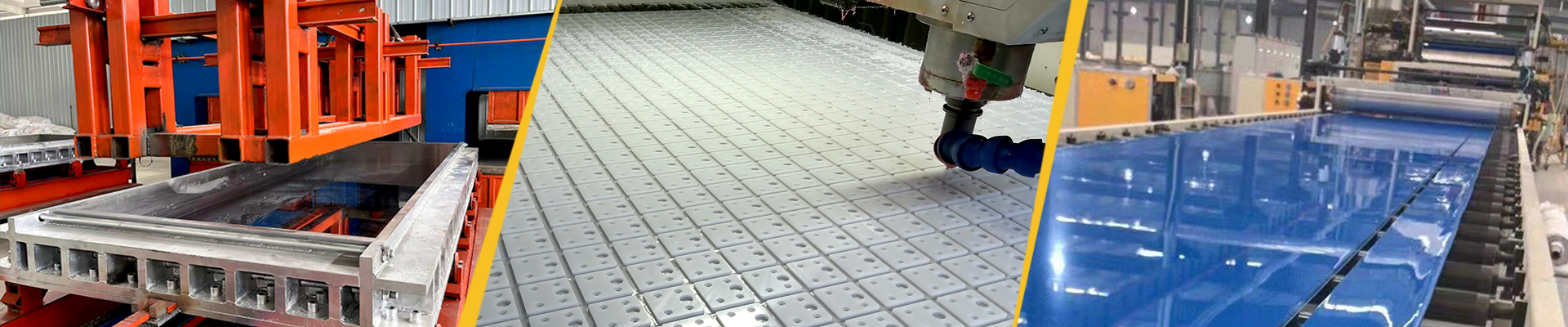
Ground Protection Mats for Arborist Bucket Truck Access: Protect Lawns and Improve Jobsite Efficiency
Tree maintenance and arborist operations often require heavy equipment to reach locations that ordinary vehicles cannot access. Whether contractors are trimming mature trees, removing damaged branches, maintaining roadside vegetation, or performing utility line clearance, bucket trucks and other specialized equipment must operate on a variety of ground surfaces.
However, driving heavy vehicles across residential lawns, landscaped properties, parks, and soft soil can create significant challenges. Tire pressure, repeated vehicle movements, and equipment setup may cause ruts, soil compaction, damaged grass, and costly landscape restoration.

Why Arborist Operations Need Ground Protection Mats
Professional tree care involves more than chainsaws and climbing equipment. Modern arborist contractors frequently use bucket trucks, aerial lifts, cranes, wood chippers, and other heavy machinery to complete demanding jobs safely and efficiently.
These machines often need to travel across surfaces that were never designed for heavy vehicle traffic. Common challenges include:
- Lawn damage caused by repeated vehicle movements.
- Soil compaction on soft or moisture-sensitive ground.
- Tire ruts and uneven access routes.
- Damage to landscaped areas and pedestrian pathways.
- Difficult equipment access during wet weather.
- Additional cleanup and landscape restoration expenses.
For contractors working on residential properties, golf courses, public parks, and commercial landscapes, protecting the surrounding environment is particularly important.
Ground protection mats provide a temporary protective surface between heavy equipment and the underlying terrain. When properly selected and installed, they help distribute equipment loads over a larger contact area and reduce direct contact with vulnerable ground surfaces. They can also create more consistent access routes for equipment entering and leaving the work area.
How Ground Protection Mats Help Protect Lawns and Landscapes
Maintaining the appearance of a property is often just as important as completing the tree maintenance work itself. A damaged lawn can create additional costs for contractors and inconvenience property owners. Ground protection mats help address this issue through several practical functions.
Reducing Direct Ground Pressure
Heavy vehicles concentrate their weight through tires and support points. On soft soil, this pressure can contribute to rutting and surface deformation. Ground protection mats create a larger load-distribution surface, helping reduce concentrated pressure on the underlying ground. Actual performance depends on mat dimensions, thickness, equipment weight, soil conditions, and load distribution.
Protecting Grass and Landscaping
Installing temporary access mats along designated travel routes helps separate vehicle tires from grass and soil. This is especially useful when tree maintenance requires equipment to enter a property from a driveway or roadside access point.
Creating More Consistent Equipment Access
Connected ground protection mats can form temporary access lanes, providing a more consistent surface for vehicles and site personnel. Different connection systems can be selected depending on the required route length, mat configuration, and project conditions.
Supporting Repeated Project Use
Reusable polyethylene mats can be removed, transported, cleaned, and used again when properly maintained. For contractors managing multiple projects, reusable ground protection equipment can be a useful part of their long-term operational inventory.
Choosing the Right Material for Arborist Applications
HDPE and UHMWPE are two polyethylene materials commonly used for industrial and outdoor ground protection applications. Both offer useful characteristics, but the right choice depends on equipment requirements, surface conditions, expected traffic, and budget.
HDPE Ground Protection Mats
High-Density Polyethylene (HDPE) is widely used in ground protection products because of its practical combination of strength, moisture resistance, and versatility. HDPE mats can be used for temporary access routes, landscaping projects, outdoor maintenance, and equipment movement.
UHMWPE Ground Protection Mats
Ultra-High Molecular Weight Polyethylene (UHMWPE) is an engineering plastic known for its excellent abrasion resistance, impact strength, and low coefficient of friction. These properties make UHMWPE useful in demanding applications where materials are exposed to repeated contact, sliding movement, and mechanical wear.
HDPE vs. UHMWPE: Which Should You Choose?
| Comparison | HDPE | UHMWPE |
|---|---|---|
| Typical advantage | Versatile and practical | Excellent abrasion resistance |
| Impact performance | Good | Excellent |
| Wear resistance | Good | Excellent |
| Moisture resistance | Excellent | Excellent |
| Typical application | General ground protection | Demanding wear applications |
| Customization | Available | Available |
The best material should be selected according to the actual equipment load, operating environment, and expected service life rather than material name alone.
Important Features to Consider When Selecting Arborist Mats
Not every ground protection mat is suitable for every bucket truck or tree maintenance project. Before purchasing, contractors should evaluate several important product characteristics.
Surface Texture and Traction
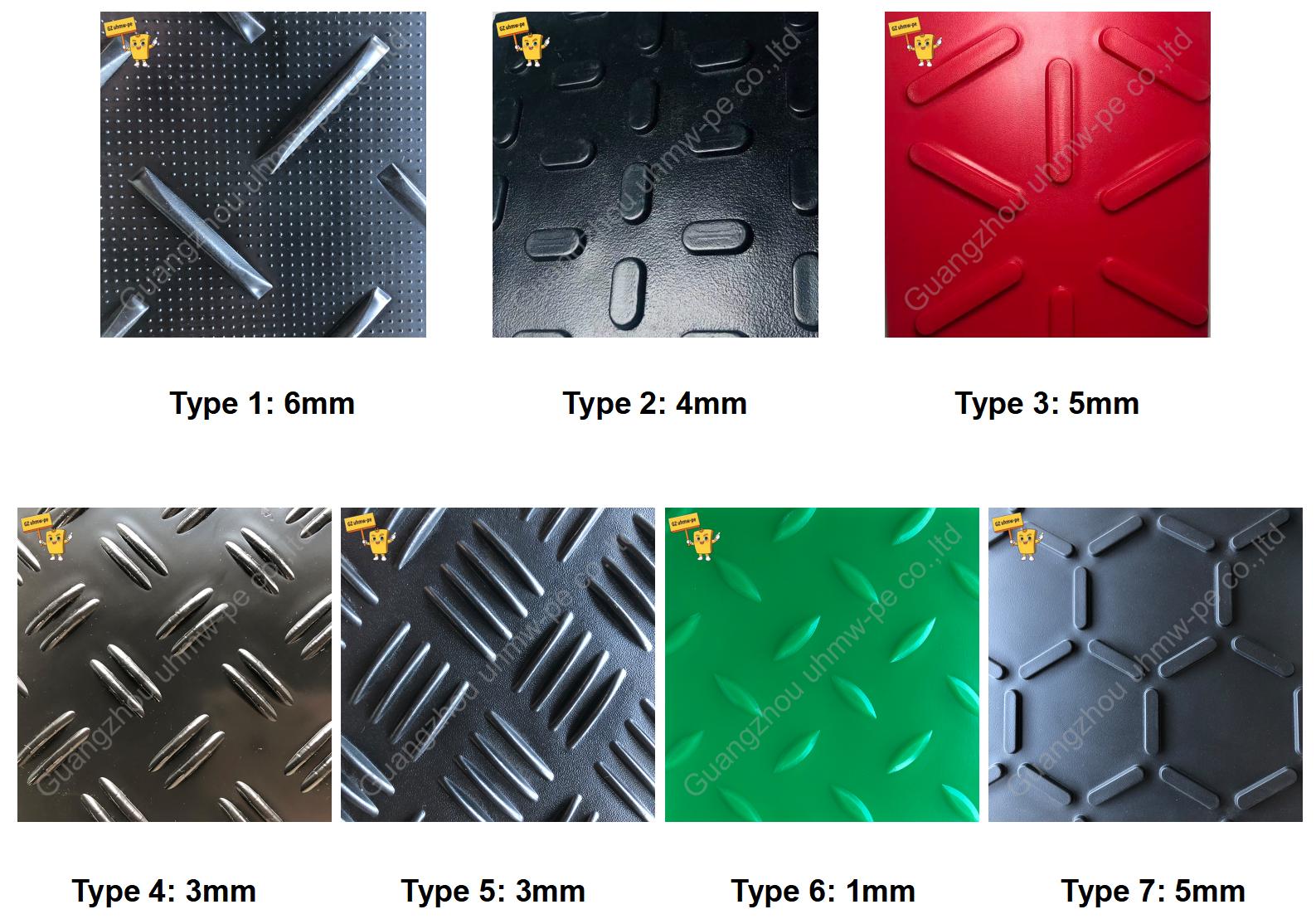
A suitable surface pattern helps improve tire and footwear contact with the mat. Depending on the application, contractors may prefer single-sided or double-sided patterns. The manufacturer's lightweight ground protection mat range lists pattern options on one or both sides.
Thickness and Dimensions
Mat thickness and dimensions affect the intended application and load-distribution characteristics. The listed lightweight mat specification includes HDPE/UHMWPE material options, 12 mm or customized thickness, and a standard size of 1220 × 2440 mm or customized dimensions. Confirm suitability for the intended equipment and site conditions before ordering.
Connection Systems
Connection systems help join multiple panels into longer access routes and larger working surfaces. The product page lists steel and polyurethane (PU) connector options.

Handling and Transportation
Arborist contractors frequently transport equipment between different properties. Mat weight, storage requirements, loading arrangements, and transportation space should therefore be considered before purchasing.
Ground Protection Mats vs. Outrigger Pads: Understanding the Difference
Ground protection mats and outrigger pads serve different purposes and should not be treated as interchangeable products.
Ground Protection Mats
Ground protection mats are primarily designed to create temporary access routes and working surfaces. They are useful for bucket truck travel paths, equipment access across lawns, temporary work platforms, landscaping areas, and vehicle staging locations.
Outrigger Pads
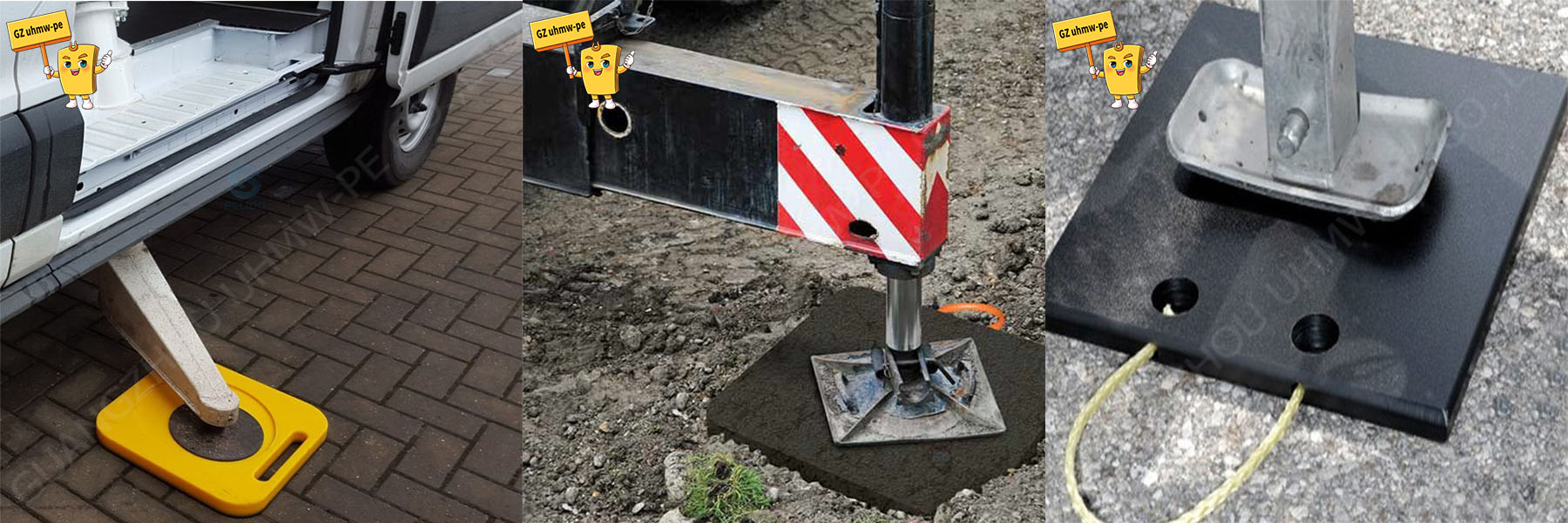
Outrigger pads are designed to distribute concentrated loads from equipment support legs. Bucket trucks, mobile cranes, and aerial work platforms may use outriggers to improve stability during operation. An appropriately selected outrigger pad provides a larger support area beneath the outrigger foot, helping distribute the applied load.
Can They Be Used Together?
Yes, when the equipment configuration and ground conditions permit. An arborist contractor may use ground protection mats to establish a temporary access route and separate outrigger pads to support the equipment at its working position. These products must be independently evaluated for their intended loads. Always follow the equipment manufacturer's requirements and assess actual ground-bearing conditions.
Applications Across Tree Care and Utility Maintenance
Residential Tree Removal
Temporary ground protection routes can help reduce direct vehicle contact with lawns and landscaped areas when bucket trucks and equipment enter residential properties.
Commercial Tree Maintenance
Shopping centers, office parks, golf courses, and commercial properties frequently require vegetation maintenance while preserving their outdoor appearance. Ground protection mats can provide designated equipment routes and temporary work areas.
Utility Line Clearance
Utility contractors regularly maintain trees and vegetation around overhead power lines and other infrastructure. Properly selected mats can help protect grass verges, roadside shoulders, and other vulnerable surfaces during maintenance operations.
Municipal Landscaping Projects
In parks, public gardens, and roadside green spaces, temporary access mats can help contractors perform tree pruning, branch removal, and landscaping work while reducing unnecessary disturbance to surrounding surfaces.
How to Select the Right Ground Protection Mat for Your Project
- Identify the equipment. Determine whether the project involves bucket trucks, aerial lifts, cranes, wood chippers, or other vehicles.
- Calculate the expected loads. Review gross vehicle weight, axle loads, tire contact pressure, outrigger reactions, and other relevant equipment information. Do not select a mat based only on total vehicle weight.
- Evaluate the ground conditions. Consider soil type, moisture content, slope, drainage, underground utilities, and the condition of the existing surface.
- Determine the required coverage. Measure the access route and working area. Consider turning areas, equipment positioning, and the number of mats needed.
- Select the material and connection system. Compare HDPE and UHMWPE options, thickness, surface patterns, and available connectors.
- Confirm engineering suitability. Request product information and confirm whether the selected configuration is appropriate for the specific equipment and operating conditions.
A well-planned mat system can help reduce ground damage, simplify site access, and improve the overall efficiency of arborist operations.
Why Choose UHMW-PE for Custom Ground Protection Solutions
Guangzhou UHMW-PE Co., Ltd. supplies engineering plastic products, including UHMWPE sheets, HDPE sheets, ground protection mats, and outrigger pads. Relevant product options for arborist and utility maintenance contractors include:
- Lightweight Ground Protection Mats: HDPE/UHMWPE material options, 12 mm or customized thickness, and standard dimensions of 1220 × 2440 mm or customized sizes.
- Dura Mat Heavy-Duty Composite Ground Protection Mat: A UHMWPE composite mat featuring dual-sided traction tread and molded overlapping interlocks, according to its product listing.
- Outrigger Pads for Bucket Trucks: Plastic support pads for bucket trucks, cranes, and other equipment requiring outrigger support.
Customization is an important consideration when standard dimensions do not match project requirements. Contact the supplier with the equipment details, site conditions, preferred dimensions, and intended application to discuss a suitable configuration.
Frequently Asked Questions
What are ground protection mats for arborist bucket truck access?
They are temporary protective panels installed on lawns, soil, and other vulnerable surfaces to create access routes and working areas for arborist vehicles and equipment.
Can ground protection mats protect residential lawns?
Properly selected mats can help reduce direct tire contact, soil rutting, and surface damage when bucket trucks and other equipment travel across residential lawns. Actual protection depends on ground conditions, equipment loads, and mat configuration.
Are HDPE and UHMWPE mats suitable for outdoor use?
Both materials are used in outdoor ground protection applications. They offer moisture resistance and useful mechanical properties, although the specific product formulation and operating conditions should be considered.
What thickness should I choose for a bucket truck?
There is no universal thickness suitable for every bucket truck. Selection depends on vehicle weight, axle loads, tire pressure, soil conditions, and intended use. Confirm the required specifications with the equipment manufacturer and mat supplier.
Can ground protection mats be connected together?
Yes. Different products offer different connection systems. The listed lightweight ground protection mats offer steel and PU connector options.
Do arborist contractors also need outrigger pads?
Many bucket trucks and aerial work platforms use outrigger pads to distribute support loads during operation. Ground protection mats and outrigger pads serve different functions and may be used together when equipment and ground conditions allow.
Can I order custom-sized ground protection mats?
The manufacturer's lightweight ground protection mat listing offers customized dimensions and thickness options. Contact the company with project requirements to discuss suitable configurations.
Get Ground Protection Mats for Your Arborist Equipment
Protecting lawns and landscaped areas is an important part of professional tree care. From residential tree removal to municipal vegetation maintenance and utility line clearance, ground protection mats can help contractors create temporary access routes while reducing unnecessary damage to surrounding surfaces.
Choosing the right material, thickness, dimensions, surface pattern, and connection system can make a meaningful difference in equipment access and jobsite management.
Looking for ground protection mats for arborist bucket truck access?
Contact UHMW-PE to discuss your equipment requirements, project conditions, preferred dimensions, and customized product options.
Website: www.uhmwplast.com
Email: ali@uhmwplast.com
Product inquiry: Contact UHMW-PE
Product selection note: Load capacity and field performance depend on the complete mat configuration, equipment, and site conditions. Confirm technical suitability with the manufacturer and equipment supplier before use.