How to Select the Most Suitable Ground Protection Mat for the Construction Environment of an Oil Field
Choosing the right ground protection mat for an oil field construction environment is essential for improving site accessibility, protecting the ground, supporting heavy equipment, and maintaining safe working conditions. Oil field construction sites often involve heavy trucks, drilling rigs, excavators, cranes, temporary access roads, uneven terrain, mud, oil spills, and changing weather conditions. These demanding environments require ground protection mats with excellent load-bearing capacity, impact resistance, durability, and easy maintenance.
Guangzhou UHMW-PE Co., Ltd. specializes in manufacturing high-performance polyethylene ground protection mats for demanding industrial and construction applications. Our HDPE and UHMWPE ground mats provide practical solutions for temporary roadways, heavy equipment access, construction platforms, and oil field infrastructure projects.
In this guide, we explain how to select the most suitable ground protection mat for oil field construction, which technical factors matter most, and why polyethylene ground protection mats are an option for professional contractors and industrial buyers.
1. Understanding the Ground Protection Requirements of Oil Field Construction
Oil field construction environments are different from ordinary construction sites. Heavy machinery, drilling equipment, transportation vehicles, and temporary facilities frequently move across undeveloped or unstable ground.
- Heavy equipment traffic: Drilling rigs, dump trucks, excavators, cranes, and tankers generate substantial wheel or track loads.
- Soft and uneven ground: Sand, clay, mud, and loose soil can cause vehicles to sink, become stuck, or damage the working surface.
- Oil and chemical exposure: Fuel, lubricants, drilling fluids, and other industrial substances may come into contact with ground protection mats.
- Harsh weather: Rain, snow, UV exposure, and temperature fluctuations can affect the ground and temporary access systems.
- Frequent installation and relocation: Temporary access roads and work platforms may need to be installed, removed, and reused at different project locations.
Selecting the correct ground protection mat helps distribute equipment loads, reduce direct ground disturbance, improve access conditions, and support efficient construction operations.
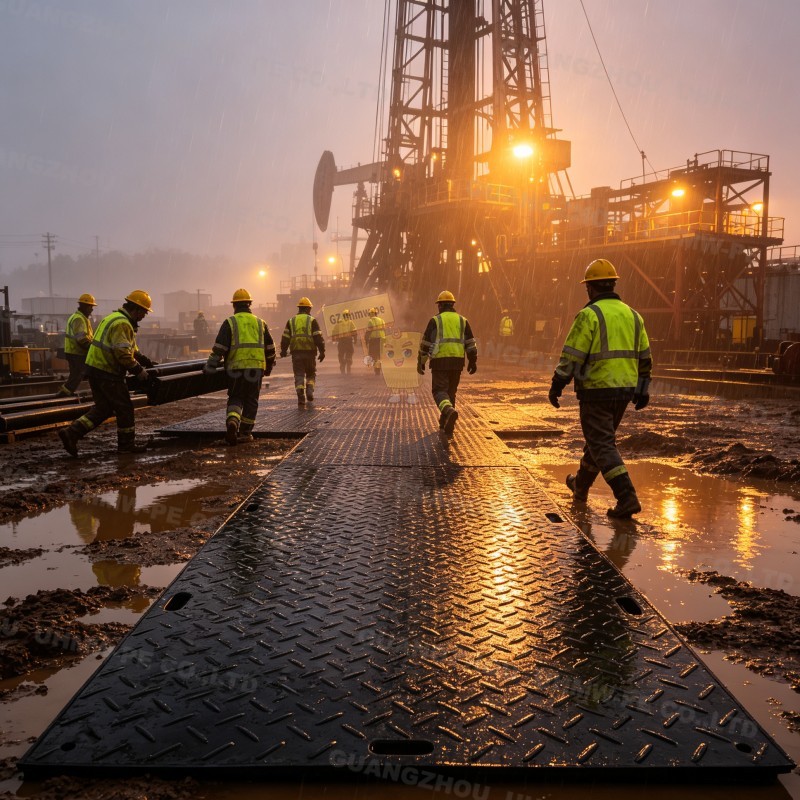
2. Why Choose Polyethylene Ground Protection Mats for Oil Field Construction?
Polyethylene ground protection mats are used in temporary access and industrial ground protection applications because they combine durability, relatively low weight, moisture resistance, and reusability.
- Impact resistance: Suitable polyethylene formulations can withstand repeated handling and impact during demanding site operations.
- Moisture resistance: Polyethylene does not absorb water like untreated wood, making it suitable for wet and muddy environments.
- Chemical resistance: HDPE and UHMWPE resist many chemicals, but compatibility should be verified for specific petroleum products and drilling fluids.
- Easy cleaning: Smooth, non-porous surfaces are generally easier to wash and maintain than absorbent materials.
- Corrosion-free material: Unlike steel plates, polyethylene does not rust.
- Reusability: Durable mats can be recovered, cleaned, inspected, and reused when their condition remains suitable.
For contractors looking to reduce maintenance requirements and improve temporary site access, polyethylene ground protection mats can be a practical alternative to conventional materials.
3. Key Factors to Consider When Selecting Oil Field Ground Protection Mats
3.1 Load-Bearing Capacity
Load-bearing capacity is one of the most important considerations. Drilling rigs, cranes, excavators, and loaded transport trucks can create significant concentrated and dynamic loads.
Evaluate maximum equipment weight, wheel loads, track contact pressure, outrigger loads, repeated traffic, soil bearing capacity, mat thickness, dimensions, and structural design. Do not select a mat based only on thickness or a general load-bearing claim. Actual performance depends on material, mat geometry, load distribution, ground conditions, and installation method.
3.2 Impact Resistance and Structural Durability
Oil field construction involves equipment movement, loading, unloading, and material handling. Mats may experience impacts from machinery, dropped tools, and repeated installation. Evaluate impact resistance, tensile and flexural properties, resistance to cracking, abrasion resistance, repeated-loading performance, and low-temperature impact performance where relevant.
UHMWPE is attractive where excellent wear and impact resistance are required. HDPE is also widely used for durable ground protection mats. Select according to actual project requirements rather than relying on material names alone.
3.3 Chemical and Oil Resistance
Oil field sites may expose mats to diesel fuel, hydraulic oil, lubricants, drilling fluids, and cleaning agents. Polyethylene resists many common chemicals, but it should not be assumed to resist every petroleum-based substance or mixture under all conditions.
Identify the fluids present, concentration, exposure duration, operating and storage temperatures, and whether exposure is occasional or continuous. For prolonged hydrocarbon exposure, request compatibility information and conduct appropriate testing before large-scale deployment.
3.4 Slip Resistance and Surface Texture
Workers may move around equipment in wet, muddy, or oily conditions. A properly designed textured surface can help improve traction under suitable conditions. Consider surface pattern, drainage, compatibility with work boots and vehicle tires, connection stability, and ease of cleaning.
No ground mat should be considered automatically slip-proof. Oil contamination can reduce traction, so regular cleaning, inspections, and site safety procedures remain essential.
3.5 Weather and UV Resistance
Outdoor mats are exposed to sunlight, rain, wind, snow, and temperature changes. Polyethylene is moisture-resistant and does not rot like untreated wood. Long-term outdoor performance depends on formulation, UV stabilization, temperature range, and manufacturing quality.
Ask suppliers about UV stabilization, recommended operating temperature range, low-temperature impact performance, heat resistance, and outdoor storage recommendations.
3.6 Easy Cleaning and Maintenance
Oil field sites can become contaminated with mud, dust, drilling fluids, and oil residues. Polyethylene has a relatively smooth, non-absorbent surface, making many common contaminants easier to remove using suitable washing methods.
- Remove loose soil, mud, and debris.
- Use a cleaning method compatible with the mat material and contaminant.
- Collect and dispose of oily wastewater and residues according to applicable environmental requirements.
- Inspect mats for cracks, deformation, and damaged connectors.
- Dry and store reusable mats appropriately.
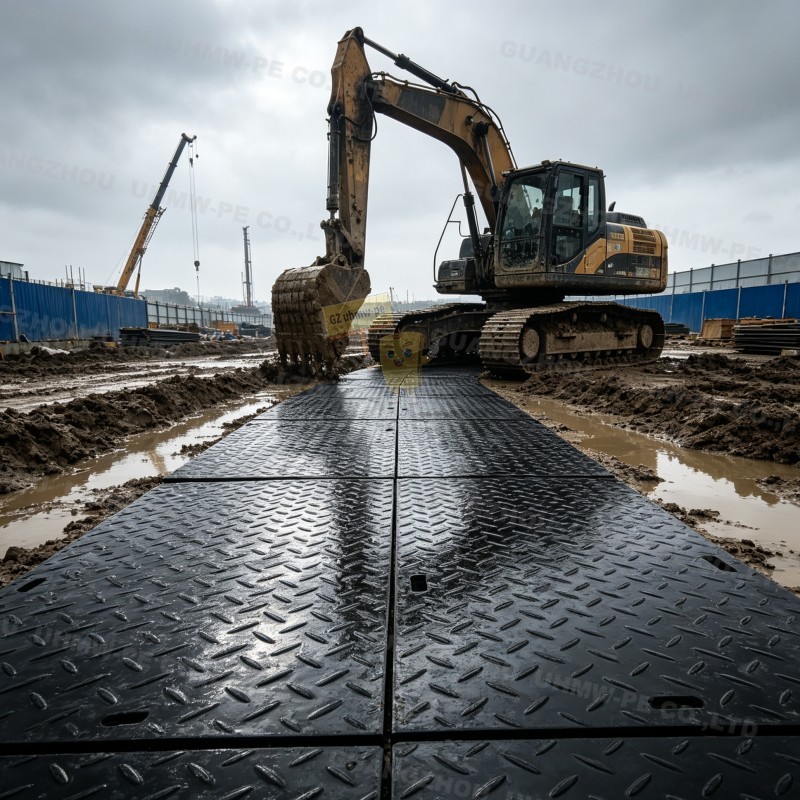
4. Different Types of Ground Protection Mats for Oil Field Applications
Heavy-Duty Ground Protection Mats
Designed for temporary access roads and equipment movement in demanding construction environments. Typical applications include heavy truck access, excavator and loader movement, material transportation routes, temporary construction roads, and equipment staging areas. Select thickness, dimensions, and structural design according to expected loads and ground conditions.
HDPE Ground Protection Mats
HDPE mats provide a balance of durability, moisture resistance, weight, and cost efficiency. They can suit temporary access applications, pedestrian routes, and general equipment movement when correctly engineered for the intended load.
UHMWPE Ground Protection Mats
UHMWPE is known for excellent wear resistance, impact resistance, and low friction characteristics. It may be suitable for repeated handling, demanding wear conditions, or specialized industrial requirements. Consider structural strength, thickness, material properties, and project budget.
Custom-Sized Ground Protection Mats
Oil field sites often have unique access layouts and equipment requirements. Custom mats can be specified by length, width, thickness, material grade, surface pattern, connector configuration, and color.
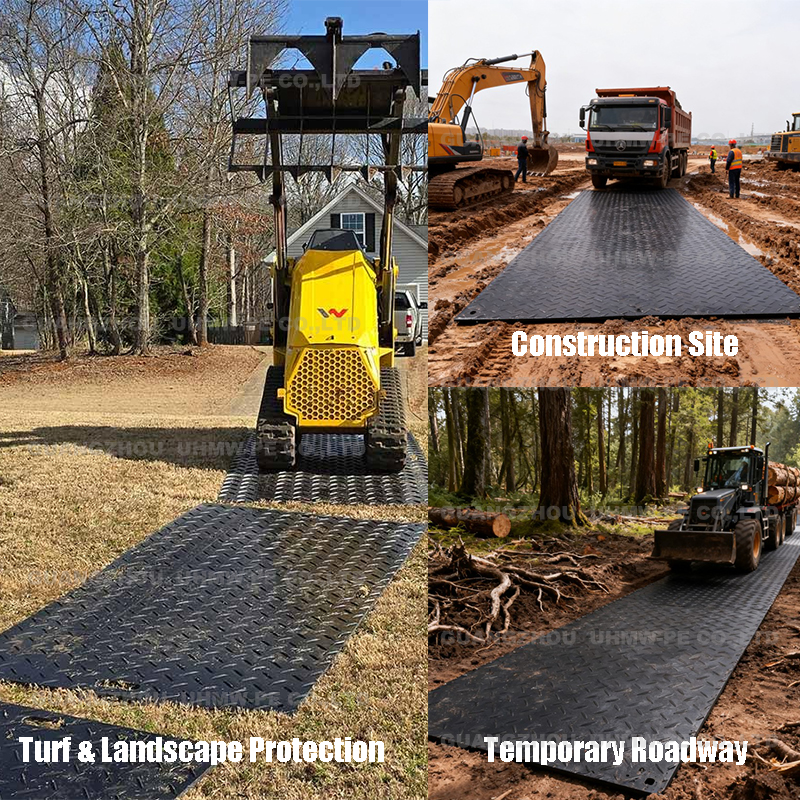
5. Application Scenarios: Ground Protection Mats in Oil Field Construction
- Temporary access roads: Temporary routes for trucks, service vehicles, and construction equipment.
- Drilling rig access areas: Ground protection around designated equipment access and staging zones, subject to engineered load requirements.
- Equipment staging areas: Protection of underlying soil where equipment and materials are temporarily positioned.
- Material transportation routes: Temporary working surfaces for moving pipes, tools, and construction materials.
- Worker walkways: Defined pedestrian routes where surface texture, drainage, and site conditions are appropriate.
- Remote oil field construction: Temporary access solutions where conventional road construction is difficult or uneconomical.
For every application, assess ground condition, equipment load, drainage, and installation method before deployment.
6. HDPE vs. UHMWPE vs. Traditional Ground Protection Materials
| Material | Main advantages | Considerations |
|---|---|---|
| HDPE | Moisture resistance, durability, relatively economical | Performance depends on grade and structural design |
| UHMWPE | Excellent wear and impact resistance | Higher material cost in many applications |
| Wood | Familiar material, readily available in some markets | Can absorb moisture, rot, splinter, and require maintenance |
| Steel | High structural strength and rigidity | Heavy, susceptible to corrosion, and may require lifting equipment |
There is no universal best material for every oil field project. The suitable solution depends on site conditions, load requirements, operating frequency, and total lifecycle cost.
7. Technical Advantages of Polyethylene Ground Protection Mats
| Technical feature | Practical benefit |
|---|---|
| HDPE and UHMWPE material options | Material selection for different project requirements |
| High impact resistance | Helps withstand demanding handling and site operations |
| Moisture resistance | Suitable for wet and muddy outdoor environments |
| Chemical resistance | Resistance to many common industrial chemicals |
| Textured surface options | Supports traction when properly designed and maintained |
| Custom thickness and dimensions | Selection according to project conditions |
| Reusable construction | Helps reduce repeated material purchasing |
| Easy-to-clean surface | Simplifies routine maintenance |
Actual technical performance should be confirmed through product specifications and application-specific testing.
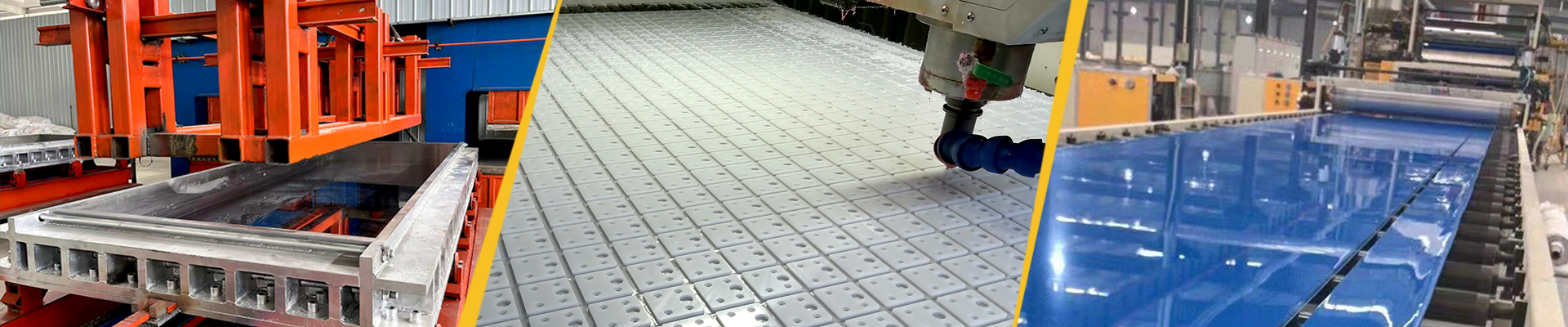
8. Customization and Manufacturing Support from Guangzhou UHMW-PE Co., Ltd.
Choosing a reliable manufacturer is just as important as choosing the right ground protection mat. Guangzhou UHMW-PE Co., Ltd. provides polyethylene material products and ground protection solutions for international industrial and construction customers.
- Custom mat dimensions and thicknesses
- HDPE and UHMWPE material selection
- Different surface textures and patterns
- Customized colors
- Connector and installation options
- Product recommendations based on project requirements
When requesting a quotation, provide the intended application, equipment type, maximum equipment weight, wheel or track configuration, ground conditions, required mat dimensions, chemical exposure, estimated quantity, and delivery destination. This information helps identify a suitable solution.
9. Frequently Asked Questions About Oil Field Ground Protection Mats
Q1: What is the best material for ground protection mats in oil field construction?
HDPE and UHMWPE are both useful options. HDPE offers a practical balance of durability and cost, while UHMWPE provides excellent wear and impact resistance. The best choice depends on equipment loads, site conditions, and required service life.
Q2: Can polyethylene ground protection mats support heavy oil field equipment?
Appropriately engineered polyethylene mats can be used for heavy equipment access. Allowable loads depend on mat dimensions, thickness, structural design, soil conditions, and loading configuration. Request application-specific load information from the manufacturer.
Q3: Are polyethylene ground protection mats resistant to oil and chemicals?
Polyethylene offers resistance to many common chemicals and industrial fluids. Compatibility varies with chemical type, concentration, temperature, and exposure duration. Verify compatibility before use.
Q4: Are HDPE ground protection mats suitable for muddy construction sites?
HDPE is moisture-resistant and does not absorb water like untreated wood. A suitable textured surface and proper installation can help provide a stable temporary working surface. Ground preparation and drainage remain important.
Q5: How do you clean oil field ground protection mats?
Remove loose mud and debris, then wash using a compatible cleaning method. Collect and dispose of oil residues and contaminated wastewater according to applicable environmental regulations. Inspect mats before reuse.
Q6: Can ground protection mats be customized for oil field projects?
Yes. Manufacturers can provide customized dimensions, thicknesses, surface patterns, colors, and connector options according to project requirements.
Q7: How can I choose the correct mat thickness?
Select thickness according to equipment loading, soil conditions, mat dimensions, support conditions, and the required safety margin. A thicker mat is not automatically suitable for every application. Ask the manufacturer for engineering guidance.
10. Make the Right Investment in Oil Field Ground Protection Mats
Selecting the most suitable ground protection mat for an oil field construction environment requires more than comparing prices and product dimensions. Buyers should evaluate load-bearing requirements, impact resistance, chemical compatibility, slip resistance, weather performance, maintenance, and reusability.
HDPE and UHMWPE ground protection mats provide practical solutions for temporary access roads, equipment staging areas, construction routes, and other industrial applications.
Guangzhou UHMW-PE Co., Ltd. is committed to providing durable polyethylene products and customized manufacturing solutions for global construction and industrial customers.
Looking for Ground Protection Mats for Your Oil Field Project?
Share your equipment specifications, site conditions, required dimensions, and project quantity. Our team can help you identify a suitable polyethylene ground protection mat solution.
Request a QuoteRelated Product Keywords Covered
Oil field ground protection mats · Oilfield construction mats · Ground protection mats for oil and gas industry · Heavy-duty ground protection mats · HDPE ground protection mats · UHMWPE ground protection mats · Oilfield access road mats · Temporary roadway mats · Heavy equipment access mats · Drilling rig access mats · Plastic ground protection mats · Polyethylene construction mats · Industrial ground protection mats · Reusable ground protection mats