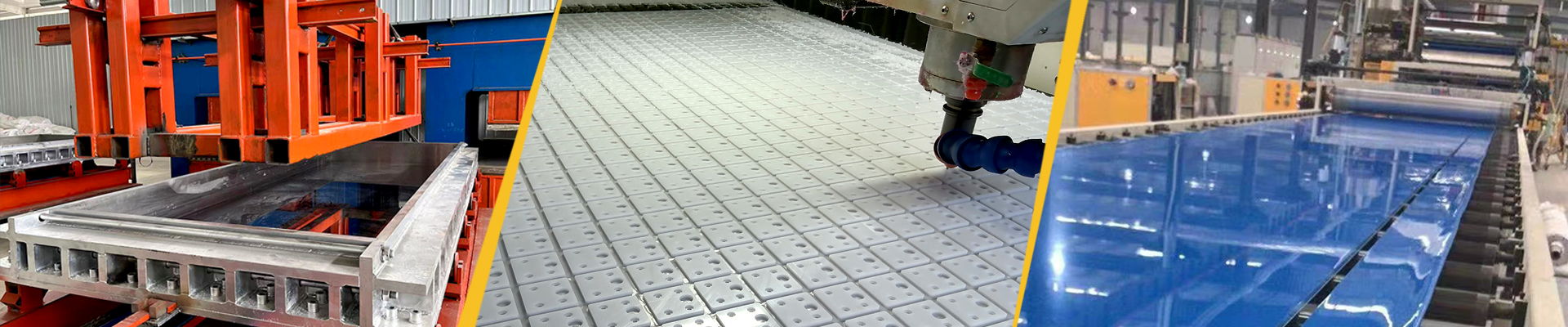
Guangzhou uhmw-pe co.,ltd, a leading manufacturer of UHMWPE engineering plastics, rigorously tests its ground protection mats for impact and wear resistance to ensure top performance in heavy-duty applications. Impact testing includes standardized drop-weight, Charpy, and Izod methods, as well as full-scale panel simulations that replicate real-world crane outrigger loads and falling objects. Wear resistance is evaluated through Taber abraser, sand-slurry, and pin-on-disc tests, which quantify the material’s exceptional durability—UHMWPE exhibits up to 15 times the wear resistance of carbon steel. These tests are supported by ISO quality management, third-party certifications from SGS, and custom field trials. The company’s state-of-the-art facilities can produce oversized sheets up to 6 meters, and its CNC machining capabilities enable fully customized mat solutions. Beyond ground protection, the same testing rigor applies to outrigger pads, synthetic ice rink boards, and lining sheets. With competitive pricing, global export experience, and a commitment to innovation, Guangzhou uhmw-pe co.,ltd delivers reliable, cost-effective engineering plastic products that lower total cost of ownership and enhance operational safety across construction, mining, winter sports, and infrastructure sectors.
In the world of heavy construction, outdoor events, and infrastructure projects, ground protection mats are unsung heroes. They shield sensitive terrain—grass, asphalt, concrete, or soil—from the punishing forces of cranes, aerial lifts, trucks, and foot traffic. Yet not all mats are created equal. At Guangzhou uhmw-pe co.,ltd, a specialized manufacturer of high-performance engineering plastics, impact resistance and wear resistance are not just buzzwords; they are engineered into every mat through a rigorous battery of tests. This article dives deep into the testing protocols that separate a premium ground protection mat from an ordinary plastic board, exploring the science of durability from the lab to the job site.
The Critical Role of Ground Protection Mats
Temporary access roads, work platforms, and heavy equipment staging areas demand surfaces that can withstand extreme point loads, abrasion from tracked vehicles, and relentless foot traffic. A failure in mat performance can lead to ground damage, costly restoration, equipment instability, and safety hazards. That is why customers worldwide—from construction firms to event organizers—trust engineered plastic solutions from Guangzhou uhmw-pe co.,ltd. Strategically located in Guangzhou, adjacent to the Pazhou International Convention and Exhibition Center, the company has built a reputation for quality, reliability, and precision. Their ground protection mats, made primarily from Ultra-High Molecular Weight Polyethylene (UHMWPE), are designed to bear extraordinary loads while remaining lightweight and easy to handle. But how do they ensure these properties? Through meticulous testing of impact and wear resistance.
undefined
Understanding UHMWPE: The Material Behind the Magic
Ultra-High Molecular Weight Polyethylene (UHMWPE) is a subset of thermoplastic polyethylene with extremely long chains, giving it a molecular weight typically between 3.1 and 5.67 million atomic mass units. This structure confers unparalleled toughness, the highest impact strength of any thermoplastic, and outstanding abrasion resistance. In fact, UHMWPE has a wear resistance up to 15 times greater than carbon steel. It also boasts a low coefficient of friction (self-lubricating), excellent chemical inertness, and moisture resistance. These properties make it ideal for ground protection mats that must endure rough treatment in all weather conditions. At Guangzhou uhmw-pe co.,ltd, raw UHMWPE resin is carefully selected and processed via extrusion and mould pressing lines to create sheets up to 6 meters in length and various thicknesses, forming the backbone of their finished products. The company's material modification capabilities allow tailoring grades with flame retardancy, antistatic properties, or enhanced low-temperature resistance, ensuring performance in mining, ports, power generation, and food processing industries.
Manufacturing Processes: Setting the Stage for Quality
Before a mat can be tested, it must be flawlessly manufactured. The factory operates international-grade extrusion and mould pressing lines. In compression molding, UHMWPE powder is placed in a mold and subjected to high pressure and temperature, fusing the particles into a dense, homogeneous sheet. This process yields isotropic properties—uniform strength in all directions—crucial for withstanding multi-directional impacts. Alternatively, ram extrusion produces continuous profiles with consistent cross-sections. After forming, sheets are cut, CNC-machined, and sometimes engraved with anti-slip patterns. Guangzhou uhmw-pe co.,ltd’s advanced CNC machining centers and precision saws ensure tight tolerances. The company’s robust customization service transforms customer drawings or samples into ready-to-install mat systems, including interlocking features and handles. Quality management governs every step—from raw material inspection to final dimensional checks—in accordance with ISO standards. SGS, ROHS, and FDA test reports are available, confirming compliance with international environmental and safety requirements. This foundation of precision engineering makes subsequent impact and wear testing meaningful and repeatable.
Impact Resistance Testing: Simulating the Real World
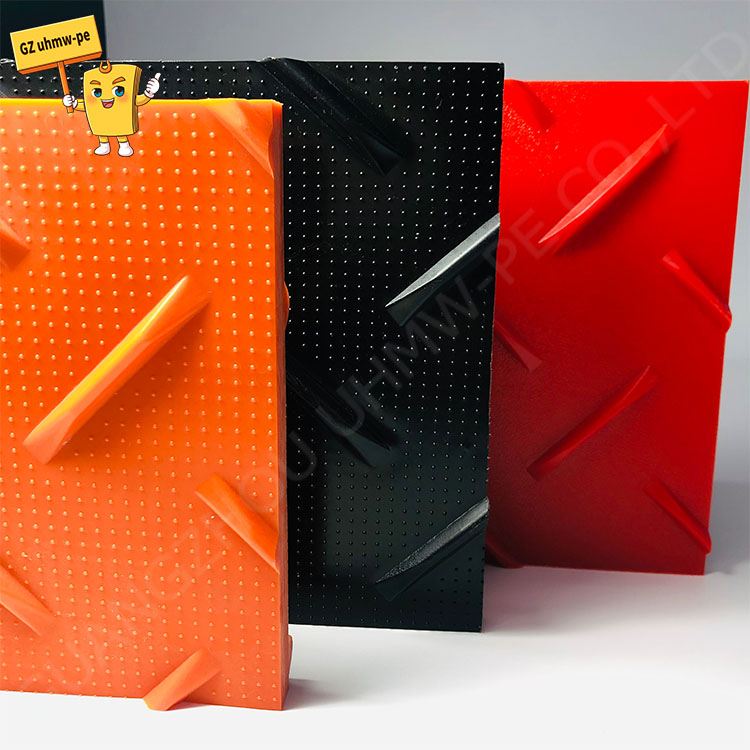
Impact resistance is arguably the most critical performance metric for a ground protection mat. It measures the material's ability to absorb energy from sudden blows without cracking, fracturing, or permanently deforming. In the field, mats face heavy equipment outriggers that exert hundreds of pounds per square inch, falling tools, and the dynamic loads of tracked vehicles. The testing lab at Guangzhou uhmw-pe co.,ltd replicates these forces through several standardized and custom methods.
Drop-Weight Impact Test (ISO 6603, ASTM D5628)
One of the primary tests is the drop-weight impact test. A hemispherical striker of known mass is dropped from increasing heights onto a clamped mat specimen until failure occurs. Failure is defined as visible cracking, yielding, or complete penetration. The energy absorbed up to that point is calculated and recorded. UHMWPE typically exhibits ductile behavior, meaning it deforms significantly before breaking, absorbing tremendous energy. Results are compared against benchmarks for HDPE, PP, and Nylon—common alternative materials. For example, UHMWPE may withstand over 300 Joules per millimeter thickness, whereas HDPE might fail at half that. The factory maintains a library of these values to ensure every production batch meets or exceeds specifications. Digital high-speed cameras capture the deformation mode, and force sensors record the load-time history, allowing engineers to fine-tune formulations. For extreme cold applications, specimens are conditioned at -40°C before testing to verify low-temperature impact toughness, a capability stemming from the company’s specialized modification know-how.
Charpy and Izod Notched Impact Tests (ISO 179, ASTM D256)
While less directly representative of mat abuse than drop-weight tests, Charpy and Izod tests provide standardized comparisons of a material’s resistance to crack propagation. A notched bar is struck by a swinging pendulum; the energy lost by the pendulum indicates the impact strength. UHMWPE often yields “non-break” results in these tests, meaning it deforms but does not snap. This ductility is a key advantage over more brittle plastics like virgin POM or standard PP. The factory uses these tests to qualify incoming raw materials and to evaluate the effects of additives (e.g., UV stabilizers, carbon black) on the base resin. By aligning with ISO 179, they ensure consistent quality that meets global expectations.
Full-Scale Panel Impact Simulation
Beyond laboratory coupons, the company conducts full-scale panel impact testing using a custom-built rig. A 4 ft by 8 ft mat section is supported on a bed of crushed stone or soft soil, and a 500 kg steel hemisphere is dropped from 2 meters to mimic a crane outrigger punch. The resulting dent depth and diameter are measured, and the surrounding area is inspected for cracks. This test not only validates the material but also the structural design—thickness, ribbing, and interlocking edges. Repeated impacts at the same spot simulate prolonged use. Data from these tests guide product improvements, such as optimizing the mat thickness profile or adding reinforcing layers. Guangzhou uhmw-pe co.,ltd’s ability to produce oversized sheets up to 6 meters allows testing on full-scale prototypes without scaling errors.
Puncture and Dynamic Loading
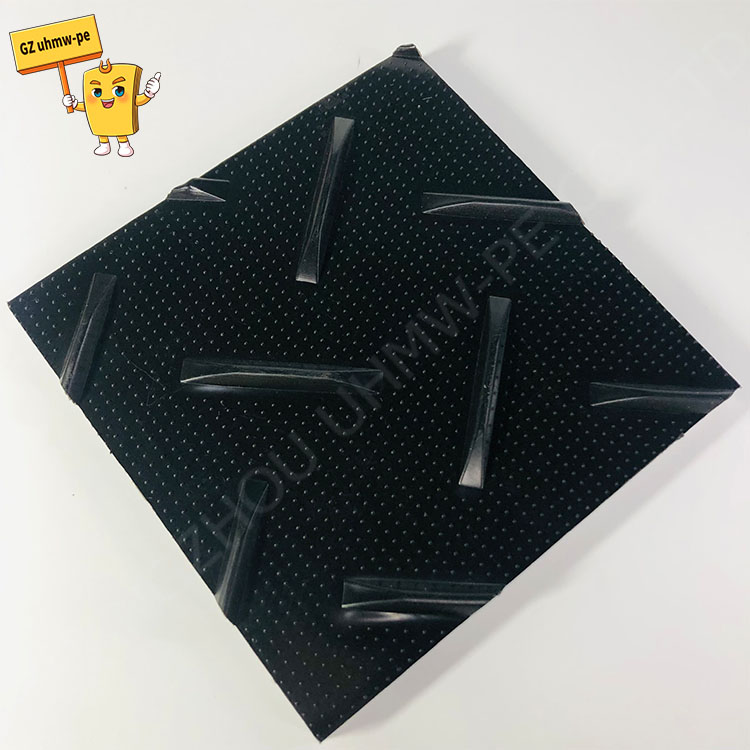
Sharp objects like rebar or rock fragments can stab through a mat. A puncture test uses a conical tip attached to a compression testing machine; the force required to pierce the mat is recorded. Additionally, a servo-hydraulic actuator applies cyclic loads at various frequencies to simulate the repetitive passage of heavy vehicles. The stiffness retention and surface wear are monitored over thousands of cycles. Because UHMWPE has excellent fatigue resistance, the mats maintain their protective capabilities far longer than wood or HDPE alternatives. The company’s dedicated team of professionals—with deep expertise in material science—interprets these results to refine the polymer matrix, ensuring that ground protection mats from Guangzhou uhmw-pe co.,ltd stay in service for years with minimal degradation.
Wear Resistance Testing: Standing Up to Abrasion
While impact strength protects against sudden forces, wear resistance governs the mat’s longevity under sliding, scraping, and grinding actions. Construction sites are abrasive environments: tracked equipment, dragged steel pipes, and gritty mud all erode a mat’s surface. A mat that wears too quickly loses thickness, grip, and its load-spreading capability. The factory employs a suite of wear tests to quantify and guarantee abrasion resistance.
Taber Abraser Test (ASTM D4060, ISO 9352)
The Taber abraser is the workhorse of wear testing. A rotating disc specimen is subjected to two abrasive wheels under a specified load. After a set number of cycles (often 1000 or 5000), the weight loss or volume loss is measured and expressed as a wear index. UHMWPE consistently achieves a wear index less than 0.2 mg/1000 cycles under CS-17 wheels, ranking among the most abrasion-resistant thermoplastics. The lab compares these results against previous batches and competitor products. Because the process is highly controlled, it is used for routine quality assurance. The company’s rigorous quality management system ensures that every batch of UHMWPE compound delivers Taber wear results within a tight tolerance band, giving customers confidence in long-term performance.
Sand-Slurry Abrasion Test
Real-world abrasion often involves three-body wear—grit trapped between the mat and a moving object. To simulate this, the factory uses a slurry test per ISO 15527 or a modified Miller abrasion test. A mat coupon is rotated in a vessel containing a silicon carbide or sand slurry for a predetermined time. The mass loss correlates to field wear in sandy environments. This test is particularly relevant for mats used in desert construction or oil field access roads. The company has extensive experience supplying to mining and bulk material handling sectors, so they understand that wear resistance must be proven in aggressive media. Data from slurry testing informs material selection for ground protection mats destined for abrasive sites.
Sliding Wear and Coefficient of Friction
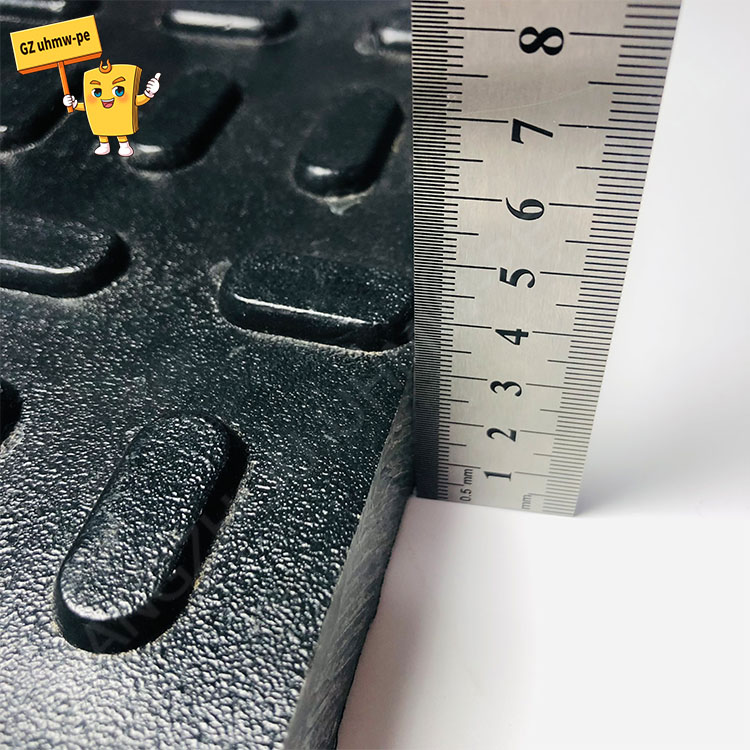
A separate pin-on-disc test (ASTM G99) measures the coefficient of friction and wear rate when the mat material slides against steel or rubber. UHMWPE’s self-lubricating nature gives it a dynamic coefficient of friction as low as 0.05–0.10 against polished steel. This not only reduces wear but also makes mats easier to clean and less likely to bind with tracked vehicles. The test is run under dry and wet conditions, as water can sometimes act as a lubricant. Results demonstrate that UHMWPE maintains its low friction and low wear even without external lubricants, a key advantage in muddy or rainy conditions. Guangzhou uhmw-pe co.,ltd provides this data to customers calculating the total cost of ownership, as reduced friction translates into less fuel consumption for vehicles moving over mats.
Custom Ground Protection Mat Wear Trials
In addition to laboratory tests, the company conducts field trials on its own test ground or at partner sites. Mats are laid over a prepared subgrade and subjected to a defined number of passes by a loaded dump truck or excavator. Weight loss, surface profile changes, and visual degradation are recorded. These trials validate laboratory predictions and sometimes reveal behaviors not captured by accelerated tests—for example, the polishing effect of tires, which can actually improve surface smoothness over time without significant material loss. Because Guangzhou uhmw-pe co.,ltd offers ground protection mats as a core product line, they continuously refine their designs based on this feedback. For instance, they might adjust the top-surface texture to balance slip resistance with cleanability, based on wear patterns observed in these trials.
Quality Assurance: Beyond Mechanical Tests
Impact and wear resistance tests are part of a broader quality ecosystem. The factory operates under an ISO quality management system, and finished products are subject to 100% dimensional inspection. Thickness is measured at multiple points with precision calipers; flatness is checked on a granite surface plate. Physical properties like density, tensile strength, and elongation at break are measured per ISO 527. The company can provide third-party test reports from SGS for REACH, RoHS, and FDA compliance, ensuring that mats are safe for incidental food contact or environmentally sensitive areas. All this documentation supports the product’s integration into global supply chains. With export experience spanning Southeast Asia, the Middle East, Europe, and the Americas, the company has mature logistics and foreign trade capabilities, delivering consistent quality across borders.
Product Range: Ground Protection Mats and Beyond
The expertise in testing and manufacturing extends to other finished products, all of which share the same material fundamentals. For example, outrigger pads—smaller cousins of ground protection mats—use identical UHMWPE formulations and are tested similarly for punctures and load distribution. Synthetic ice rink boards, another specialty, must withstand the impact of skates and hockey pucks while providing a low-friction glide; impact and wear tests are adapted accordingly. UHMWPE lining sheets for hoppers and chutes undergo rigorous abrasion tests against coal, ore, or grain. Guide rails, star wheels, and wear-resistant liners are all customized based on the same material testing foundation. This synergy allows Guangzhou uhmw-pe co.,ltd to serve industries from winter sports to infrastructure with a unified quality standard.
Customization and the Test-Validate-Improve Cycle
One of the company's standout strengths is its customization capability. With mold development facilities and CNC machining centers, they provide a one-stop service from material selection to finished product. When a client provides a drawing or sample, the engineering team translates requirements into a material specification. A prototype is made and tested against the anticipated load, wear, and environmental conditions. If a mat is intended for a chemical plant, additional chemical resistance tests are performed. For arctic applications, low-temperature impact and brittleness tests are added. This iterative approach ensures that the final product not only meets but often exceeds expectations. The philosophy of “Quality First, Integrity Based, Innovation Driven” is embedded in this process. Rapid response and delivery for non-standard parts are made possible by in-house tooling and large-scale production lines. For instance, they can manufacture UHMWPE sheets up to 6 meters in length and across a wide range of thicknesses, giving them an edge in oversized ground protection mats.
Case Example: Testing a Ground Protection Mat for a Crane Rental Company
To illustrate the testing flow, consider a recent project: a crane rental company needed mats for a 200-ton rough-terrain crane working on soft grass. The requirements were: support 150 psi static pressure, withstand dropped shackles, and survive 500 hours of tracked traffic without losing more than 10% thickness. The factory selected a UHMWPE compound with 30% glass fiber reinforcement for added stiffness. Drop-weight impact tests were performed on 25 mm thick samples; at -20°C, the energy to failure exceeded 350 J. The Taber wear index after 5000 cycles was 0.15 mg, far below the threshold. Full-scale panel tests with a 700 kg punch showed negligible permanent deformation. After passing all internal checks, the mats were pilot-produced and sent to the customer for a field trial. Six months later, the mats were still in service with only minor surface scuffing. This success story—replicated for clients around the world—demonstrates how systematic testing translates into reliable products.
Competitive Advantages and Global Supply
Compared to similar engineering plastic brands in Europe and the United States, Guangzhou uhmw-pe co.,ltd offers highly competitive pricing while delivering equivalent or superior performance. The cost-effectiveness is achieved through efficient manufacturing, local raw material sourcing where possible, and lean operations. The company’s strategic location in Guangzhou facilitates sea freight exports, and their experienced team handles all export documentation, including certificates of origin and compliance. Products are typically wrapped in weatherproof packaging with edge protectors and shipped in containers or break-bulk. Whether a customer orders one custom-shaped guide rail or a hundred ground protection mats, the quality and service level remain consistent.
Environmental Responsibility and Innovation
The company is guided not only by a commitment to quality but also by environmental responsibility. UHMWPE, HDPE, and PP are fully recyclable thermoplastics. Off-cuts and defective parts from the testing process are reground and reused in non-critical applications or sold to recyclers, minimizing waste. Additionally, the durability of their mats reduces consumption: a single UHMWPE mat can replace dozens of plywood or steel plates over its lifetime, lowering the carbon footprint of construction projects. Through continuous innovation, the company explores bio-based UHMWPE and more sustainable additives, aligning with global trends toward greener materials.
Conclusion: Trust Built on Tested Performance
Ground protection mats are not commodities; they are engineered shields that must perform flawlessly in demanding environments. At Guangzhou uhmw-pe co.,ltd, impact and wear resistance are validated through a comprehensive spectrum of tests—from Charpy and drop-weight to full-scale simulations and field trials. This dedication to testing, combined with advanced manufacturing and customization capabilities, ensures that every mat leaving the factory in Haizhu District, Guangzhou, will protect your ground and your equipment for years to come. Whether you need temporary roadways, outrigger pads, or synthetic ice rink boards, a partner with proven testing prowess is a partner you can trust.