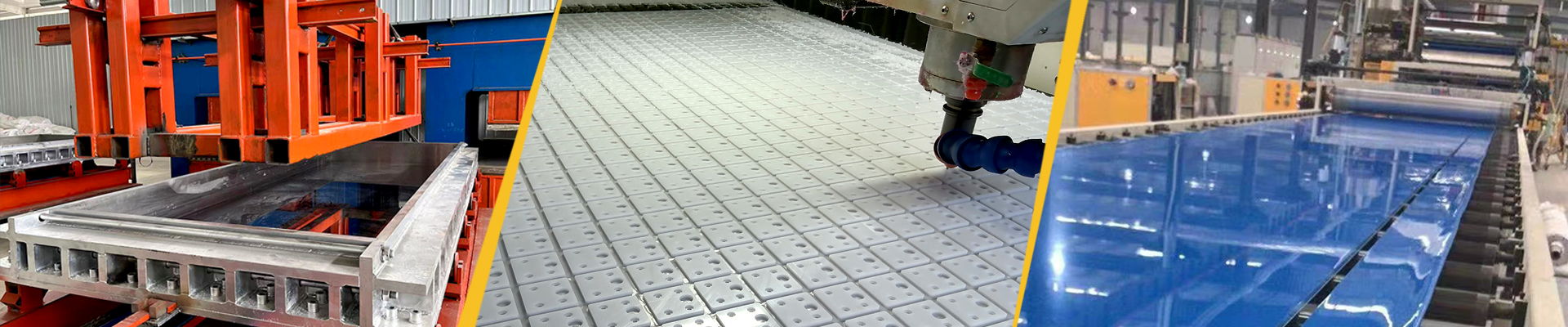
This article provides a comprehensive guide on machining and cutting UHMWPE sheets without deformation, focusing on material properties, challenges, and best practices. UHMWPE's high molecular weight leads to heat buildup during machining, causing thermal expansion and warping. To counter this, proper tool selection—carbide tools with positive rake angles and polished flutes—is critical. Optimizing cutting parameters such as speeds (150–300 m/min), feed rates (0.1–0.3 mm/tooth), and light depths of cut (0.5–2 mm) minimizes heat generation. Effective cooling via air blast or mist coolant and efficient chip evacuation are essential. Techniques like climb milling and fine-tooth saw blades improve edge quality. Post-machining stress relief through annealing at 80–100°C reduces residual stresses. The article highlights the expertise of Guangzhou uhmw-pe co.,ltd, a specialized manufacturer that offers custom machining, large-format sheets up to 6 meters, and rigorous quality control with ISO certifications. Case examples demonstrate successful machining of lining sheets and complex parts. By following these guidelines, fabricators can achieve precise, deformation-free UHMWPE components for applications in infrastructure, mining, and recreation. The company's global supply experience and cost-effective solutions make them a reliable partner for engineering plastic needs.
Ultra-high molecular weight polyethylene (UHMWPE) is a versatile engineering plastic renowned for its exceptional wear resistance, low friction, and impact strength. However, machining and cutting UHMWPE sheets without deformation poses significant challenges due to its high viscoelasticity and tendency to generate heat. This comprehensive guide explores proven techniques and best practices to achieve precise, distortion-free results. Drawing on decades of experience from industry leaders like Guangzhou uhmw-pe co.,ltd, a specialized manufacturer of high-performance engineering plastics, we delve into material behavior, tool selection, cutting parameters, and post-processing strategies. Whether you are fabricating components for ground protection mats, synthetic ice rink boards, or UHMWPE lining sheets, understanding these principles is essential for maintaining dimensional accuracy and product integrity.
Understanding UHMWPE Material Properties
UHMWPE differs from conventional polyethylene in its extremely long molecular chains, which give it unique mechanical and thermal characteristics. With a molecular weight typically exceeding 3 million g/mol, it exhibits high melt viscosity and low thermal conductivity. These properties make it prone to heat buildup during machining, leading to thermal expansion, melting, and subsequent deformation upon cooling. Additionally, UHMWPE’s low coefficient of friction and high ductility can cause chips to stick to tools, further complicating the process. Guangzhou uhmw-pe co.,ltd leverages advanced material modification technologies, including flame retardant and antistatic variants, to tailor properties for specific applications while maintaining machinability.
undefined
Common Challenges in Machining UHMWPE
Operators often encounter several issues when cutting UHMWPE sheets:
- Thermal deformation: Localized heating causes material expansion, leading to warping or dimensional changes after cooling.
- Burr formation: The material's flexibility creates rough edges that require secondary finishing.
- Tool clogging: Chips can adhere to cutting edges, reducing efficiency and increasing friction.
- Cracking: Excessive stress or improper feed rates can induce micro-cracks, especially near edges.
Addressing these challenges requires a systematic approach to tool geometry, cutting parameters, and cooling.
Selecting the Right Cutting Tools
Carbide and High-Speed Steel Tools
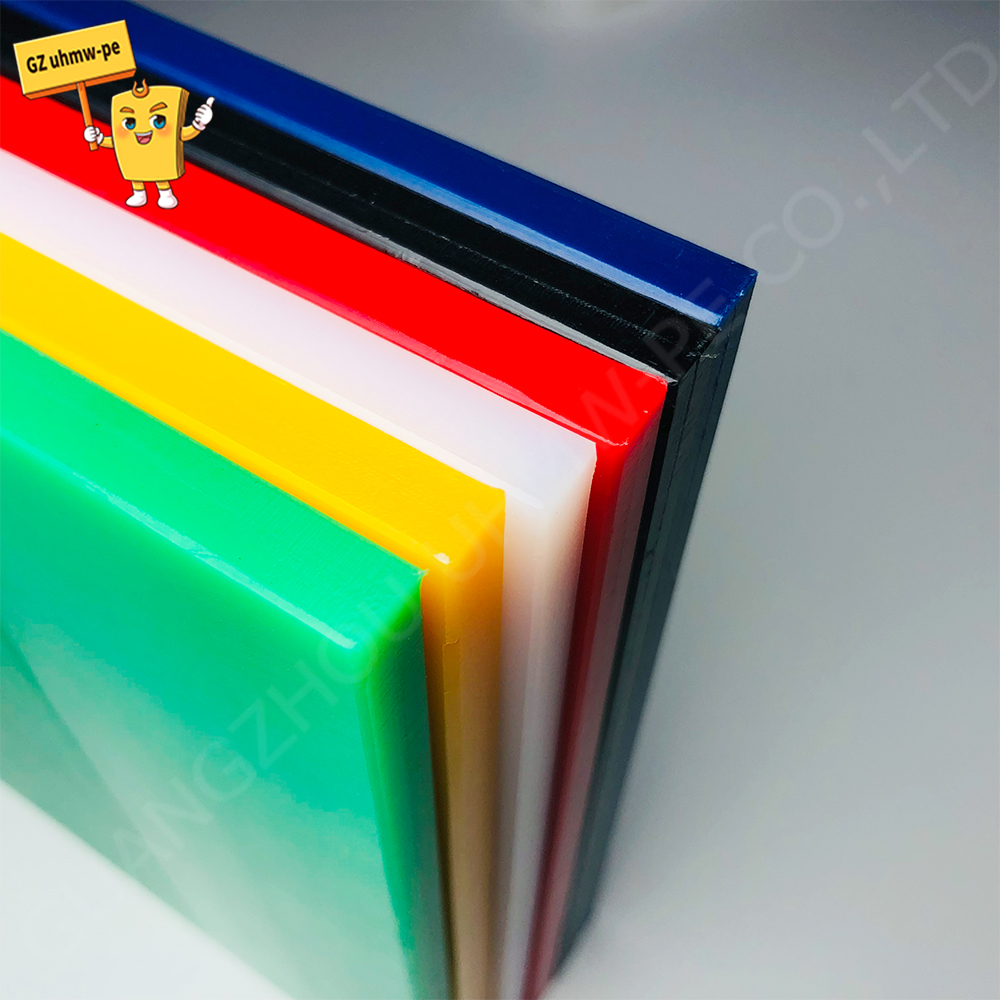
For most UHMWPE machining operations, carbide-tipped tools are preferred due to their hardness and ability to maintain sharp edges under high temperatures. High-speed steel (HSS) tools can be used for low-volume work but dull quickly. Tools with polished flutes reduce chip adhesion. Guangzhou uhmw-pe co.,ltd recommends using single-flute or two-flute end mills for slotting and profiling to minimize heat generation. For drilling, use drills with a 30° helix angle and sharp points to reduce thrust forces.
Tool Geometry Modifications
Geometry plays a critical role. A positive rake angle (10°–15°) reduces cutting forces and heat. Relief angles should be generous (8°–12°) to prevent rubbing. For saw blades, choose blades with triple-chip grind or alternate top bevel geometries to produce cleaner cuts. Ensure tools are sharp; dull tools increase friction and heat.
Optimizing Cutting Parameters
Speeds and Feeds
Spindle speeds should be moderate to avoid excessive frictional heat. Recommended cutting speeds for milling UHMWPE are 150–300 m/min (500–1000 SFM). Feed rates should be high enough to remove material quickly but not so high as to cause tool deflection. A good starting point is 0.1–0.3 mm/tooth (0.004–0.012 in/tooth) for end mills. For drilling, use a feed of 0.1–0.2 mm/rev (0.004–0.008 in/rev).
Depth of Cut
Light depths of cut (0.5–2 mm) help control heat buildup. For roughing, a deeper cut can be taken but must be accompanied by adequate cooling. Climb milling is recommended over conventional milling to reduce heat and provide a better surface finish.
Cooling and Chip Evacuation
Effective cooling is vital. Use air blast or mist cooling with water-soluble coolant to dissipate heat. Avoid flood coolant as it can cause thermal shock. For thin sheets (<5 mm), consider using a chilled compressed air system. Chip evacuation must be efficient; use vacuum attachments or brush-type chip guards. Guangzhou uhmw-pe co.,ltd offers custom-shaped parts like star wheels and guide rails that require meticulous chip management to prevent recutting.
Cutting Techniques for Different Operations
Laser Cutting
Laser cutting of UHMWPE is possible with CO2 lasers, but attention to heat-affected zones is critical. Use high power and speed with multiple passes for thick sheets. The cut edge may have a slight discoloration; this is acceptable for functional parts. For appearance-critical components, waterjet cutting is superior.
Waterjet Cutting
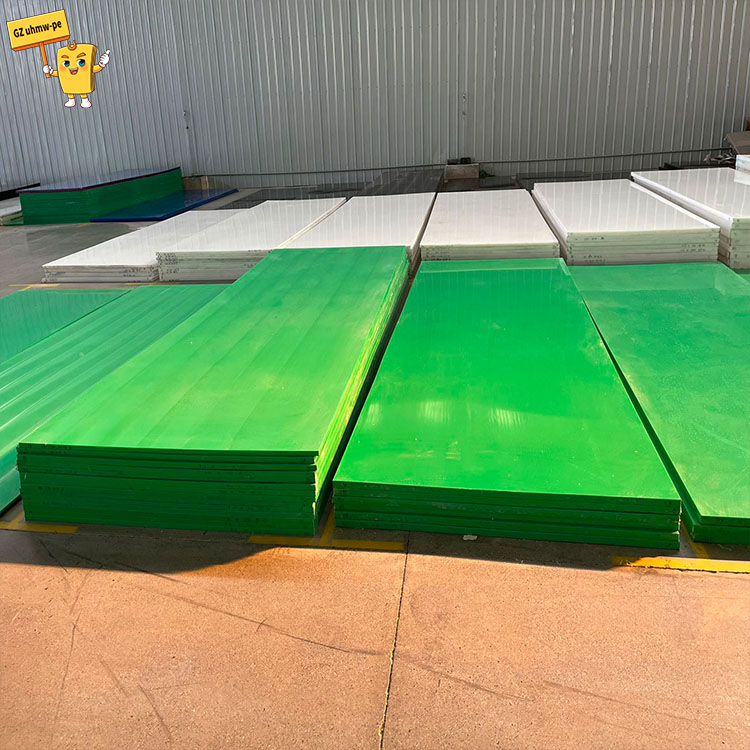
Abrasive waterjet cutting is ideal for thick UHMWPE sheets (up to 150 mm) as it generates minimal heat. The process produces a smooth edge and requires no secondary finishing. However, it is slower and more expensive. Guangzhou uhmw-pe co.,ltd uses advanced CNC waterjet systems to produce large-format sheets up to 6 meters in length.
Sawing
For straight cuts, use band saws or circular saws with fine-tooth blades (10–14 TPI). Feed the material slowly to avoid chatter. For curved cuts, jigsaws with sharp blades are suitable. Always secure the sheet to prevent vibration.
Machining Complex Shapes and Custom Parts
When machining custom parts such as outrigger pads or synthetic ice rink boards, the following steps ensure accuracy:
- Rough-cut the sheet to oversize dimensions, allowing for stress relief.
- Clamp the workpiece on a flat vacuum table or use double-sided tape to prevent movement.
- Program multi-pass toolpaths with stepovers of 30–40% tool diameter.
- Use a climb milling strategy for finish passes with a depth of 0.2–0.5 mm.
- Deburr edges using a chamfer tool or fine sandpaper.

Post-Machining Stress Relief
Even with optimal parameters, residual stresses can cause delayed deformation. Annealing UHMWPE machined parts at 80–100°C for 1–2 hours per cm of thickness can relieve stresses. Cool slowly to room temperature. Guangzhou uhmw-pe co.,ltd provides this service for critical components used in infrastructure and mining applications.
Quality Control and Measurement
Inspect machined parts for dimensional accuracy using CMM or laser scanners. Pay attention to flatness, parallelism, and surface finish. Acceptable tolerances for UHMWPE are typically ±0.1 mm for non-critical dimensions and ±0.05 mm for precision fits. The company employs rigorous quality management systems certified to ISO standards, ensuring consistent output.
Case Study: Machining UHMWPE Lining Sheets
A client required large UHMWPE lining sheets (3m x 1.5m x 10mm) with holes and slots for a chute application. Using a 5-axis CNC router with a 12mm carbide two-flute end mill, the operations team ran at 18,000 RPM with a feed of 4 m/min and 0.5 mm depth of cut. Air cooling was applied. The resulting sheets had no warpage and held tolerances of ±0.05 mm. The project was delivered within 48 hours.
Conclusion
Machining UHMWPE sheets without deformation is achievable through careful selection of tools, parameters, and techniques. By controlling heat generation, ensuring efficient chip evacuation, and employing stress relief, manufacturers like Guangzhou uhmw-pe co.,ltd produce high-quality components for demanding environments. With decades of expertise and advanced CNC capabilities, they offer one-stop solutions from material modification to finished custom-shaped parts. For industries requiring durable, low-friction, and impact-resistant components, partnering with a knowledgeable supplier is key to success.
This guide was prepared with insights from Guangzhou uhmw-pe co.,ltd, a leader in engineering plastic solutions. For more information, visit their facility at Room 1303, No. 1068 Xingang East Road, Haizhu District, Guangzhou, China.