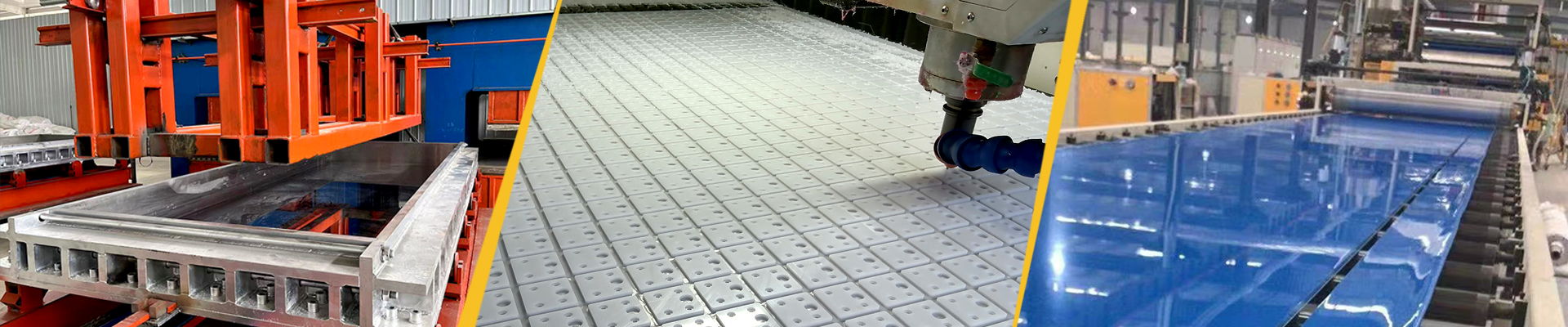
Machining UHMWPE board into complex profiles requires careful consideration of the material's low melting point, high ductility, and notch sensitivity. Key techniques include using sharp carbide or PCD tools, high spindle speeds (10,000-24,000 RPM), and aggressive feed rates to prevent heat buildup. Climb milling, trochoidal paths, and mist coolant help achieve smooth finishes and dimensional accuracy. Guangzhou uhmw-pe co.,ltd, a specialized engineering plastics manufacturer, offers custom UHMWPE grades (antistatic, flame-retardant, high-wear) and advanced CNC machining services for complex parts like guide rails, star wheels, and wear liners. Their expertise includes large-format processing up to 6 meters, mold development, and strict quality control (ISO, SGS reports). By partnering with them, clients benefit from lower total cost of ownership, improved safety, and efficient customization for industries like construction, mining, and winter sports.
Ultra-High Molecular Weight Polyethylene (UHMWPE) is a versatile engineering plastic known for its exceptional wear resistance, low friction, and impact strength. However, machining UHMWPE into complex profiles presents unique challenges due to its soft, tough nature and high thermal expansion. This article provides a comprehensive guide on routing and shaping UHMWPE boards, drawing on the expertise of Guangzhou uhmw-pe co.,ltd, a specialized manufacturer and solutions provider in high-performance engineering plastics.
Understanding UHMWPE Material Behavior
UHMWPE's molecular weight above 3 million g/mol gives it outstanding abrasion resistance and self-lubrication, but also makes it prone to melting during cutting. The material has a low melting point (around 130-136°C) and poor thermal conductivity, so heat buildup must be managed carefully. Additionally, UHMWPE is notch-sensitive and can deform under clamping pressure. Proper tool selection and machining parameters are critical to avoid surface melting, burrs, and dimensional inaccuracies.
Material Grades and Modifications
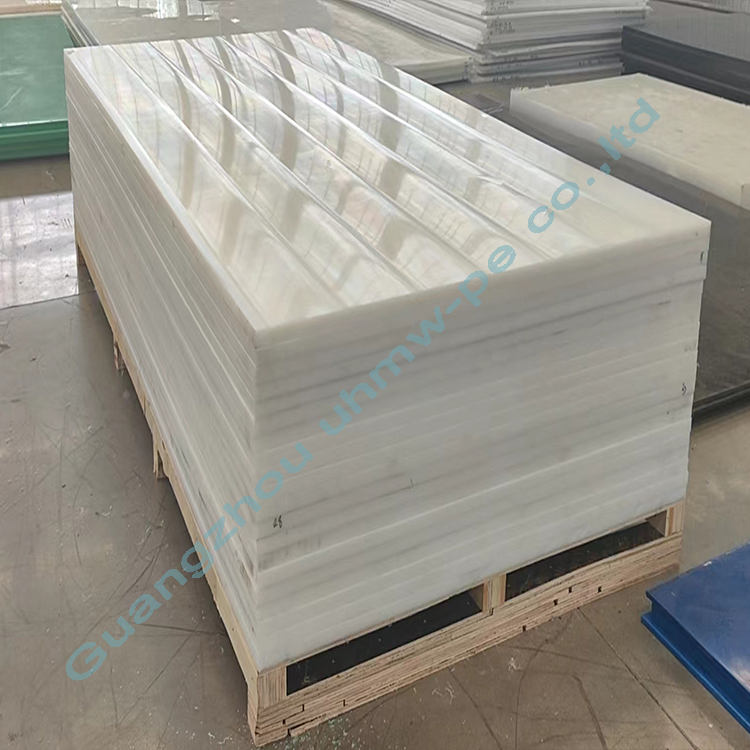
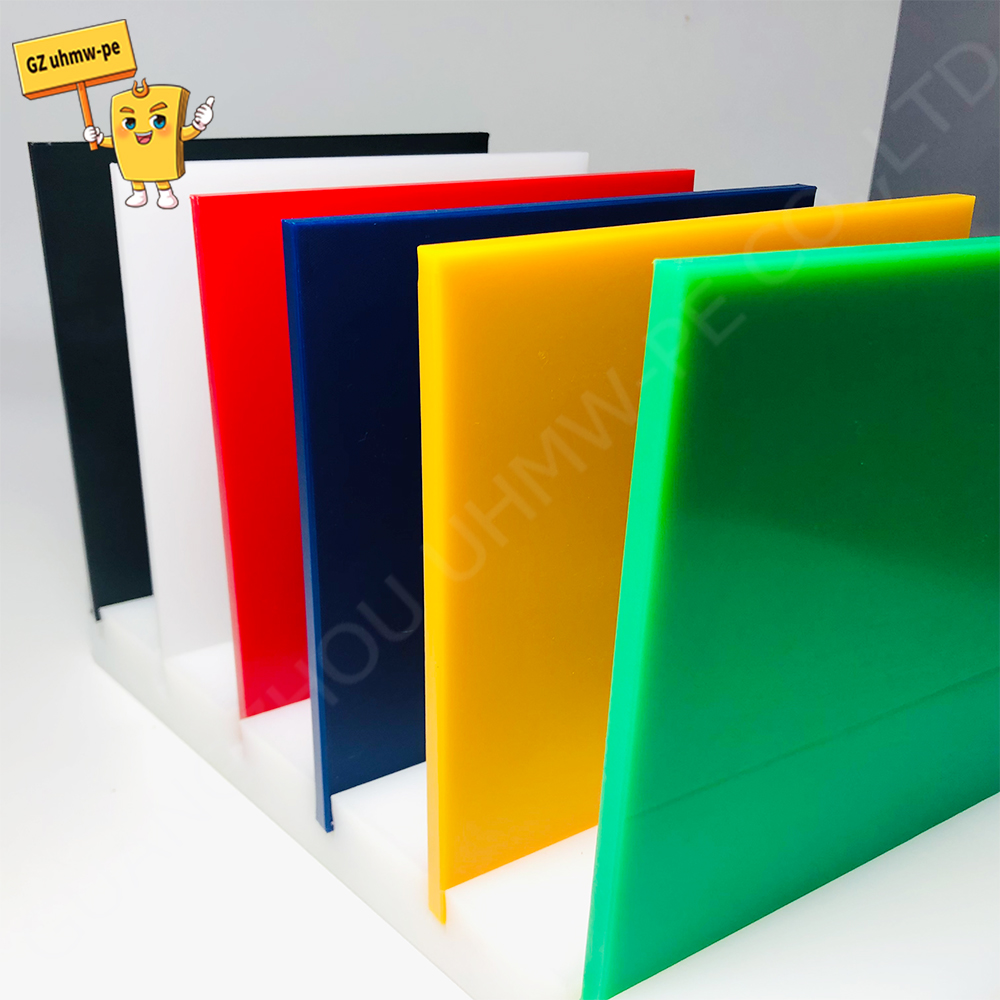
Guangzhou uhmw-pe co.,ltd offers various UHMWPE grades including standard, antistatic, flame-retardant, and high-wear-resistant types. For complex profiles, modified UHMWPE with fillers like glass fibers or PTFE can improve dimensional stability, though it may require different tooling. The company also provides custom formulations to meet specific requirements, such as low-temperature resistance for winter sports applications like synthetic ice rink boards.
Equipment and Tooling for Routing UHMWPE
CNC routers with high spindle speeds (10,000-24,000 RPM) and rigid construction are ideal for complex profiles. Use carbide or polycrystalline diamond (PCD) end mills with sharp cutting edges. Single-flute or two-flute designs with polished flutes reduce friction and heat. For large-diameter profiles (e.g., guide rails or star wheels), helical router bits with chip-breaker geometry improve chip evacuation. Guangzhou uhmw-pe co.,ltd employs advanced CNC machining centers and precision saws to produce components with tight tolerances.
Feeds and Speeds
Recommended cutting speeds for UHMWPE range from 300 to 800 m/min, depending on tool diameter and machine rigidity. Feed rates should be high enough to prevent dwell, typically 0.1-0.4 mm/rev. A climb milling strategy minimizes edge breakout. Always use coolant (air blast or mist) to dissipate heat. The company's team uses these parameters to achieve smooth finishes on complex parts like outrigger pads and lining sheets.
Techniques for Complex Profile Machining
Complex profiles often require roughing passes to remove bulk material, followed by finishing passes with small stepovers (10-20% of tool diameter). For deep cavities or 3D contours, use trochoidal milling to reduce tool engagement and heat generation. Vacuum fixtures or double-sided tape secure the board without deformation. For thin-walled parts, low melting point alloys can be used as support.
Cooling and Chip Management
UHMWPE produces long, stringy chips that can wrap around tools. High-pressure air or coolant systems (water-soluble) break chips and cool the cutting zone. A mist coolant with anti-foam additives is preferred. Regular polishing of tool flutes prevents material adhesion. Guangzhou uhmw-pe co.,ltd uses mist cooling on its CNC routers to maintain accuracy during machining of large-format sheets up to 6 meters.
Application-Specific Examples
Examples of complex UHMWPE parts include guide rails for conveyor systems, star wheels for bottling lines, and wear-resistant liners for chutes. For guide rails, multiple T-slots and mounting holes require precision. The company's mold development facilities allow custom mold design for thermoplastic forming of complex shapes, though routing is preferred for low-to-medium volume parts.
Quality Control
Dimensional inspection with CMM and surface finish measurement (Ra < 1.6 µm) ensures compliance. Guangzhou uhmw-pe co.,ltd follows ISO quality management and provides SGS test reports. Parts are deburred and cleaned before packaging.
Conclusion
Successful routing of UHMWPE boards for complex profiles depends on understanding material properties, using sharp carbide tooling, optimizing feeds/speeds, and effective cooling. With the right approach, manufacturers can produce high-quality components that leverage UHMWPE's unique benefits. Guangzhou uhmw-pe co.,ltd offers end-to-end solutions from material selection to finished machining, ensuring reliable performance for demanding applications.
For further guidance or custom machining services, contact Guangzhou uhmw-pe co.,ltd at Room 1303, No. 1068 Xingang East Road, Haizhu District, Guangzhou, China.