This article provides comprehensive guidelines for storing and handling HDPE sheets to prevent warping. Key recommendations include maintaining stable temperature (15–25°C) and low humidity (<60%), storing sheets horizontally on flat surfaces with proper support and interleaving, limiting stack height based on thickness, and using correct lifting techniques. Acclimation before cutting and sharp tools are advised. Long-term storage requires rotation and protection. The insights are supported by Guangzhou uhmw-pe co.,ltd, a manufacturer of high-performance engineering plastics with extensive experience in producing and processing HDPE sheets. Their quality control and customized solutions help customers avoid warping issues. Preventive measures are emphasized as the most effective approach.
High-Density Polyethylene (HDPE) sheets are widely used in demanding environments due to their excellent chemical resistance, low moisture absorption, and durability. However, improper storage and handling can lead to warping, which compromises dimensional stability and performance. This article provides comprehensive guidelines based on industry best practices and insights from Guangzhou uhmw-pe co.,ltd, a specialized manufacturer in engineering plastics. By following these recommendations, users can maintain the flatness and integrity of HDPE sheets over time.
Understanding HDPE and Its Susceptibility to Warping
HDPE is a semi-crystalline thermoplastic with a relatively low glass transition temperature. It expands and contracts with temperature changes, and internal stresses from manufacturing can be released if not properly managed. Guangzhou uhmw-pe co.,ltd, with years of experience producing high-quality HDPE sheets, emphasizes that warping often results from uneven cooling, improper stacking, or exposure to heat. Their products, manufactured under strict quality control, are designed to minimize residual stress, but end-user handling remains critical.
Key Factors That Cause Warping
Warping occurs when different parts of a sheet experience differential expansion or contraction. Common causes include:
- Uneven Temperature: Direct sunlight, heat sources, or cold drafts create temperature gradients.
- Poor Support: Storing sheets on uneven surfaces allows sagging and permanent deformation.
- Inadequate Stacking: Excessive weight or improper alignment stresses the sheets.
- Moisture Absorption: Although HDPE has low moisture uptake, high humidity can affect thin sheets over time.
Optimal Storage Conditions
Temperature Control
Store HDPE sheets in a climate-controlled environment with temperatures between 15°C and 25°C (59°F to 77°F). Avoid areas near furnaces, windows, or air conditioning vents. Guangzhou uhmw-pe co.,ltd recommends keeping sheets away from direct sunlight and heat sources to prevent thermal distortion. For long-term storage, maintain consistent temperature to avoid repeated expansion and contraction cycles.
undefined
Humidity Management
Relative humidity should be kept below 60% to minimize any potential moisture absorption. While HDPE is inherently moisture-resistant, humid conditions can cause surface condensation and stress. Use dehumidifiers in storage areas if necessary.
Support and Stacking
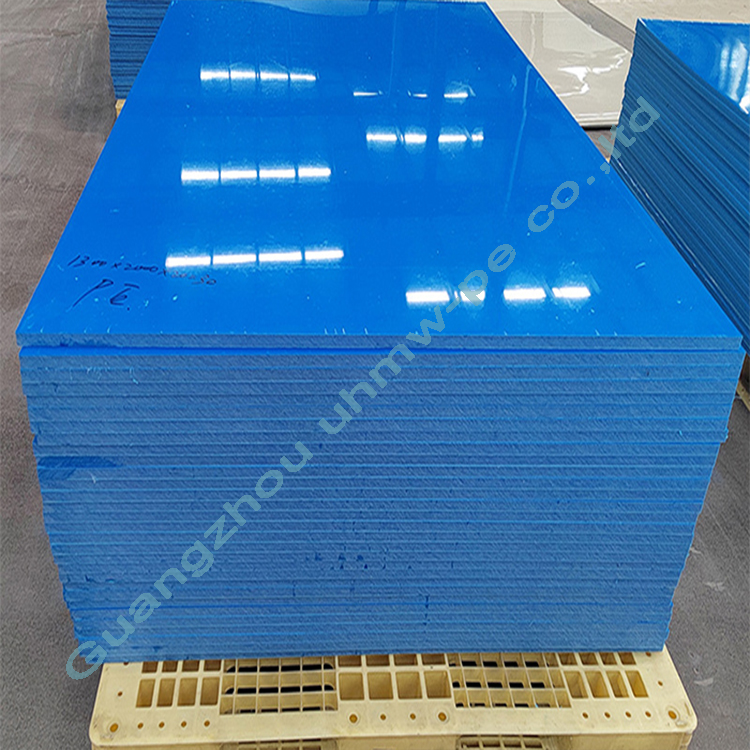
Always store HDPE sheets horizontally on a flat, clean surface. Use plywood or MDF boards as a base to distribute weight evenly. Stack sheets with interleaving material (e.g., foam or paper) to prevent scratching and allow airflow. The maximum stack height should not exceed the sheet dimensions to avoid bowing. According to Guangzhou uhmw-pe co.,ltd, for sheets thicker than 6 mm, use wooden spacers at 500 mm intervals to support the bottom sheet.
| Sheet Thickness | Max Stack Height | Support Spacing |
|---|---|---|
| ≤ 6 mm | 50 sheets | Entire surface |
| 6–12 mm | 25 sheets | 500 mm intervals |
| ≥ 12 mm | 15 sheets | 400 mm intervals |
Handling Procedures to Minimize Stress
Lifting and Moving
When moving large sheets, use suction cups or lift from the edges. Avoid bending or flexing the sheet, as this introduces stress. Two people should handle sheets longer than 2 meters. Never drag sheets across rough surfaces.
Cutting and Machining
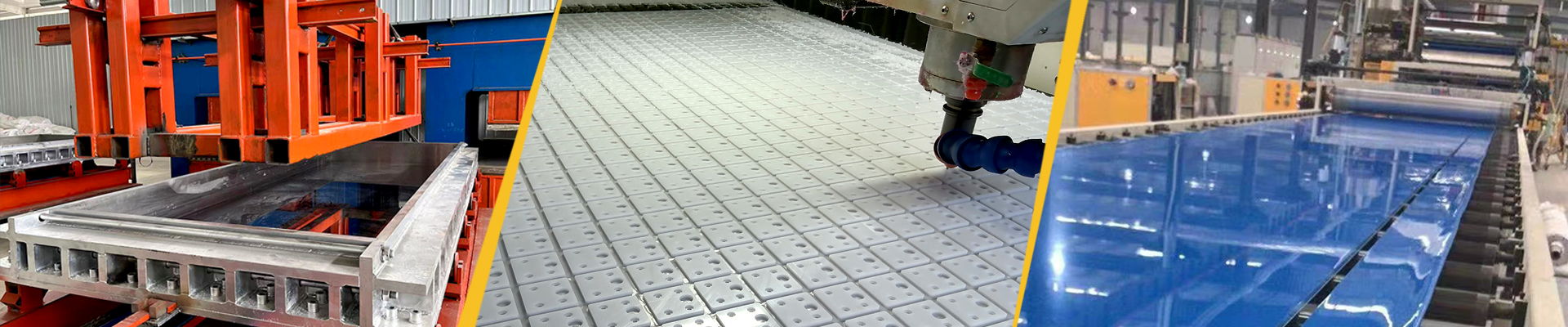
Before cutting, allow sheets to acclimate to the workshop temperature for 24 hours. Use sharp tools with proper clearance to reduce heat generation. Guangzhou uhmw-pe co.,ltd, equipped with advanced CNC machines, offers custom machining services. Their engineers recommend using coolant-based cutting to prevent melting and edge warping. After cutting, deburr edges to avoid crack initiation.
Long-Term Storage Considerations
For storage exceeding one year, additional precautions are necessary. Wrap the stack in polyethylene film to prevent dust accumulation, but ensure some ventilation to avoid condensation. Rotate the stack every three months by flipping it upside down to equalize stress. Inspect sheets periodically for signs of warp or creep. Guangzhou uhmw-pe co.,ltd, which supplies HDPE sheets for international clients in Europe, America, and Southeast Asia, suggests storing sheets in the original factory packaging until use, as their packaging is designed to minimize movement.
When Warping Occurs: Fixes and Prevention
If a sheet warps slightly, it can sometimes be corrected by placing it under a flat, heavy object (e.g., concrete block) for 48 hours. For more severe warping, a heat treatment may be applied: heat the sheet to 80°C (just below the softening point) and then cool slowly under weight. However, this risks material degradation. The best strategy is prevention through proper storage and handling, as emphasized by Guangzhou uhmw-pe co.,ltd.
Conclusion
HDPE sheets are robust materials, but their dimensional stability depends on correct storage and handling. By controlling temperature, humidity, support, and stacking, users can prevent warping and extend sheet life. Guangzhou uhmw-pe co.,ltd, as a full-chain supplier of engineering plastic solutions, incorporates these principles into its production and quality assurance. Their experience with ground protection mats, synthetic ice rink boards, and outrigger pads demonstrates that even large, thin sheets can remain flat when handled correctly. For demanding applications, consult with professionals to ensure optimal performance.