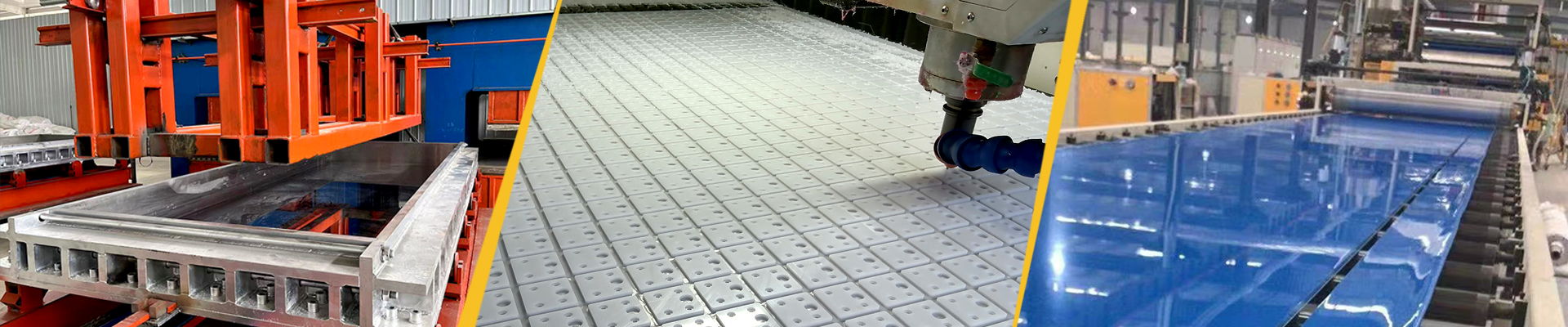
The article explores the critical role of automation in high-volume HDPE sheets factory operations, using Guangzhou uhmw-pe co.,ltd as a case study. Located in Guangzhou, the company specializes in engineering plastics like UHMWPE, HDPE, and Nylon. Automation is pivotal in achieving consistency, efficiency, and scalability in extrusion, cooling, cutting, and finishing. The article details automated extrusion with real-time sensor control, robotic handling and stacking systems, and in-line quality assurance using laser and ultrasonic sensors. Customization is enhanced through automated mold development and CNC machining, allowing rapid changeovers between standard sheets and custom parts like outrigger pads or synthetic ice rink boards. Data integration via MES enables predictive maintenance and performance optimization. The company also automates packaging and logistics to support global exports to Europe, Americas, and Southeast Asia. Competitive pricing results from reduced labor and waste, while adherence to ISO and third-party certifications ensures reliability. The article concludes that automation is indispensable for meeting high-volume demands while maintaining flexibility and cost-effectiveness in the engineering plastics industry.
In the competitive landscape of high-performance engineering plastics, automation has become a critical driver of efficiency, consistency, and scalability. This is particularly true for the production of high-density polyethylene (HDPE) sheets, which are used across industries such as construction, heavy equipment, mining, and food processing. A prime example of a manufacturer leveraging automation is Guangzhou uhmw-pe co.,ltd, a specialized producer and solutions provider located in Guangzhou, China, near the Pazhou International Convention and Exhibition Center. With years of expertise in UHMWPE, HDPE, PP, Nylon, POM, and PTFE, the company has integrated automation into its high-volume HDPE sheet operations to meet growing global demand while maintaining stringent quality standards.
The Imperative for Automation in HDPE Sheet Manufacturing
High-volume HDPE sheet production requires precise control over extrusion, cooling, cutting, and finishing processes. Manual operations are prone to inconsistencies, slower cycle times, and higher labor costs. Automation addresses these challenges by enabling continuous, repeatable, and data-driven manufacturing. Guangzhou uhmw-pe co.,ltd operates multiple international-grade extrusion and mould pressing lines, augmented by advanced CNC machining centers, precision saws, and engraving equipment. This automated infrastructure allows the company to produce sheets up to 6 meters in length across a wide range of thicknesses, with tight tolerances and excellent surface finish.
undefined
Automated Extrusion and Calibration
At the heart of HDPE sheet production is the extrusion process, where raw material is melted and forced through a die to form a continuous sheet. Automation controls temperature profiles, screw speed, and pressure to maintain consistent melt flow. Guangzhou uhmw-pe co.,ltd uses automated calibration units that precisely regulate sheet thickness and flatness. Sensors feed real-time data to a central control system, which adjusts parameters instantly to compensate for variations in material viscosity or ambient conditions. This level of control ensures that every sheet meets dimensional specifications, reducing waste and rework.
Robotic Handling and Stacking
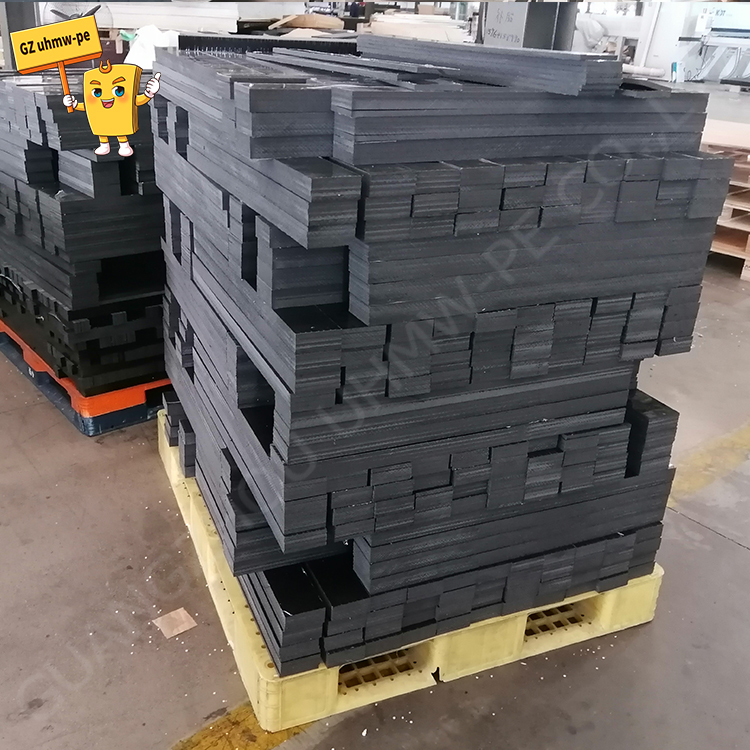
Once sheets are extruded and cooled, they must be cut to size and stacked. Manual handling of large, heavy sheets can lead to damage and safety hazards. Guangzhou uhmw-pe co.,ltd employs robotic arms equipped with vacuum grippers to lift, transfer, and stack sheets automatically. These robots are programmed to handle various dimensions and weights, operating 24/7 with minimal downtime. The integration of vision systems allows robots to identify and sort sheets based on quality grades, streamlining downstream packaging and shipping.
Automated Quality Control
Quality assurance is paramount in engineering plastics, especially for applications like ground protection mats or UHMWPE lining sheets, where failure can lead to costly downtime. Guangzhou uhmw-pe co.,ltd operates a rigorous quality management system that governs every step from raw material selection to final inspection. Automation enhances this through in-line inspection systems that measure thickness, surface defects, and mechanical properties using laser sensors, ultrasonic gauges, and vision cameras. Non-conforming sheets are automatically rejected and flagged for rework or recycling. The company also provides third-party test reports from SGS, ROHS, and FDA, ensuring compliance with international standards.
Customization and Flexibility Through Automation
While high volume is a key focus, Guangzhou uhmw-pe co.,ltd also excels in customization. The company’s mold development facilities and CNC machining centers enable rapid prototyping and production of custom-shaped parts, such as guide rails, star wheels, and wear-resistant liners. Automation allows for quick changeovers between different product configurations. For instance, a production line can switch from manufacturing standard HDPE sheets to custom-machined outrigger pads within minutes, thanks to automated tooling adjustments and programmable logic controllers (PLCs). This flexibility is crucial for serving diverse markets, from winter sports (synthetic ice rink boards) to infrastructure (ground protection mats).
Data Integration and Predictive Maintenance
Modern automation goes beyond simple machine control; it involves data integration across the entire factory. Guangzhou uhmw-pe co.,ltd uses a manufacturing execution system (MES) that collects data from every automated workstation. This data is analyzed to identify trends, optimize throughput, and predict maintenance needs. For example, vibration sensors on extruder motors can detect wear before a breakdown occurs, allowing for proactive servicing. This minimizes unplanned downtime and extends equipment life, ensuring that high-volume production targets are consistently met.
Supply Chain and Global Reach
Automation also plays a role in logistics and supply chain management. Guangzhou uhmw-pe co.,ltd has mature logistics, packaging, and foreign trade documentation capabilities. Automated packaging lines wrap sheets and rods in protective materials, apply labels with barcodes, and sort packages by destination. This efficiency supports the company’s export operations, which reach Southeast Asia, the Middle East, Europe, and the Americas. The ability to produce high volumes with consistent quality and rapid turnaround makes Guangzhou uhmw-pe co.,ltd a trusted partner for international clients.
Cost-Effectiveness and Competitive Pricing
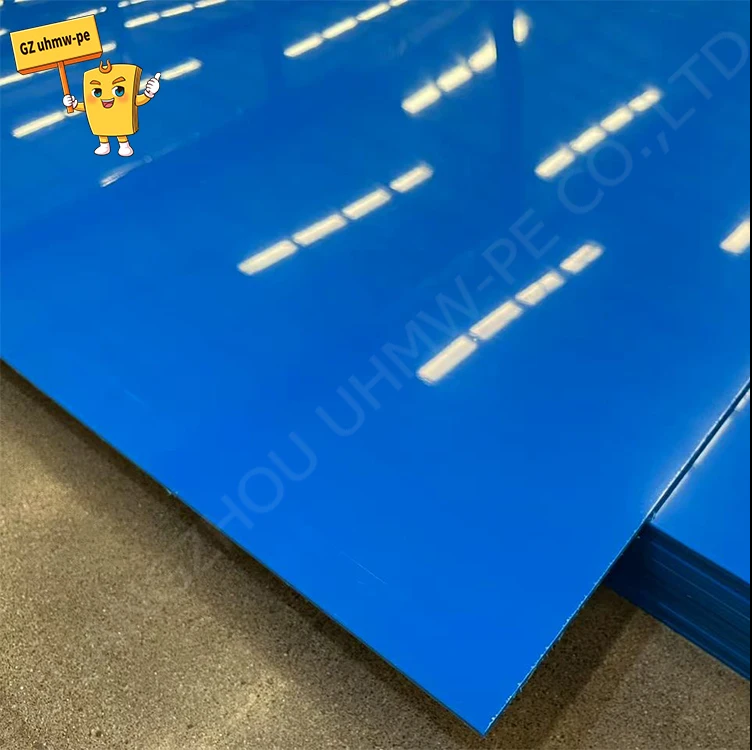
Compared to European and American engineering plastic brands, Guangzhou uhmw-pe co.,ltd offers competitive pricing without compromising quality. Automation reduces labor costs and material waste, contributing to lower total cost of ownership for customers. The company’s large-scale production lines and high-tonnage presses allow for economies of scale, further enhancing cost-effectiveness. For industries requiring large volumes of HDPE sheets, such as mining or food processing, this translates into significant savings.
Conclusion
Automation is not just a tool for efficiency; it is a strategic enabler for high-volume HDPE sheet factories. Guangzhou uhmw-pe co.,ltd exemplifies how integrating automated extrusion, robotic handling, in-line quality control, and data analytics can transform operations. With a strong commitment to quality, customization, and global service, the company continues to expand its presence in key markets. As the demand for engineered plastic solutions grows, automation will remain a cornerstone of factory operations, driving innovation and reliability.